
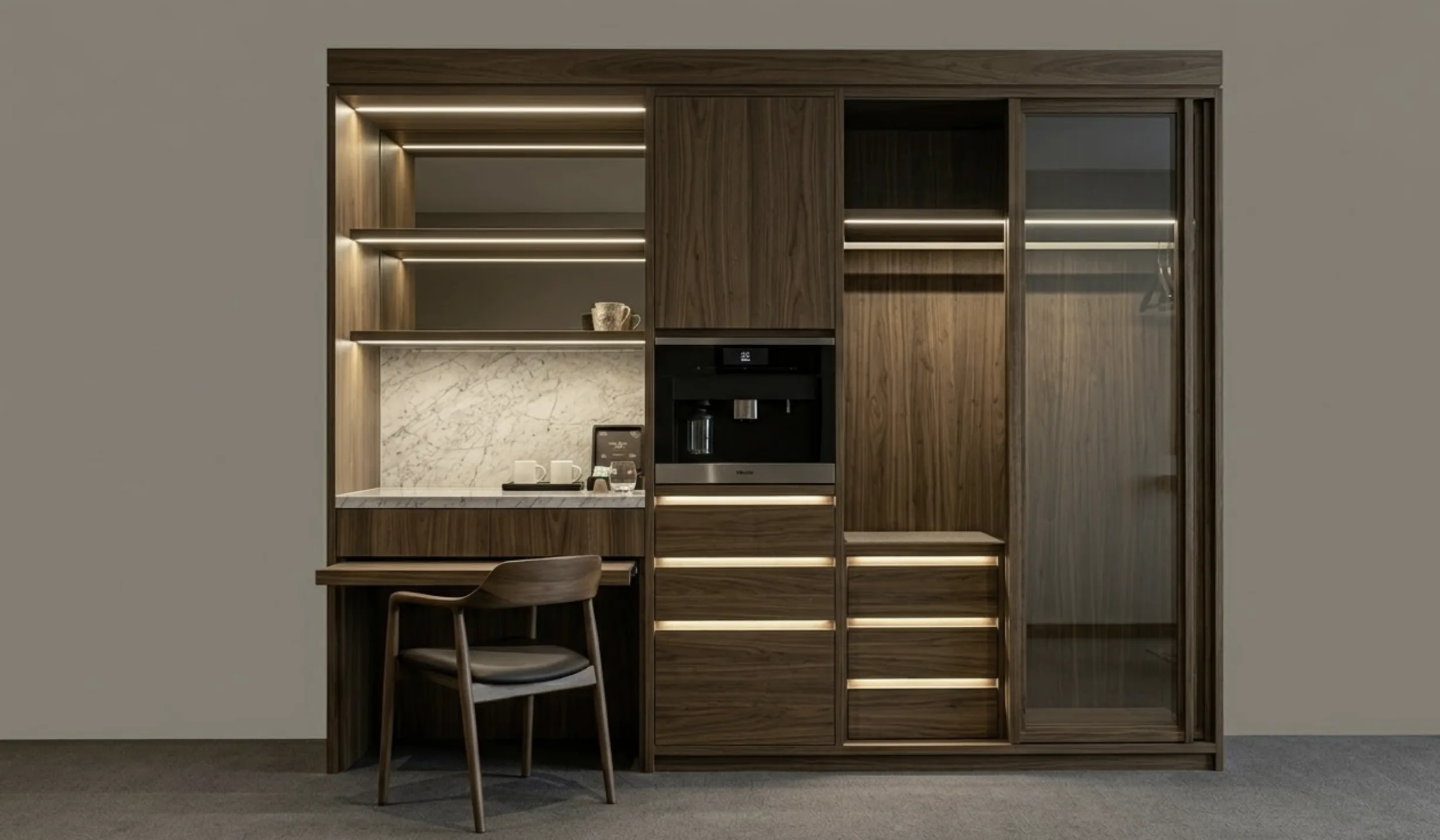
In hotel interior design, focus often gravitates toward beds, sofas, or lighting. However, cabinetry systems are equally vital components that determine spatial functionality and the overall guest experience. Especially in bar areas—whether it’s a guestroom minibar, a lobby bar, or a back-of-house service area—cabinetry design directly impacts operational efficiency, aesthetics, and guest satisfaction.
When faced with different project requirements, hotels typically choose between two primary solutions: Custom Cabinetry and Modular Cabinetry. Which is better suited for your hotel bar? This article provides an in-depth analysis.
What is Custom Hotel Cabinetry?
Definition & Concept:
Custom cabinetry is a system specifically designed and manufactured based on the precise spatial dimensions, design style, and functional requirements of a hotel.
Advantages of Custom Millwork:
Unmatched Personalization: Achieves a 100% unique design that blends perfectly with luxury lobby aesthetics.
Architectural Adaptability: Built to navigate architectural anomalies, unusual room shapes, structural columns, or historic building constraints.
Premium Material Selection: Designers can specify rare woods, exotic stones, and integrated LED features to elevate the guest experience.
Disadvantages of Custom Millwork:
Financial Investment: Requires higher upfront costs due to specialized labor, premium materials, and longer production cycles.
Lack of Flexibility: Future modifications, upgrades, or expansions are difficult if your beverage program changes.
What is Modular Hotel Cabinetry?
Definition & Concept
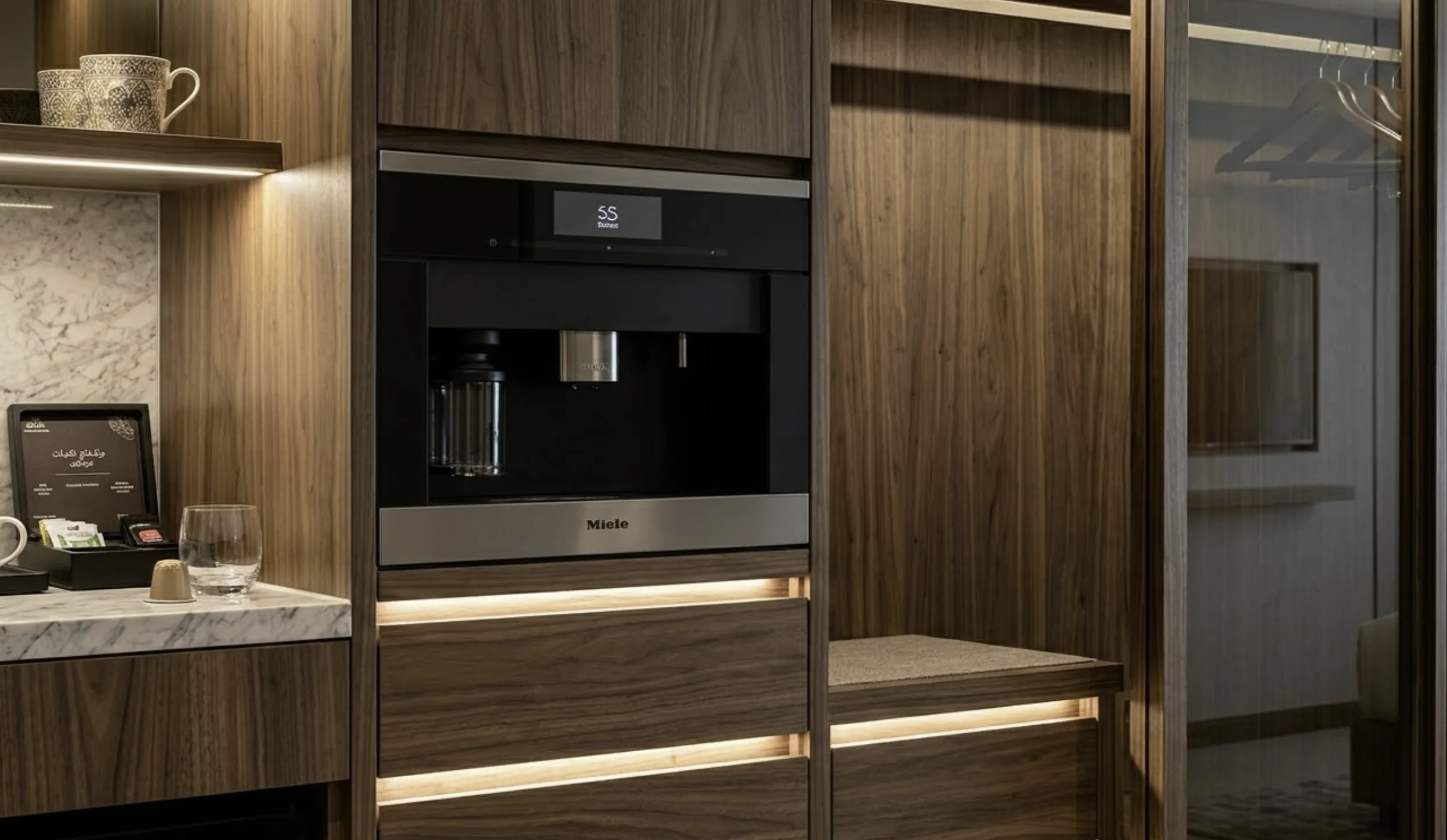
Modular cabinetry consists of standardized components that can be combined and installed according to specific needs.
Advantages of Modular Systems:
Commercial Engineering: Specifically engineered for rigorous daily use without performance degradation, warping, or rusting.
Equipment Synergy: Seamlessly integrates with essential bar equipment like under-counter refrigeration, glass washers, ice bins, and soda guns.
Speed of Deployment: Significantly faster manufacturing and installation times compared to custom products.
Disadvantages of Modular Systems:
Standardized Aesthetics: For highly bespoke interiors, standard stainless steel finishes may require creative panels or custom cladding to mask their industrial appearance.
Best Use Cases: High-traffic hotel lounges, sports bars, and rooftop bars favor modular systems where service speed, hygiene, and durability are critical for profitability.
Core Comparison: Custom vs. Modular
As a vital component of hotel furniture, whether custom or modular, TaiSen helps clients consider the following manufacturing requirements:
| Feature | Custom Millwork | Modular Systems |
|---|---|---|
|
Aesthetic Control |
100% unique; fits strict brand guidelines. |
Industrial/Standardized; may need cladding. |
|
Operational Durability |
High (depending on material). |
Superior; built for moisture and heavy use. |
|
Maintenance |
Requires professional carpentry repairs. |
Easy component replacement; minimal downtime. |
|
Equipment Integration |
Bespoke integration required. |
Pre-engineered for standard commercial units. |
User Experience Comparison:
-
Space Utilization: Custom offers maximum efficiency; Modular may result in “dead zones.”
-
Cost: Custom requires high investment; Modular is budget-friendly.
-
Design Expression: Custom highlights brand identity; Modular is more functional.
-
Installation: Custom is complex; Modular is simple and fast.
-
Usage Habit: Custom is tailored to specific workflows; Modular is universal.
Selection Guide by Hotel Type
-
Economy Hotels (Recommend Modular): Focus on cost control, rapid replication, and easy maintenance.
-
Mid-scale Business Hotels (Recommend Hybrid): Custom cabinetry for high-visibility core areas; modular for auxiliary zones.
-
High-end/Five-Star Hotels (Recommend Custom): Emphasize brand tone, enhance spatial value, and create a differentiated experience.
-
Bars & F&B Spaces: Choose Custom for high-end visual impact or Modular for high-intensity operational durability.
Key Factors for Bar Cabinetry Selection
-
Spatial Dimensions: Are there irregular shapes or structural pillars?
-
Hotel Positioning: Is it economy or luxury? This dictates the design direction.
-
Budget Control: Does the ROI match the cabinetry investment?
-
Functional Needs: Does it require embedded equipment or specialized storage?
-
Long-term Maintenance: Is there a need for quick upgrades or part replacements?
Choosing the Right Manufacturer
A professional hotel furniture manufacturer should offer versatility and industry-specific expertise. At TaiSen, we believe:
No “One-Size-Fits-All”: There is only the solution that fits the specific project.
Hybrid Models are Efficient: More hotels are now combining custom aesthetics with modular functionality.
Why Choose a Specialist?
A professional supplier helps you optimize layouts, control costs, and enhance design. TaiSen Manufacturer possesses deep industry experience across various brand standards, including ACCOR, BEST WESTERN, CHOICE, HILTON, HYATT, IHG, MARRIOTT, MOTEL 6, RADISSON, SONESTA, and WYNDHAM.
Conclusion
Selecting the right cabinetry is a foundational decision for any hospitality venue. Whether you lean toward modular commercial bars for service speed or bespoke custom solutions for visual impact, understanding the nuances of each system is vital. Our expertly designed bars are built to be both a visual focal point and a powerhouse for efficient service.


