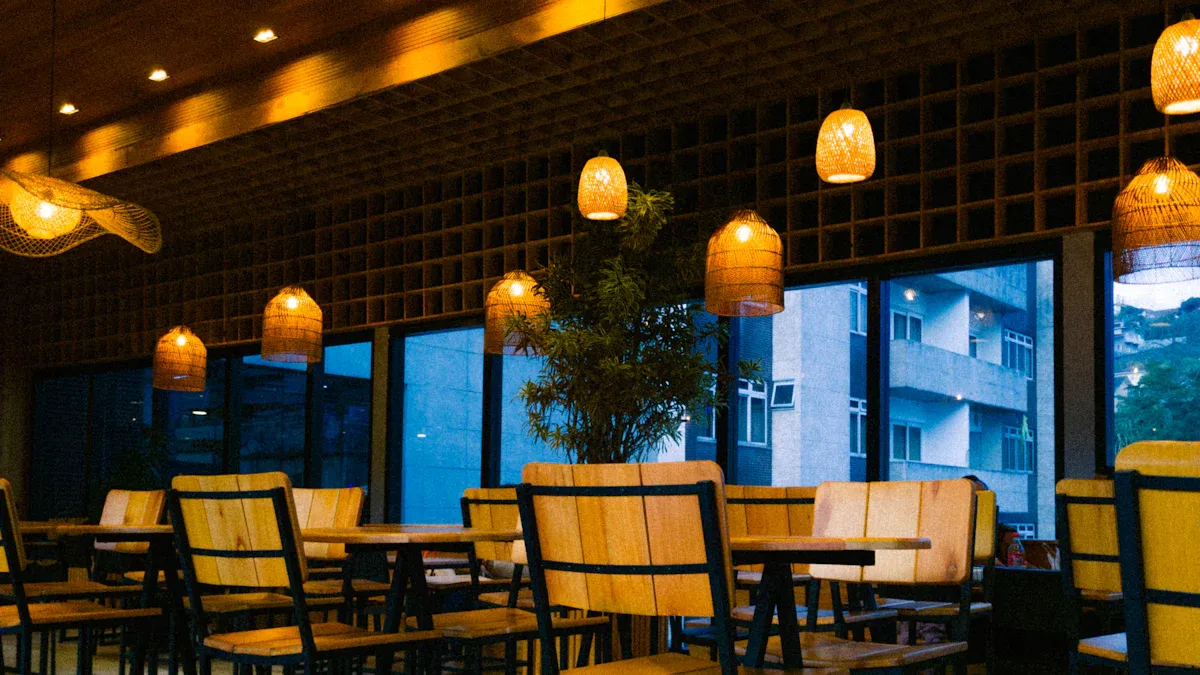
Light critically defines a hospitality brand’s identity. Strategic Hospitality Lighting Solutions directly impact guest comfort and perception. A recent study indicates that hotels implementing human-centric lighting designs have reported a measurable increase in guest satisfaction scores, often exceeding 15%. This dual power of lighting creates memorable, functional spaces. A Hotel Wall Lamp, Boutique Hotel Custom Lamps, and Hotel Guest Room Lighting like a Hotel Bedside Lamp are key. Using Hospitality Lighting Solutions to Increase Hotel Occupancy Rates is a proven strategy.
Key Takeaways
- Good lighting helps hotels create a strong brand image. It makes spaces feel special and memorable for guests.
- Lighting makes guests feel comfortable and well. It can help them sleep better and feel more relaxed.
- Smart lighting saves energy and money. It also helps hotels be more eco-friendly.
Crafting Distinct Brand Identity with Hospitality Lighting Solutions
Defining Ambiance and Atmosphere for Brand Cohesion
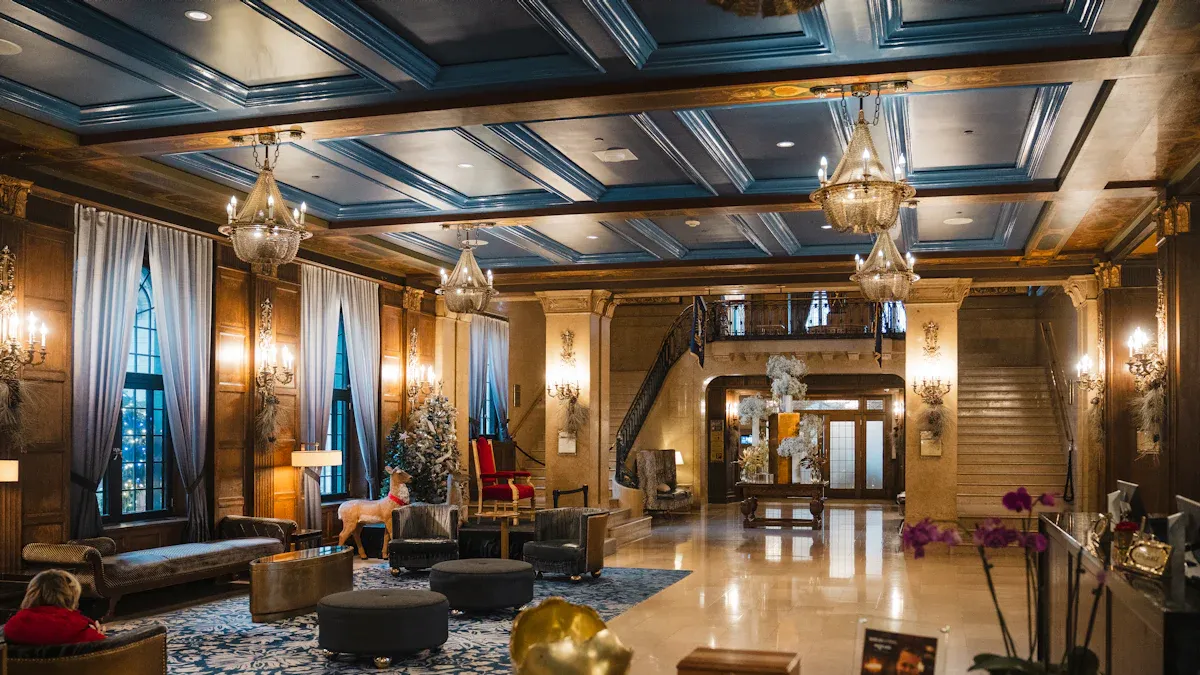
Lighting plays a crucial role in establishing the overall feel of a hospitality space. It defines the ambiance and atmosphere, creating a cohesive brand experience for guests. Warm, soft lights often create a calming environment, making them ideal for fine dining restaurants or spa reception areas. Conversely, bright, cool lights signal energy and activity, suiting fitness areas or conference rooms. This strategic selection of light temperature, brightness, and placement aligns the atmosphere with the brand’s goals across different venue parts.
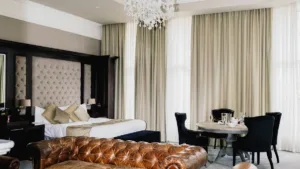
Luxury hotels often employ specific lighting techniques to define their ambiance. They use direct lighting to emphasize unique design features, draw attention to specific sitting areas, or highlight displayed art. Large tiered chandeliers or distinctive pendant lights serve as focal points, adding class and elegance in entrance halls or ballrooms. Layered lighting combines ambient light for overall illumination, task lighting for activities like reading, and accent lighting to highlight design features. This approach creates a welcoming environment. For contemporary styles, modern fixtures and maximized daylight create a natural atmosphere. Warm lighting can make airy contemporary spaces more inviting, while increased lighting can brighten dark traditional furniture.
Reinforcing Brand Aesthetics and Values Through Illumination
Illumination effectively communicates a hospitality brand’s core values. Color and intensity choices convey specific messages. Warm, amber tones suggest intimacy and elegance, fitting for fine dining or high-end resorts. Cooler, brighter lighting implies energy and accessibility, suitable for casual eateries or urban cafes. Luxury hotels might use elegant uplighting to highlight architectural features, while modern restaurants may opt for sleek, minimal fixtures.
Brands committed to sustainability often integrate eco-friendly Hospitality Lighting Solutions. LED fixtures, solar-powered options, and low-voltage systems reduce environmental impact. The Prague Marriott Hotel, for example, significantly reduced its lighting electricity consumption by approximately 58% and saved around €40,000 annually by switching to more efficient bulbs. This demonstrates how practical lighting upgrades contribute to sustainability goals. Smart systems, including sensors, timers, and app-based controls, enable precise management of outdoor lighting, reducing waste. The Candela Light by Francisco Gomez Paz exemplifies innovation in sustainable lighting. This cordless lamp uses bioethanol to generate electricity for its 24 LEDs, showcasing advanced technology integrated with environmental responsibility.
Creating Memorable Visual Signatures with Light
Lighting designers use light to create iconic and recognizable features in hospitality spaces, forming memorable visual signatures. Kalco Custom & Contract Lighting offers bespoke and ready-made lighting solutions, emphasizing artistry and engineering. They highlight innovations like CCT LED control for color customization. Decorative and thematic lighting can change exterior lights based on seasons or events, using holiday themes, brand signature colors, or artistic projections. Dynamic and interactive lighting, such as color-changing LEDs or projection-mapping, responds to movement or time of day.
Many properties use lighting to create distinct identities. The Burj Al Arab in Dubai uses dynamic RGB lighting to transform the hotel into a visual masterpiece. The Peninsula Shanghai employs automated facade lighting that adjusts intensity based on weather and time. The Hoxton Hotels are known for warm, dim-lit facades with artistic, eye-catching signage, creating a cozy yet sophisticated atmosphere. Lighting designers at Odesa Food Market created different atmospheres with light, adjusting from cool and soft in the morning to more dramatic with contrasting accents in the evening. They also revived a central tree element with light and shadows. Truman’s Social Club in London used a striking canopy of suspended pendants to mark the entrance, assisting in wayfinding and zoning. These examples show how strategic Hospitality Lighting Solutions craft unique and lasting impressions.
Elevating the Guest Journey Through Thoughtful Hospitality Lighting Solutions
Enhancing Guest Comfort and Well-being with Light
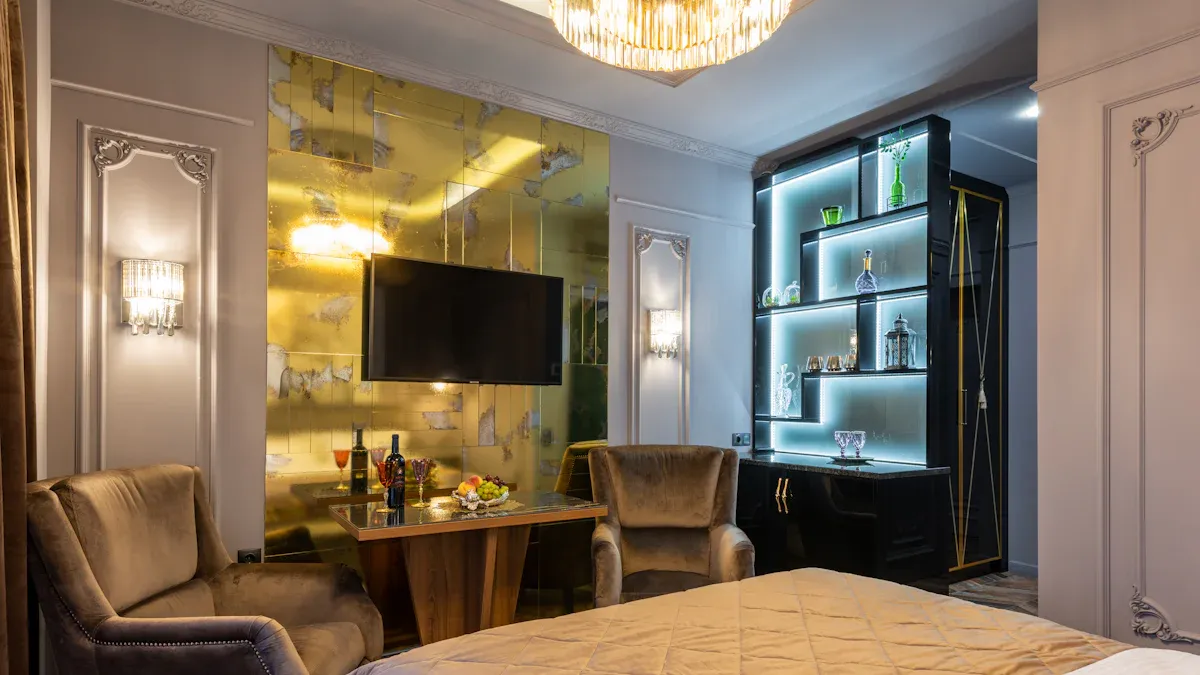
Lighting significantly impacts guest comfort and overall well-being. Thoughtful design creates a welcoming and soothing environment. Warm colors, such as red and orange, can stimulate hunger and encourage longer stays in dining areas. A University of Arkansas study supports this finding. Conversely, cooler colors like blue and green promote relaxation and a sense of calm. These colors are ideal for spas and wellness centers. Lighting also influences color perception; natural light enhances colors, while artificial lighting can alter them. Warm lighting makes colors appear more vibrant, while cool lighting makes them look more subdued. Dimmable lighting allows for mood adjustment throughout the day. Warm lighting creates a cozy evening atmosphere. Cooler lighting makes a space feel fresh during the day.
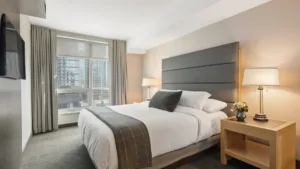
The tone and intensity of lighting significantly alter how a space feels. Soft, warm-toned light encourages relaxation. Lighting for a workspace needs to be brighter and more functional. An imbalance in light sources can be detrimental. Too much brightness can feel clinical, and too little can cause inconvenience. Strategic lighting design enhances comfort and emotional well-being. This includes warm white bulbs near beds, dimmers for adjustability, combining overhead and table lamps, and positioning lights to flatter architecture.
Circadian lighting systems further enhance guest well-being. These systems adjust color temperature throughout the day. They use warm and cool lights to mimic the natural daylight cycle. This helps regulate guests’ internal clocks. It particularly benefits those traveling across time zones by reducing jet lag. It also aligns their circadian rhythm with the local environment. Hotels like the Tampa Marriott Water Street Hotel and Four Seasons Hotel Los Angeles at Beverly Hills implement circadian rhythm lighting in their special ‘Stay Well Rooms’ and ‘Wellness Rooms.’ This lighting mirrors natural light patterns. It helps jet-lagged guests adjust to new time zones and harmonize with their surroundings. These systems offer settings for relaxation with long-wavelength amber tones. They can also energize guests with blue light that suppresses melatonin. Lighting that simulates dawn helps guests wake up naturally, ensuring optimal rest. This approach boosts mood, energy, and a sense of balance throughout the day. It improves sleep quality and overall guest wellness. It creates a more restful, health-focused stay.
Guiding Navigation and Functionality for Seamless Experiences
Lighting plays a crucial role in guiding guests and ensuring smooth functionality within hospitality spaces. It directs guests through lobbies, corridors, and public areas. It also illuminates specific zones for various activities. Task lighting is crucial in areas like guest rooms and business centers. It provides focused illumination for activities such as working at a desk, thereby enhancing productivity. Vanity lighting above a bathroom mirror is a direct example of task lighting in a hotel bathroom. Focused lighting over a workspace in a guest room or conference area illustrates task lighting in business-related spaces within a hotel.
Engineers must consider the height and angle of fixtures to minimize glare and shadows. This optimizes functionality. Adjustable lamps, like desk lamps or wall-mounted reading lights, offer flexibility. They allow guests to personalize their lighting needs. Integrating smart lighting solutions further improves functionality. Guests can control brightness and color settings via mobile devices or voice commands. This creates a customized and personalized environment.
Influencing Mood and Emotional Connection in Hospitality Spaces
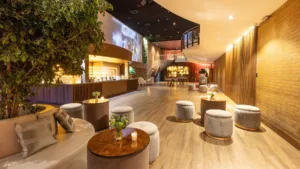
Lighting profoundly influences guest mood and emotional connection. It transforms spaces and evokes specific feelings. Dim lighting creates intimacy in general, enclosed atmospheres. Dim, cozy lighting encourages lingering in dining areas, promoting relaxation. Bright, cool lighting energizes a space, suitable for areas requiring excitement. Soft, warm lighting creates a cozy atmosphere, fostering intimacy. Bright, natural light promotes relaxation in wellness facilities. Dimly lit areas are ideal for social gatherings, encouraging both relaxation and intimacy. Brighter lighting in a bar area encourages a vibrant social atmosphere. Softer lighting in lounge areas promotes conversation. Warm amber hues provide comfort, while cooler blues evoke calm.
Dynamic lighting significantly influences guest emotional responses in different hospitality zones. In lobbies and common areas, ambient lighting creates warmth and clarity. Directional lighting highlights design details and aids orientation. Restaurants and lounges use layered lighting to shape mood and depth. Overhead lights ensure general visibility. Table lamps foster intimacy. Accent lights highlight décor, textures, and artworks. Adjusting lighting temperatures throughout the day supports natural rhythm and emotional engagement. Warm tones (2700K–3000K) foster relaxation and intimacy. Cooler tones suit task-oriented spaces. A dynamic lighting strategy supports natural rhythms and guest well-being.
In restaurants and bars, proper lighting increases dwell time, appetite, and spending. Warm, low-level light fosters intimacy and relaxation. Spot or accent lighting draws attention to premium dishes or design features. The ability to personalize lighting environments significantly influences guest well-being. Smart lighting systems allow customization of light intensity and color temperature. They provide guests with greater control over their surroundings. This adaptability creates calming atmospheres in relaxation areas. It also creates more stimulating environments in communal spaces, enhancing the overall guest experience. Warm light temperatures (2700 K–3000 K) associate with melatonin production and improved sleep. Cooler lights (5000 K–6500 K) are stimulating and suit active areas. Leisure-oriented spaces like hotels and beach resorts prefer warm-toned lighting. Activity and multifunctional spaces might utilize cooler lighting. This demonstrates a context-based approach to lighting. The Mehrabian–Russell model explains how environmental stimuli, such as lighting, influence emotional responses of pleasure, arousal, and dominance. These responses subsequently impact behaviors like satisfaction and loyalty. Within this model, sustainable Hospitality Lighting Solutions act as a positive stimulus. They elicit emotional responses supporting guest relaxation, restorative rest, and overall well-being.
Practical Considerations for Implementing Effective Hospitality Lighting Solutions
Achieving Energy Efficiency and Sustainability in Lighting Design
Hospitality venues prioritize energy efficiency and sustainability in lighting design. Implementing LED lighting upgrades significantly reduces energy consumption. Lighting retrofits in typical hotels can cut electricity use by 50 percent or more. Replacing older lamps with LEDs in back-room areas, like kitchens and offices, can reduce lighting energy consumption by 35 percent or more. Many certifications guide sustainable lighting practices. These include WELL Certification, LEED (Leadership in Energy and Environmental Design), ENERGY STAR, DesignLights Consortium (DLC), and ISO standards. LEED, a globally recognized green building certification, helps designers achieve maximum efficiency across various environmental impact categories. It includes specific lighting standards.
Ensuring Maintenance and Longevity of Lighting Systems
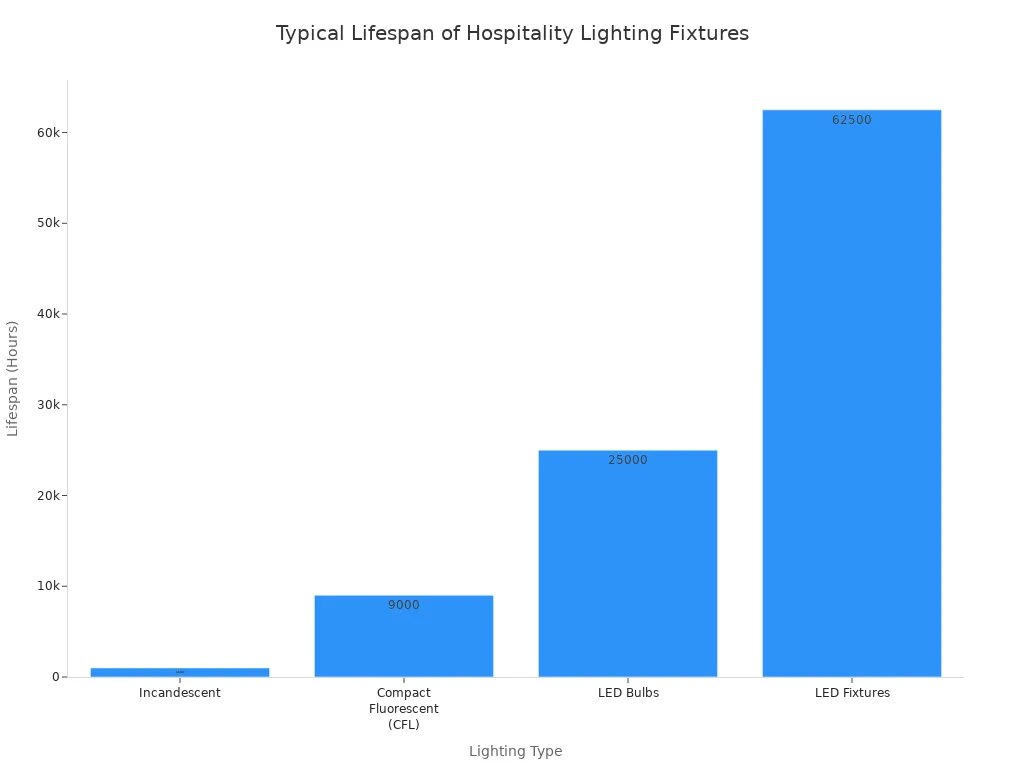
Effective maintenance strategies extend the lifespan of lighting systems and minimize operational costs. Regular cleaning, thorough inspections, and timely replacements are crucial. Periodically checking electrical connections prevents hazards. Monitoring and replacing flickering or damaged bulbs promptly reduces consumption. Addressing dimming issues immediately indicates underlying problems. Scheduled inspections proactively identify and repair issues early. Investing in professional maintenance services provides tailored solutions. Different lighting types offer varying lifespans:
| Lighting Type | Typical Lifespan (Hours) |
|---|---|
| Incandescent | 1,000 |
| Compact Fluorescent (CFL) | 8,000 – 10,000 |
| LED Bulbs | 25,000+ |
| LED Fixtures | 25,000 – 50,000 (or 70,000 – 100,000+ for high-quality commercial fixtures) |
Leveraging Adaptability and Control Systems for Optimal Performance
Lighting control systems offer significant flexibility in adapting hospitality space ambiance. They allow for customized atmospheres, creating a calming spa retreat or a vibrant restaurant. Preset lighting scenes facilitate specific activities like dining or reading. Automated lighting seamlessly transitions a dining area from a bright breakfast setting to an intimate dinner ambiance.
Great lighting can perfectly compliment an interior design, providing guests with enhanced comfort whether they are relaxing or working. Combined with smart controls, LED lighting can enhance guests’ experiences from the moment they arrive at their room. Nothing makes a better first impression of a guest room than a perfectly presented welcome experience: lighting set to complement the time of day, the room cooled or heated for optimum comfort, and curtains automatically opening on entry to frame a beautiful view of the city or beach.
Smart controls allow guests to create mood or activity-based lighting scenes with a single tap. Tunable white lighting enhances focus for work or promotes relaxation with soft, warm light. Smart lighting systems adjust automatically based on occupancy or time of day, improving safety and contributing to energy efficiency.
Lighting is indispensable for hospitality success, profoundly shaping guest experiences. Well-executed Hospitality Lighting Solutions provide a strategic advantage, enhancing brand image. Investing in thoughtful lighting differentiates a brand and cultivates guest loyalty. This ensures memorable stays.
FAQ
💡 How does lighting influence a hotel’s brand image?
Lighting defines a hotel’s unique identity. It sets the mood and atmosphere. Strategic illumination reinforces brand aesthetics and values. It creates memorable visual signatures for guests.
🏨 Can lighting truly improve guest comfort and well-being?
Yes, thoughtful lighting significantly enhances guest comfort. Circadian lighting systems regulate sleep patterns. Dimmable lights allow personalized ambiance. This promotes relaxation and overall well-being.
💰 What are the practical benefits of energy-efficient lighting in hospitality?
Energy-efficient lighting, like LEDs, drastically reduces electricity consumption. This lowers operational costs. It also supports sustainability goals. Smart controls further optimize energy use.