Quality checks are fundamental for the durability and longevity of custom hotel furniture. These checks directly impact guest satisfaction and comfort. They are also vital for ensuring guest safety and regulatory compliance. A Custom Hotel Furniture Manufacturer uses these checks to protect and enhance the hotel’s brand reputation. For hotel furniture customization, these steps optimize the return on investment. This makes B2B Hotel Furniture Sourcing more reliable. Knowing "How to choose a hospitality furniture supplier for renovation projects?" is crucial. It ensures you select a partner committed to high standards.
Key Takeaways
- Quality checks make hotel furniture last longer. This saves hotels money over time.
- Good quality furniture keeps hotel guests safe and comfortable. It makes their stay better.
- Quality checks help hotels keep a good reputation. They prevent bad reviews from guests.
- Hotels should choose furniture makers with strong quality checks. This ensures good furniture and fewer problems.
Why Quality Checks Ensure Durability in Hotel Furniture Customization
Quality checks are the first line of defense against furniture that breaks down too soon. They ensure every piece of custom hotel furniture can withstand constant use. This focus on durability means hotels get lasting value from their investment in hotel furniture customization.
Verifying Material Quality
Inspectors start by examining the raw materials. They confirm these materials meet specific standards for strength and resilience. High-quality materials naturally withstand daily wear better. For example, consider the properties of common furniture materials:
| Material Type | Specific Materials | Durability Properties |
|---|---|---|
| Wood | Oak, Maple, Cherry, Mahogany | Natural beauty, strength, resistance to wear and tear, longevity with solid construction and protective finish |
| Metal | Stainless Steel, Aluminum, Iron | Strength, resilience, sleek appearance, resistance to rust and corrosion, low maintenance |
| Upholstery Fabrics | Polyester, Microfiber, Crypton, Sunbrella | Stain-resistant, easy to clean, durable, comfortable, stylish |
| Other | Glass, Plastic, Composite (MDF, Plywood) | Glass: sophistication, transparency; Plastic: lightweight, affordable, easy to clean; Composite: affordability, durability |
Beyond these inherent properties, the quality of the material itself is crucial. Well-designed and properly constructed pieces are more durable.
Assessing Construction Integrity
After materials, inspectors examine how manufacturers build the furniture. They look for strong joints and stable frames. Reinforced joints, using dowels, screws, or brackets, are essential. These prevent wobbling or weakening over time. Without proper checks, common failures can occur. These include wobbling or collapsing furniture, loose screws, weak welds, and insufficient reinforcement in high-stress areas. Quality checks catch these issues early.
Evaluating Finish and Upholstery Resilience
The final layers of furniture also need scrutiny. Inspectors check finishes for scratches, dents, or uneven coatings. They ensure the finish resists stains and fading. For upholstery, they verify the fabric’s resilience. Fabrics like polyester or Crypton offer stain resistance and are easy to clean. Quality checks confirm these finishes and upholsteries will maintain their appearance and function, even with heavy use in a busy hotel environment.
Why Quality Checks Enhance Guest Experience with Custom Hotel Furniture
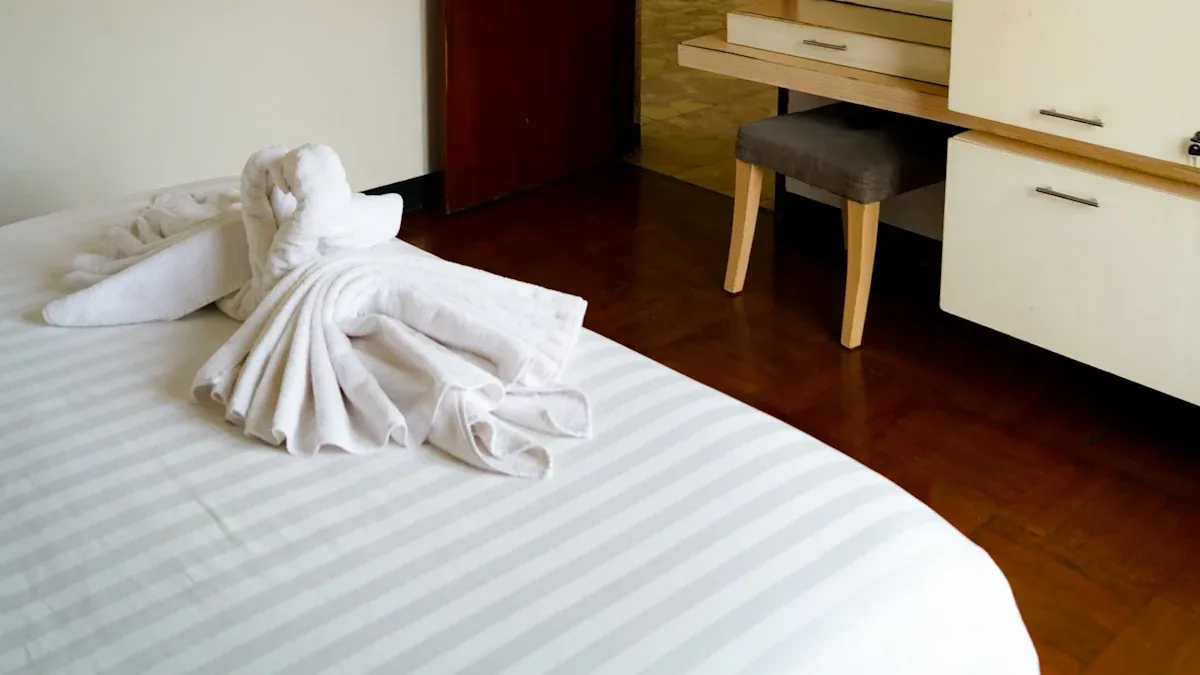
Quality checks do more than just ensure durability. They directly shape how guests feel about their stay. When hotels prioritize quality in their custom hotel furniture, they create memorable and comfortable experiences.
Ensuring Ergonomic Design Compliance
Guests expect comfort. Quality checks make sure furniture designs meet ergonomic standards. This means the furniture supports the body correctly and reduces strain. For example, a good chair provides proper back support. A well-designed bed offers a restful sleep. These checks confirm that each piece of furniture contributes to a welcoming and relaxing environment.
| Ergonomic Design Principle | Description | Benefit to Hotels |
|---|---|---|
| Comfort | Provides proper support to reduce strain on the body | Creates a welcoming and relaxing environment for guests |
| Functionality | Serves clear purposes and supports guest activities | Makes space more practical and efficient to use |
| Flexibility | Adapts to various guest preferences and needs | Accommodates a wider range of travelers and activities |
| Accessibility | Caters to all guests, regardless of physical ability | Improves inclusivity and usability for diverse travelers |
Maintaining Aesthetic Consistency
A hotel’s look tells a story. Quality checks ensure every piece of custom hotel furniture fits that story. They prevent visual inconsistencies. Imagine a modern hotel with old, rustic furniture. This mismatch confuses guests. It also weakens the hotel’s brand message. Consistent, well-maintained furniture makes sure the hotel’s branding remains clear. It gives guests a unified and pleasant visual experience. Without these checks, a hotel might accidentally use industrial-style chairs in a tranquil, tropical setting. This sends the wrong message.
Confirming Functional Performance
Furniture must work as intended. Quality checks confirm that all furniture performs its function reliably. Poor craftsmanship often leads to early repairs and replacements. This impacts guest comfort. For instance, a wobbly table or a drawer that sticks frustrates guests. These issues can lead to negative online reviews. Guests might even post pictures or videos. Quality checks prevent these common functional failures:
- Choosing furniture for looks over durability.
- Using delicate materials that damage easily.
- Employing low-quality construction.
- Selecting furniture with mismatched sizes.
By catching these problems early, hotels ensure their furniture always performs well. This keeps guests happy and protects the hotel’s reputation.
Why Quality Checks Uphold Safety Standards for Custom Hotel Furniture
Guest safety is paramount for any hotel. Quality checks are not just about comfort or looks; they are crucial for making sure custom hotel furniture meets strict safety standards. These checks protect guests from potential hazards and help hotels avoid serious liabilities.
InspectIng Structural Stability
Imagine a guest sitting on a wobbly chair or a dresser tipping over. Quality checks prevent these dangerous situations. They rigorously inspect furniture for structural stability. While some current dresser safety tests might seem inadequate because they do not truly reflect how children use furniture, quality checks go further. They ensure furniture can handle real-world use. Standards like ANSI/BIFMA provide comprehensive guidelines for furniture durability and safety. For example, BIFMA X5.1 for office chairs includes "torture tests" like 200,000 backrest cycles and drop testing from various heights. These tests confirm the furniture’s stability and prevent accidents, especially in busy hotel environments.
Verifying Fire Retardancy
Fire safety is a top concern in hotels. Quality checks ensure all custom furniture meets strict fire retardancy standards. This significantly reduces fire risks. The Crib 5 flame retardant standard, part of the BS 5852 regulations, is a key example. It tests if furniture can resist ignition from an open flame. If a material passes, it gets Crib 5 certification. This is vital for UK hotels and other markets. Other important standards include NFPA, ASTM, and ANSI, which set benchmarks for fire resistance and structural integrity. These checks help hotels comply with laws and keep guests safe.
Assuring Non-Toxic Materials
What you cannot see can still harm you. Quality checks also focus on the materials used in furniture, making sure they are non-toxic. Many common furniture materials contain harmful chemicals. These include toxic flame retardants, PFAS (used for stain treatments), antimicrobials, and volatile organic compounds (VOCs) like formaldehyde. These chemicals can escape into the air and dust, potentially causing serious health problems like cancers, developmental disorders, and respiratory issues. Organophosphorus flame retardants (OPFRs), for instance, can affect the endocrine system and lead to asthma. Quality checks ensure manufacturers use safer alternatives, protecting guests and staff from these hidden dangers.
Why Quality Checks Protect Brand Reputation in Hotel Furniture Customization
Quality checks are not just about safety or durability; they are crucial for a hotel’s image. These checks directly protect and enhance a hotel’s brand reputation. They ensure guests always associate the hotel with excellence and attention to detail.
Guaranteeing Consistent Quality Across Pieces
A hotel’s brand promise relies on consistency. Quality checks make sure every piece of custom hotel furniture meets the same high standards. From the lobby chairs to the guest room desks, each item should reflect the hotel’s commitment to quality. This consistency builds trust with guests. It reinforces the hotel’s brand message. When every piece looks and feels premium, guests notice the hotel’s dedication to their experience.
Preventing Negative Guest Feedback
Nobody wants to read a bad review about their hotel choice. Poor quality furniture often leads to negative guest feedback. A single negative review can actually scare away about 30 potential customers. Think about it: 94% of travelers avoid hotels with bad reviews, and 83% rely on reviews to make their booking decisions. For a hotel with a $125 average daily rate, just one negative review might mean losing over $15,000 each month. Four bad reviews? That number jumps to nearly $60,000 monthly. Annually, hotels with several negative reviews can face losses exceeding $700,000. These financial hits come from decreased bookings, lower occupancy, and the inability to charge premium prices. Negative reviews also hurt staff morale and increase marketing costs as hotels try to repair their image. Quality checks prevent these issues by ensuring furniture always meets guest expectations.
Reflecting High Hotel Standards
High-quality furniture communicates a hotel’s commitment to excellence. It shows guests that the hotel pays attention to every detail. This dedication to quality reinforces the hotel’s overall brand identity. It helps position the hotel as a premium choice. When guests see well-made, beautiful furniture, they feel valued. This positive impression strengthens the hotel’s reputation and encourages repeat visits.
Why Quality Checks Optimize Cost Efficiency for Custom Hotel Furniture
Quality checks are not just about preventing problems; they are a smart financial strategy. Hotels save significant money when they invest in thorough quality assurance for their custom furniture. These checks turn into direct cost savings.
Minimizing Rework and Returns
Poor quality furniture often leads to expensive rework or returns. Imagine receiving a large order of custom hotel furniture only to find defects. Fixing these issues costs time and money. It also delays installation. Quality checks catch these problems early in the production process. This prevents the need for costly repairs or shipping items back to the manufacturer. Early detection means fewer disruptions and a smoother project timeline.
Reducing Warranty Claims
When furniture fails prematurely, hotels face warranty claims. These claims can be a hassle. They involve paperwork, coordination, and often replacement costs. Robust quality checks ensure the furniture meets durability standards from the start. This significantly reduces the likelihood of defects appearing after installation. Fewer warranty claims mean less administrative burden and lower unexpected expenses for the hotel. It protects their budget.
Extending Furniture Lifespan
High-quality furniture simply lasts longer. Quality checks confirm the use of durable materials and strong construction methods. This extended lifespan means hotels do not need to replace their furniture as often. For hotel furniture customization, this translates into substantial long-term savings. They avoid frequent purchasing cycles and the associated costs of removal and installation. Investing in quality upfront ensures a better return on investment over many years.
Key Inspection Methods for Quality Assurance in Hotel Furniture Customization
Quality assurance for custom hotel furniture involves several critical inspection stages. These stages ensure every piece meets the hotel’s high standards. They catch potential problems before they become costly issues.
Pre-Production Sample Approval
Quality assurance begins with careful pre-production sample approval. You cannot rely on digital renderings alone. They do not show tactile qualities like fabric texture, finish sheen, or joint sturdiness. Always approve a physical sample. This serves as the ultimate quality assurance checkpoint. Without this physical validation, you risk your project budget. Define and approve physical samples for finishes, colorways, and branding elements early. This includes Pantone references, finish samples, and vector files for logos. Request and approve factory samples or 1:1 mock-ups for critical items. These include structural frames, finish samples, and upholstered test pieces. Confirm comfort, scale, and color in-situ when possible. This prevents surprises during installation.
In-Process Manufacturing Checks
Checks continue throughout the manufacturing process. These in-process inspections catch issues early. They prevent costly rework later. Inspectors perform product assembly checks. They ensure easy assembly and proper alignment of parts. A product functional check verifies all functions operate correctly. This adheres to client specifications. Stability tests check for wobbling. They place furniture on a flat surface. Fatigue tests involve repeated use to ensure durability. Static loading tests confirm the product withstands its nominal weight. Inspectors also check color specifications against Pantone codes. For wooden furniture, they verify moisture content. An odor check ensures no offensive smells. Dimensional checks confirm measurements match technical drawings. Initial Production Checks (IPC) and During Production Checks (DUPRO) are vital. They verify quality against specifications and materials.
Final Product Inspection
The final product inspection is a comprehensive review before shipment. Inspectors examine wood, metal, and other parts for quality. They check for warping or cracks. They also inspect fasteners and hardware. Assembly and joinery receive close attention. Inspectors look for tight joints and smooth operation of moving parts. They perform stability and durability tests. They apply pressure or sit on the furniture. This ensures it does not wobble or crack. Surface and finish inspection looks for scratches, dents, or uneven color. They check corners and edges for sharp points. Workmanship and measurements are verified. Inspectors use tape measures to confirm dimensions. Finally, they check packing and packaging. They ensure strong materials and clear labels. This prevents shipping damage.
Third-Party Quality Audits
Sometimes, hotels bring in outside experts to check their furniture. These are called third-party quality auditors. They offer an extra layer of assurance. These independent inspectors verify everything follows hospitality industry rules. They also make sure the project specifications are met. This includes stringent checks on furnishings and finishes. They do this through vendor checks, factory visits, and material sample verification.
Engaging these auditors ensures unbiased results. They have no personal stake in the audit’s outcome. This objectivity is very important. It helps identify any issues. It also provides valuable ideas for best practices. This improves internal processes and ensures compliance.
Third-party experts also protect the project schedule and budget. They can find design problems early. This includes things like brand standard differences or construction conflicts. Finding these early prevents costly delays and rework. They also act as a quality check for brand compliance. This reduces back-and-forth with corporate reviewers. It also speeds up approvals.
These reviewers assess the design from the user’s point of view. They think about how guests move around. They also consider staff operations and back-of-house access. This leads to smoother service and happier guests. Objective review reports give clear information for making decisions. They reduce disagreements and create a clear path forward for everyone involved. Beyond solving problems, these reviews often find ways to improve things. They can also suggest cost-effective changes. These changes add significant operational or experiential value to the hotel.
Why Selecting a Manufacturer with Robust QC is Essential for Hotel Furniture Customization
Choosing the right manufacturer for your custom hotel furniture is a critical decision. A manufacturer with strong quality control (QC) protocols ensures your investment delivers lasting value. This choice directly impacts the quality, safety, and longevity of your furniture.
Evaluating Quality Control Protocols
Robust quality control protocols in furniture manufacturing establish clear, comprehensive quality standards. These standards guide every part of the manufacturing process. They include meticulous material selection. This ensures materials meet strict requirements for longevity, appearance, and sustainability. Certifications often verify these materials. Vigilant quality control teams conduct thorough inspections. They base these inspections on measurable criteria. This helps them detect and fix flaws early. It ensures the quality of finished products and customer satisfaction.
Manufacturers should offer various quality assurance services. These include developing guidelines, training employees, and continuously improving manufacturing processes. They also perform quality assurance testing. This evaluates materials, components, and finished products for durability, safety, and overall quality. Quality inspection in manufacturing checks products at various stages. This includes raw materials, in-process monitoring, and final product inspections. Thorough documentation supports these checks. A detailed quality check involves visual inspections, measurements, and functional testing at every production stage. Finally, product inspection reviews finished furniture. This ensures it meets all quality standards and customer expectations. These processes cover assembly, finish, color, design, packaging, labeling, and marking.
Reviewing Certifications and Standards
Certifications offer proof of a manufacturer’s commitment to quality and responsible practices. For example, FSC Certification focuses on sustainability. It ensures wood products come from environmentally and socially responsible sources. This involves a complete chain of custody. AWI Certification from the Architectural Woodwork Institute sets standards for architectural woodwork. It helps manufacturers produce and install products according to proven industry standards. Look for CARB P2-compliant panels and FSC-certified wood. These are standard for eco-friendly and health-conscious materials. They ensure both durability and indoor air quality.
Working with certified manufacturers offers many benefits. They have a proven record of quality and service. They streamline production and delivery processes. This provides clear project timelines. They also comply with principles that enhance a hotel’s image. You can expect better, faster, and more economical delivery with less in-transit damage. These manufacturers often reduce environmental impact through sustainability efforts. They offer more durable finishes based on research. This leads to longer warranties. Faster and simpler re-ordering also results from improved processes.
Assessing Supplier Track Record
A manufacturer’s track record speaks volumes about their reliability. Always assess their past performance. Look for client testimonials and case studies. A strong history indicates consistent quality and dependable service. It shows they can deliver on promises. This helps you choose a partner who will meet your specific needs.
Quality checks are truly indispensable for the success of custom hotel furniture. Prioritizing quality assurance safeguards a hotel’s significant investment and consistently enhances guest satisfaction. Robust quality control is not just a step; it becomes a cornerstone of a hotel’s operational excellence. Ultimately, strategic quality checks ensure long-term value and protect the brand’s integrity for years to come.
Investing in thorough quality checks means investing in your hotel’s future.
FAQ
Why are quality checks important for custom hotel furniture?
Quality checks ensure furniture lasts longer. They keep guests safe and comfortable. These checks also protect the hotel’s good name. They make sure the hotel gets value for its money.
What happens if a hotel skips quality checks?
Skipping checks can lead to broken furniture. Guests might get hurt. The hotel could receive bad reviews. This costs more money in repairs and replacements.
Who performs quality checks on custom hotel furniture?
Manufacturers perform checks during production. Hotels also approve samples before production starts. Sometimes, independent third-party auditors conduct additional inspections.
How do quality checks save hotels money?
Quality checks prevent costly reworks and returns. They reduce warranty claims. Furniture lasts longer, so hotels replace it less often. This saves money over time.