
Every procurement decision is a balancing act between immediate aesthetic appeal and long-term financial performance. While the visual impact of a guestroom bathroom can significantly influence guest satisfaction scores, it is the underlying quality of the hotel vanity base that ultimately dictates the project’s Return on Investment (ROI). In a high-humidity, high-traffic environment, a poorly chosen material can lead to warping, mold, and premature failure, resulting in costly replacements and room downtime. But why does material selection in a hotel vanity base determine long-term ROI? This professional guide explores the critical relationship between material science, durability standards, and the total cost of ownership for modern luxury hotels.
What is a Hotel Vanity Base and How Does it Impact Lifecycle Costs?
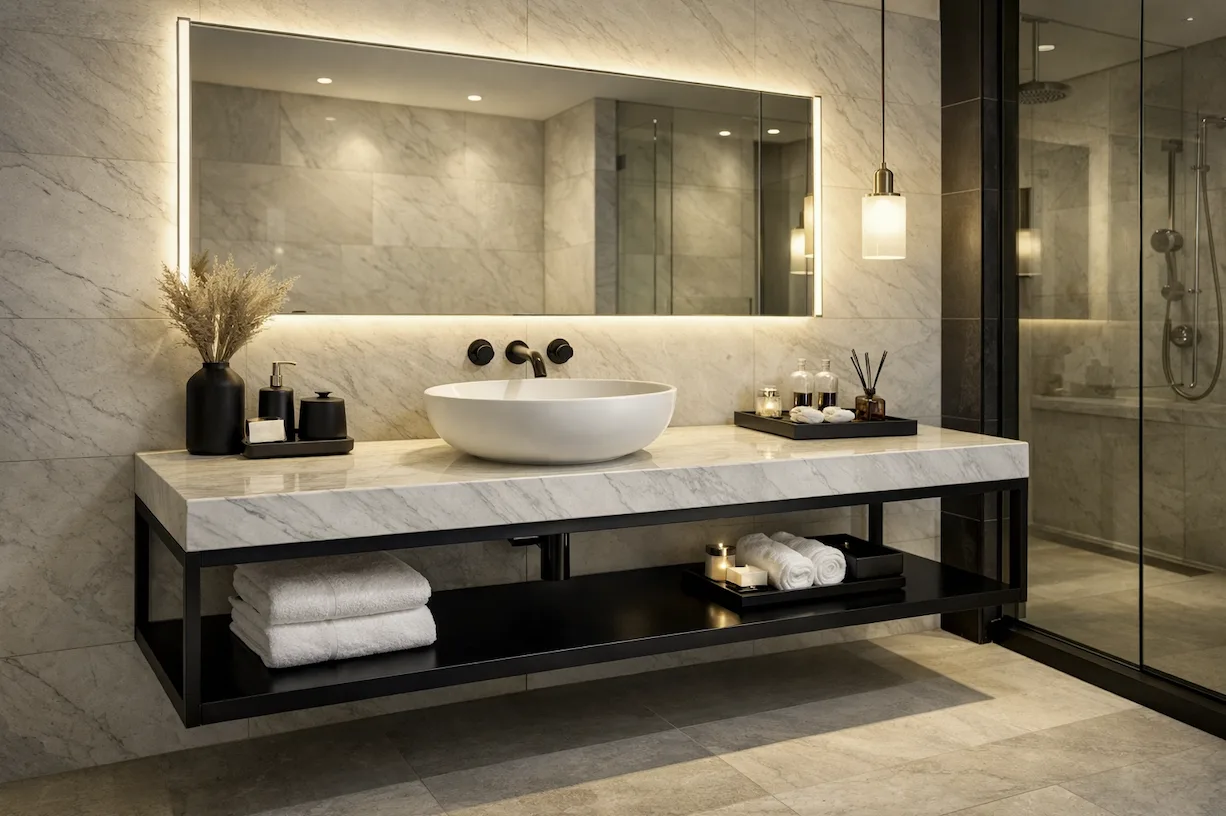
A hotel vanity base is the structural foundation of the bathroom’s most-used fixture. It supports the heavy countertop, houses the plumbing, and often provides essential storage for guests. In the context of FF&E (Furniture, Fixtures, and Equipment) bathroom vanity specifications, the base is the component most vulnerable to moisture-related degradation. When a vanity base fails, the entire unit—including the expensive stone top and sink—often needs to be removed, leading to a cascade of expenses.
The Hidden Costs of Low-Quality Materials
Choosing a budget-friendly material like standard MDF or particle board might seem like a cost-saving measure during the initial construction phase. However, these materials are notorious for absorbing moisture and swelling, often within the first 24 to 36 months of use. The true cost of a low-quality hotel vanity base includes:
1.Material Replacement: The cost of purchasing a new unit.
2.Labor Costs: The expense of hiring contractors to remove the old unit and install the new one.
3.Room Downtime: Perhaps the most significant cost, as a room out of service for a bathroom renovation generates zero revenue.
4.Guest Dissatisfaction: Visible damage to a vanity base can lead to negative reviews, directly impacting the hotel’s Average Daily Rate (ADR).
“In the hospitality industry, the cheapest option is often the most expensive over a ten-year horizon. A durable hotel vanity base is an investment in operational stability and brand reputation.” — Hospitality Procurement & Design Review
How to Compare Stainless Steel vs. Wood for Hotel Vanity ROI?
When evaluating stainless steel vs wood hotel vanity ROI, designers and owners must look beyond the initial price tag. Both materials offer distinct advantages, but their performance in a commercial bathroom environment varies significantly. But which material offers the best long-term value for hotel vanity bases?
The Case for 304-Grade Stainless Steel
For modern luxury hotels, 304-grade stainless steel has emerged as the gold standard for moisture-resistant vanity bases for hospitality. Its non-porous surface is naturally resistant to rust, corrosion, and mold, making it ideal for the high-humidity conditions of a guestroom bathroom.
•Lifespan: A high-quality stainless steel base can easily last 15 to 20 years, outliving multiple cycles of soft goods renovations.
•Hygiene: It is exceptionally easy to sanitize, a critical factor in the post-pandemic hospitality landscape.
•Maintenance: Requires minimal upkeep beyond regular wiping, reducing the labor burden on housekeeping teams.
The Aesthetic Appeal of Solid Wood and Marine-Grade Plywood
While wood offers a warm, “spa-like” aesthetic, it requires careful selection to ensure durability. Marine-grade plywood is a superior alternative to standard wood products, offering enhanced water resistance through specialized adhesives and layering. However, even the best wood products require periodic maintenance and are more susceptible to damage from aggressive cleaning chemicals.
| Material | Initial Cost | Maintenance Level | Estimated Lifespan | ROI Rating |
|---|---|---|---|---|
|
304 Stainless Steel |
High |
Low |
15-20+ Years |
Excellent |
|
Marine-Grade Plywood |
Medium |
Medium |
8-12 Years |
Good |
|
Solid Wood (Oak/Teak) |
Very High |
High |
7-10 Years |
Fair |
|
MDF / Particle Board |
Low |
Very High |
2-4 Years |
Poor |
Why are Durability Standards Critical for High-Traffic Bathroom Vanity Durability?
To ensure a positive ROI, hotel vanity bases must meet rigorous industry standards for strength and moisture resistance. But what are the key durability standards for commercial-grade bathroom vanity bases?
Understanding ANSI, ASTM, and ISO Requirements
Specifying products that comply with recognized standards is the best way to guarantee long-term performance. Key standards include:
1.ANSI/KCMA A161.1: This standard establishes performance requirements for kitchen and bath cabinets, including tests for structural integrity and finish durability.
2.ASTM D1037: Used to evaluate the water absorption and thickness swelling of wood-base fiber and particle panel materials.
3.ISO 7170: An international standard that determines the strength and durability of storage units, ensuring they can withstand the rigors of daily guest use.
By adhering to these FF&E bathroom vanity specifications, hotel owners can mitigate the risk of premature failure and ensure their high-traffic bathroom vanity durability meets the demands of a 24/7 hospitality operation.
How to Maximize ROI Through Low-Maintenance Hotel Bathroom Furniture?
In the hospitality industry, the true cost of a product is not its purchase price, but its total cost of ownership over its entire lifecycle. Low-maintenance hotel bathroom furniture is a key driver of operational efficiency and long-term profitability. But how to maximize ROI through the selection of hotel vanity bases that require minimal upkeep?
The Impact of Maintenance on Housekeeping Efficiency
Housekeeping is one of the largest operational expenses for any hotel. A hotel vanity base that is difficult to clean or prone to staining can add minutes to the cleaning time for each room. Over hundreds of rooms and thousands of cleanings, these extra minutes translate into significant labor costs.
•Seamless Designs: Choosing a hotel vanity base with a seamless or minimalist design reduces the number of crevices where dirt and bacteria can accumulate.
•Chemical Resistance: Materials like 304-grade stainless steel and high-quality powder-coated aluminum are resistant to the aggressive cleaning chemicals used in hotels, preventing the finish from dulling or peeling over time.
•Easy-to-Wipe Surfaces: Non-porous materials allow for quick and effective cleaning, ensuring the bathroom always looks pristine for the next guest.
“A low-maintenance hotel vanity base is a gift to the housekeeping department. It ensures the room is turned over quickly and maintains its luxury appeal without the need for specialized cleaning protocols.” — Hospitality Operations & Management Journal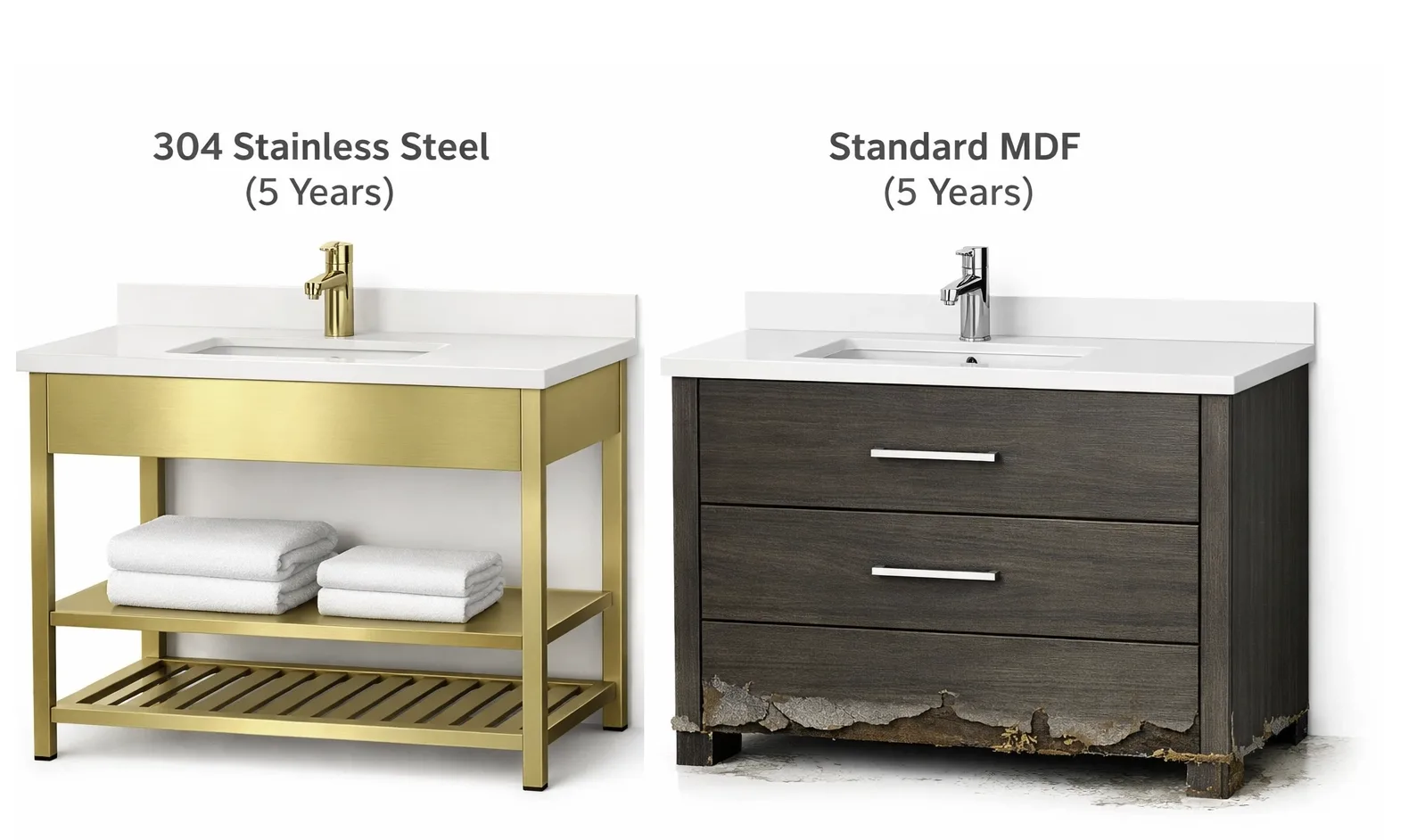
Why is ADA Compliance a Critical Factor in Hotel Vanity ROI?
In many regions, including the United States, ADA (Americans with Disabilities Act) compliance is a legal requirement for a specific percentage of hotel guestrooms. Failing to meet these standards can lead to significant legal liabilities and costly retrofitting. But how does ADA compliance impact the ROI of hotel vanity bases?
The Financial Benefits of Inclusive Design
An ADA compliant luxury vanity base is not just a legal necessity; it is a smart business decision. By designing for accessibility from the start, hotels can:
1.Avoid Legal Risks: Compliance with ADA standards protects the hotel from potential lawsuits and fines.
2.Attract a Wider Audience: Inclusive design makes the hotel more attractive to travelers with disabilities, a growing and loyal market segment.
3.Future-Proof the Property: Designing for accessibility ensures the guestrooms remain compliant with evolving regulations, preventing the need for expensive renovations in the future.
What are the Step-by-Step Stages of a Hotel Bathroom Renovation Cost-Benefit Analysis?
Before embarking on a renovation, it is essential to conduct a thorough hotel bathroom renovation cost-benefit analysis. This process helps owners and managers understand the long-term financial impact of their material choices. But how to conduct a cost-benefit analysis for hotel vanity bases?
1.Calculate Initial Costs: Include the purchase price, shipping, and installation labor for each material option.
2.Estimate Maintenance Expenses: Factor in the cost of cleaning supplies and the labor time required for daily maintenance over a ten-year period.
3.Project Replacement Cycles: Based on the material’s durability, estimate how many times the hotel vanity base will need to be replaced over the next 20 years.
4.Account for Room Downtime: Calculate the lost revenue for each day a room is out of service for a vanity replacement.
5.Evaluate Guest Satisfaction Impact: Consider how the material’s appearance and durability will affect guest reviews and the hotel’s ADR.
6.Determine Total Cost of Ownership: Sum all costs over a 20-year horizon to identify the material that offers the best long-term ROI.
FAQ: Common Questions About Hotel Vanity Base ROI
What is the Most Durable Material for a Hotel Vanity Base?
304-grade stainless steel is widely considered the most durable material for a hotel vanity base. Its resistance to rust, corrosion, and moisture makes it ideal for the high-humidity environment of a hotel bathroom, ensuring a long lifespan and a high ROI.
How Does Material Selection Impact Hotel Bathroom Renovation Costs?
Material selection directly impacts both the initial and long-term costs of a hotel bathroom renovation. While materials like MDF are cheaper upfront, their short lifespan and frequent replacement costs lead to a higher total cost of ownership compared to durable materials like stainless steel or marine-grade plywood.
Why is Moisture Resistance Critical for Hospitality Vanity Bases?
In a hotel bathroom, moisture-resistant vanity bases for hospitality are essential to prevent warping, swelling, and mold growth. These issues not only damage the vanity’s appearance but also compromise its structural integrity, leading to premature failure and costly replacements.
Can a Luxury Hotel Vanity Base be Both Stylish and Durable?
Yes, modern manufacturing techniques allow for hotel vanity bases that are both aesthetically stunning and exceptionally durable. For example, PVD-coated stainless steel can mimic the look of brushed gold or matte black while providing the superior moisture resistance of metal.
How Often Should a Hotel Replace Its Vanity Bases?
The replacement cycle for hotel vanity bases depends on the material quality and maintenance. High-quality stainless steel bases can last 15-20 years, while lower-quality wood or MDF bases may need replacement every 3-5 years. Choosing durable materials can significantly extend the replacement cycle and improve ROI
TaisenFurniture Manufacturer
Choosing the right hotel vanity base is a critical decision that impacts the aesthetic, functional, and legal quality of your guestroom bathroom. By selecting high-quality materials like 304 stainless steel, prioritizing modern design trends like floating styles, and ensuring ADA compliance, you can create a bathroom space that is both luxurious and inclusive. Whether you are designing a boutique urban hotel or a sprawling luxury resort, the right hotel vanity bases will serve as a foundational element of your guest’s experience.
For more information on different brands of hotel furniture and fixtures, visit our Products Page or explore our latest News and Industry Insights. If you have specific questions about selecting the right hotel vanity base for your next project, feel free to Contact Our Technical Team for expert guidance.


