
There is no universal “standard room size” across different cities or hotels. Rooms labeled as “standard” or “deluxe” can vary significantly in actual size. These terms are primarily marketing labels rather than objective measurements.
As a result, relying solely on room names makes it difficult to judge how spacious a room truly is and can often lead to mismatched expectations. In contrast, the actual room size—measured in square feet or square meters—is a far more reliable indicator. By focusing on concrete size data rather than names, travelers can better understand the space and make more accurate comparisons between hotels.
This guide is designed to help readers find and interpret room size information, and more importantly, to visualize what those numbers actually mean. By turning abstract figures into a clear mental image, you can make smarter booking decisions and avoid disappointment caused by rooms that feel smaller than expected.
Star Ratings Don’t Determine Room Size
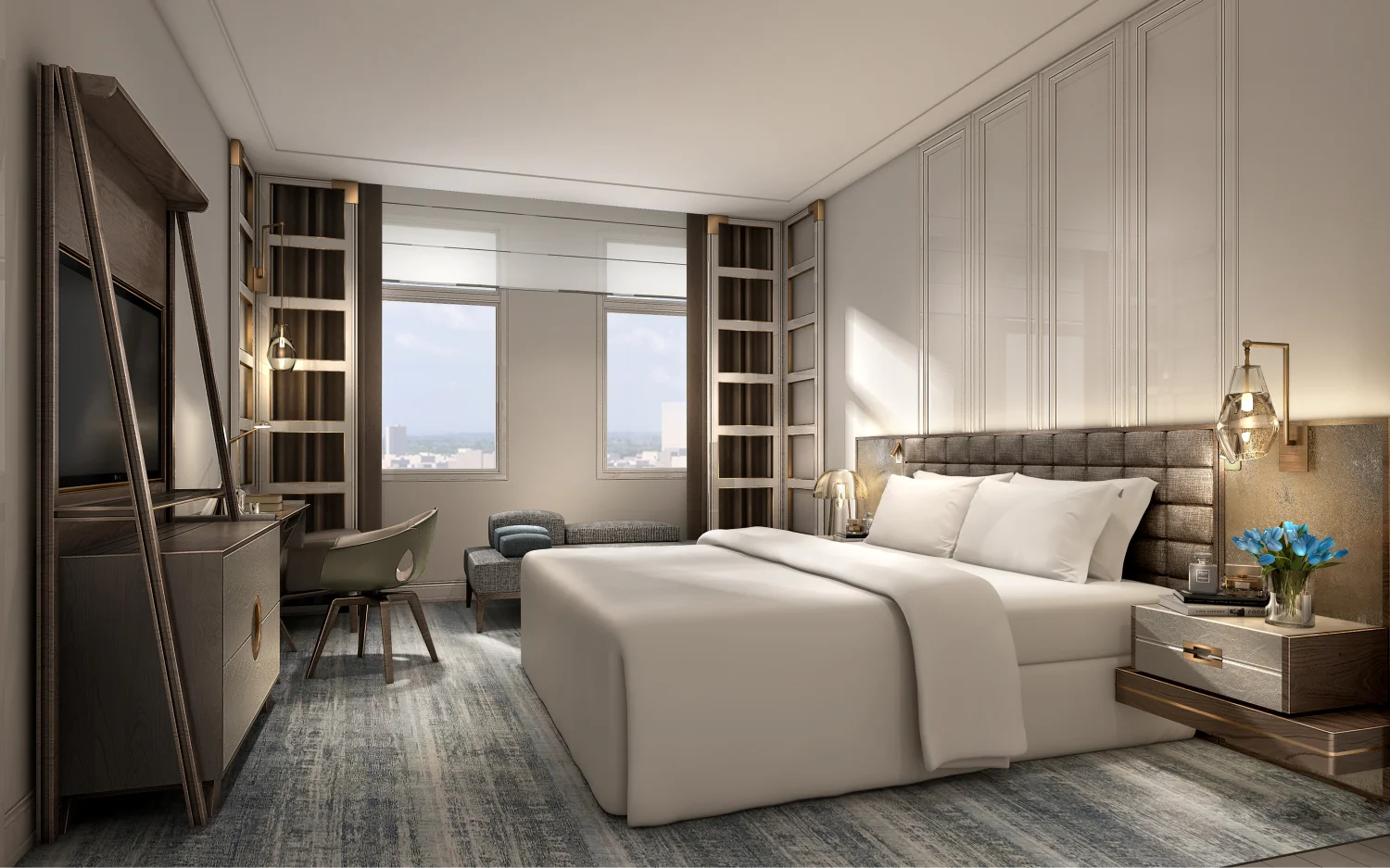
Many people assume that higher-rated hotels offer larger rooms. In reality, the most important factor influencing room size is the hotel’s location and local real estate costs. In densely populated and expensive cities such as New York, Paris, or Tokyo, space is limited, so hotel rooms are often designed to be more compact to maximize efficiency.
This explains why hotel rooms in many European cities—especially in historic centers—tend to be smaller. With the same budget, the amount of space you get can vary greatly depending on the location. For example, in central London, you may only be able to book a relatively small room, while in cities with more available land, such as Orlando or Las Vegas, you can often enjoy a much larger space.
Essentially, hotels in different locations offer different value propositions. In major cities, convenience and location are the priority, while in less dense areas, spacious rooms themselves become a key selling point.
Therefore, even a high star rating does not guarantee a larger room. The most reliable way to avoid unmet expectations is to check the actual room size, rather than relying on star ratings or room names alone.
Setting Expectations Based on Hotel Category
In addition to location, a hotel’s positioning or category can help estimate room size. Different types of hotels tend to follow general size ranges, providing a useful reference point when booking.
Budget hotels typically offer smaller, functional rooms designed for basic needs such as sleeping and showering. Mid-range hotels provide more space and comfort, allowing for additional furniture and better usability. High-end hotels, on the other hand, treat space as part of the experience, offering larger rooms that often include separate areas for relaxing, working, or entertaining.
Overall, room size generally increases with hotel category. However, it’s important to note that terms like “superior” or “deluxe” are often used as marketing language and may not reflect actual size differences.
For this reason, while hotel category can serve as a guideline, the most reliable indicator remains the actual room size.
Be Cautious of Marketing Terms Like “Superior” or “Deluxe”
When browsing hotel listings, you’ll often encounter terms such as “superior,” “deluxe,” or “executive.” While these labels sound more upscale, they have no standardized definition. Hotels are free to name their rooms however they choose.
In some cases, a “deluxe” room may be slightly larger; in others, it may simply be located on a higher floor or offer upgraded amenities, without any increase in size. In fact, king rooms and double rooms are often identical in size—the only difference is the bed configuration.
Suites, however, are more clearly defined. A “junior suite” typically consists of a larger open-plan room that combines sleeping and living areas, while a true suite includes at least two separate spaces, such as a bedroom and a living room divided by walls or doors.
Because these terms can be misleading, the best approach is to focus on objective details: the actual room size and the layout. If a hotel takes pride in its space, it will usually list the exact dimensions. If not, it’s worth taking a closer look.
More importantly, understanding what different sizes feel like in real life is key to making confident booking decisions.
Turning Square Footage Into Real Space
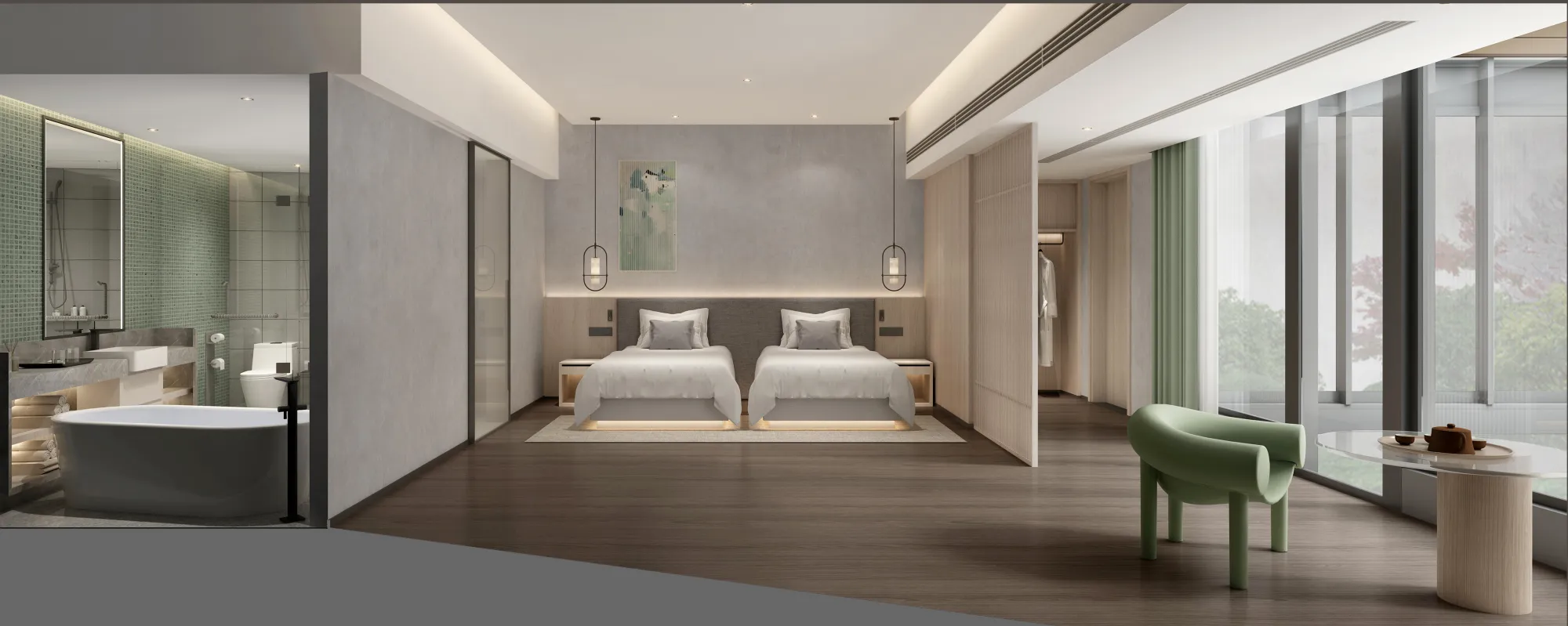
When you see a room size listed online, the number itself can feel abstract. The key is to relate it to familiar spaces, such as your bedroom or living room, to better understand what it means.
Rooms under 200 square feet (about 18.5 square meters) are considered compact and are best suited for short stays or solo travelers. Rooms between 300 and 350 square feet (28–32 square meters) are much more comfortable, comparable to a spacious master bedroom, and suitable for two people without feeling cramped.
Once a room exceeds 400 square feet (about 37 square meters), it enters the realm of luxury or apartment-style living, offering separate areas for sleeping and relaxing. These spaces are ideal for longer stays or travelers who value extra room.
Ultimately, understanding hotel room size is not just about numbers—it’s about being able to visualize the space and determine whether it fits your needs.
Special Room Types
Beyond standard king or twin rooms, certain travel needs come with unique room types, each with its own design considerations.
Accessible rooms are built according to specific regulations, ensuring wheelchair accessibility. They typically feature wider pathways, larger turning spaces, and bathrooms equipped with grab bars. While they are often more spacious, their primary purpose is accessibility rather than luxury.
Family rooms, on the other hand, have no universal definition. Some hotels offer larger single rooms with multiple beds or sofa beds, while others provide connecting rooms. It’s important to confirm the layout and size before booking.
At the opposite end of the spectrum, micro hotels are becoming increasingly popular in dense urban areas. These rooms are intentionally small but efficiently designed, catering to travelers who prioritize location and affordability over space.
How to Book the Right Hotel Room
-
Focus on location, not just price or star rating
-
Always check the actual room size
-
Learn to visualize the space
-
Pay attention to layout, not just square footage
-
Choose based on your travel needs
FAQ
Q1: Why do hotel rooms look smaller than in photos?
Because hotels often use wide-angle lenses and carefully staged angles to make rooms appear larger. The most reliable way to judge size is by checking the actual square footage and viewing real guest photos.
Q2: Why are hotel rooms smaller in cities like Tokyo or New York?
Due to high land costs and population density, hotels in these cities maximize space efficiency, resulting in more compact rooms.
Q3: Is a “deluxe room” always larger than a standard room?
Not necessarily. “Deluxe” is a marketing term and may refer to better views, higher floors, or upgraded amenities rather than increased size.
About Our Hotel Furniture Solutions
Taisen’s Hotel Cabinets collection offers a wide range of high-quality storage solutions tailored for the global hospitality industry. Our product line includes hotel refrigerator cabinets, microwave cabinets, and multifunctional hotel furniture—each designed to meet the strict standards of leading hotel brands such as Accor, Hilton, Marriott, IHG, and Wyndham.


