
Selecting the best materials for durable hotel furniture is a critical decision that determines the operational lifespan, financial ROI, and safety profile of commercial hospitality environments. High-traffic hospitality settings demand specialized substrate selection, heavy-duty structural integrity, and resilient surface treatments capable of withstanding continuous guest turnover. This technical guide evaluates the mechanical properties, commercial performance, and structural standards of premium hospitality materials to assist procurement managers and interior designers in optimizing asset longevity.
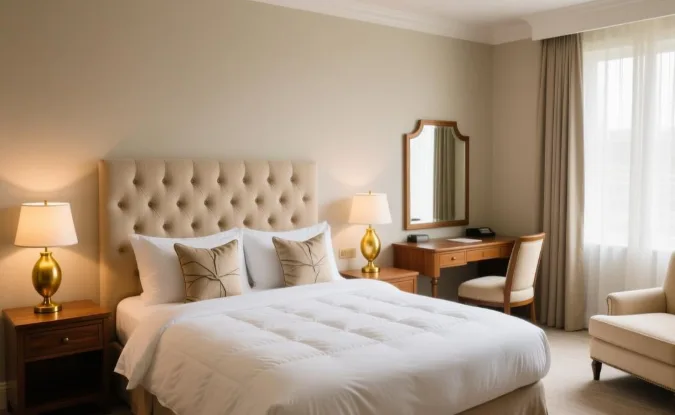
Comprehensive Analysis of Best Materials for Durable Hotel Furniture
Solid Wood and Structural Framing Standards
Solid wood remains the industry benchmark for heavy-duty structural frames within premium guestroom furniture arrangements. Hardwood species, such as kiln-dried ash, oak, and beech, provide excellent structural density and superior screw-holding capacity, preventing joint failure under dynamic loads. To ensure dimensional stability, structural timber must undergo precise kiln-drying processes to achieve a moisture content level between 6% and 8%. This moisture management prevents warping, checking, and splitting when furniture is installed in fluctuating climate conditions. For exposed elements, specialized polyurethane topcoats are required to provide moisture resistance and protection against chemical cleaning agents.
High-Performance Engineered Wood and Overlays
Medium-density fiberboard (MDF) and high-density particleboard serve as the core structural substrates for high-wear hotel project casegoods surfaces. These engineered wood products exhibit uniform density, eliminating natural weak points like knots or grain deviations found in solid timber. To achieve commercial-grade durability, these substrates are bonded under intense thermal pressure with High-Pressure Laminates (HPL) or architectural wood veneers. Modern contract furniture manufacturing utilizes polyurethane (PUR) hot-melt adhesive technologies to seal edges, creating a highly impermeable barrier against moisture infiltration. This engineering prevention eliminates edge delamination, a primary cause of aesthetic deterioration in high-humidity geographic locations.
Heavy-Duty Metals and Architectural Hardware
Integrating architectural metals into casegoods and seating frames significantly extends the operational lifespan of high-density hospitality installations. Carbon steel and extruded aluminum alloys serve as the foundation for modern hotel chair frames, providing excellent tensile strength without adding excessive weight. These metal components receive electrostatic powder coatings or architectural plating to guarantee superior scratch resistance and prevent oxidation. Furthermore, heavy-duty commercial hardware, including full-extension ball-bearing drawer glides and 270-degree pivot hinges, must be specified to withstand repetitive impacts and high-velocity physical use by guests.
| Material Substrate Type | Mechanical Density / Strength | Primary Hospitality Application | Key Operational Longevity Benefit |
|---|---|---|---|
| Kiln-Dried Hardwood | High Tensile & Compressive Strength | Structural Framework, Trim, Base Rails | Exceptional structural integrity; prevents joint separation |
| Commercial-Grade MDF | Uniform Density; Flat Profile | Hotel project casegoods, Desktops, Headboards | Elimination of natural warping; highly stable substrate for HPL |
| Extruded Aluminum Alloy | Lightweight, High Yield Strength | Performance Seating, External Frame Accents | Rustproof; excellent structural fatigue resistance |
| High-Pressure Laminate (HPL) | High Surface Impact & Scratch Resistance | Work Surfaces, Luggage Benches, Nightstands | Impermeable to moisture; high chemical cleaning resistance |
Advanced Performance Metrics of Best Materials for Durable Hotel Furniture
Quantifiable performance metrics must guide commercial procurement to ensure selected materials meet the rigorous demands of hospitality spaces. Textile applications for upholstered seating, such as lounge chairs and desk chairs, must utilize the Wyzenbeek method to verify surface abrasion resistance. Commercial contract fabrics require a minimum threshold of 50,000 double rubs, whereas heavy-duty high-traffic zones demand fabrics exceeding 100,000 double rubs. Additionally, surface finishes applied to casegoods must strictly adhere to the ASTM D3359 cross-hatch adhesion standard to confirm that protective coatings will not peel or chip under consistent mechanical friction.
Fire safety and chemical compliance are essential regulatory criteria when evaluating the best materials for durable hotel furniture. Structural substrates and interior filling materials must comply with local fire safety ordinances, such as the California Technical Bulletin 117-2013 (TB 117-2013) standards for flame retardancy in upholstered furniture. Surface coatings must also satisfy stringent indoor air quality criteria by minimizing volatile organic compound emission levels. Specifying low-VOC waterborne finishes or UV-curable coatings protects guest health and qualifies properties for international green building recognitions.
| Performance Attribute | Evaluation Method / Test Standard | Minimum Commercial Threshold | Operational Impact on Hotel Assets |
|---|---|---|---|
| Surface Abrasion | Wyzenbeek Method (ASTM D4157) | 50,000 to 100,000 Double Rubs | Prevents fabric thinning, pilling, and premature tearing |
| Finish Adhesion | Cross-Hatch Tape Test (ASTM D3359) | 4B to 5B Rating Classification | Eliminates finish peeling caused by sanitizing chemicals |
| Flame Retardancy | California TB 117-2013 / NFPA 260 | Class 1 Pass Certification | Reduces fire propagation risks; ensures building compliance |
| Formaldehyde Emission | CARB Phase 2 / EPA TSCA Title VI | ≤ 0.05 parts per million (ppm) | Guarantees superior indoor air quality for hotel guests |
Strategic Procurement Checklist for Sustainable Hospitality Furnishings
- Verify Sustainable Substrate Sourcing: Confirm all timber and engineered wood products are certified by the Forest Stewardship Council (FSC) global database, ensuring responsible forest management and environmental compliance.
- Mandate Polyurethane Edge Banding: Specify the use of reactive PUR hot-melt adhesives on all exposed edges of hotel project casegoods to prevent moisture entry and subsequent swelling.
- Select Commercial-Grade Hardware: Require contract-grade, heavy-duty soft-close drawer runners and integrated structural fasteners that are rated for a minimum of 100,000 open-close operational cycles.
- Implement High-Performance Finishes: Utilize specialized acid-catalyzed lacquers or polyurethane topcoats that possess certified resistance to alcohol, hot liquids, and commercial chemical sanitizers.
- Enforce Structural Joinery Standards: Ensure all critical structural weight-bearing points employ double-doweled joinery, glued joints, and heavy-duty corner blocks screwed directly into the frame.
When designing high-use guestrooms, a systemic approach matching material properties to specific environmental hazards is necessary. Luggage benches and entry drop zones require impact-resistant HPL or natural stone tops to withstand the frequent mechanical impacts of heavy baggage. Desk surfaces must feature scratch-resistant surfaces to counter constant contact with laptops and personal items. By establishing a robust material selection matrix, hotel operators protect their capital investments, reduce recurring maintenance expenses, and maintain visual brand consistency over a typical seven-to-ten-year property renovation cycle.
To ensure long-term commercial durability, sourcing from experienced hospitality manufacturers is vital. Contract furniture providers utilize state-of-the-art computer-controlled machinery and specialized dust-free finish rooms to apply uniform coatings. These advanced fabrication methods guarantee structural consistency across high-volume production orders. Partnering with professional manufacturers helps hoteliers secure durable custom components that meet precise structural guidelines. Ultimately, selecting the best materials for durable hotel furniture reduces total lifetime asset replacement costs.
Frequently Asked Questions
What is the expected lifespan of commercial-grade hotel furniture?
High-quality contract furniture engineered with premium substrates typically maintains a functional lifespan of seven to ten years in active commercial environments. Achieving this longevity requires specifying kiln-dried hardwood frames, high-pressure laminates, and performance textiles rated for heavy-duty commercial use. Implementing proactive maintenance and selecting superior materials significantly reduces premature asset replacement costs for hotel operators.
Why is HPL preferred over standard wood veneer for midscale hotel project casegoods?
High-Pressure Laminate provides superior scratch, impact, and moisture resistance compared to natural wood veneer, making it ideal for high-traffic surfaces. HPL features dense, resin-impregnated layers that withstand rigorous cleaning protocols and physical impacts from heavy guest luggage. This material eliminates the risk of surface scratching and deep wood denting, reducing ongoing room maintenance.
How do contract furniture flame retardancy standards differ from residential furniture regulations?
Commercial hospitality installations must strictly adhere to rigorous flammability standards, including California TB 117-2013 and NFPA 260, which mandate high resistance to cigarette ignition and open flames. Residential furnishings are not legally bound to these strict commercial testing protocols. Specifying certified contract materials ensures full regulatory compliance and protects hospitality properties from severe fire hazards.
What structural joinery techniques are essential for durable hotel chair production?
Durable hospitality seating requires heavy-duty double-doweled joints, mortise-and-tenon construction, and solid wood corner blocks that are both glued and screwed into the main frame. These advanced reinforcement methods distribute structural weight evenly and prevent joint failure caused by repetitive dynamic forces. Avoid relying solely on metal staples or basic screws for weight-bearing components.
How does moisture content in solid wood affect the durability of hotel furniture?
Solid wood components must be kiln-dried to a precise moisture content level between 6% and 8% before manufacturing to guarantee dimensional stability. If moisture levels are too high, the wood will naturally shrink, warp, or crack when exposed to air-conditioned guestrooms. Maintaining this strict technical standard prevents structural deformation and guarantees long-term product durability.


