
Many hoteliers wonder if affordable Hotel Guest Room Furniture from China means low quality. The answer is no. This affordability often reflects efficient manufacturing processes and competitive pricing. Ningbo Taisen Furniture, a leading Ningbo China furniture factory, exemplifies this. They provide high-quality hotel project furniture. This post guides hoteliers in finding quality hotel furniture within their budget. They can source durable Luxury Hotel Guestroom Furniture without compromising standards.
Key Takeaways
- Affordable hotel furniture from China can be good quality. It is often cost-efficient due to smart manufacturing.
- Look for strong materials like solid wood or metal. Check for good construction and durable finishes to ensure furniture lasts.
- Always check for certifications like ISO 9001 or BIFMA. These show the furniture meets important quality and safety rules.
- Carefully check suppliers and ask for samples. This helps you see the quality before you buy a lot of furniture.
- Buying furniture in large amounts can save money. Durable furniture also saves money over time because it lasts longer.
Understanding “Cheap” in Hotel Guest Room Furniture Sourcing
The term “cheap” often carries negative connotations. However, in the context of sourcing Hotel Guest Room Furniture from China, it frequently refers to cost-efficiency rather than poor quality. Hoteliers must understand this distinction to make informed purchasing decisions.
Defining Cost-Efficiency in Chinese Manufacturing
Cost-efficiency in Chinese manufacturing stems from several factors. Many factories operate on a large scale, benefiting from economies of scale. They also have access to a robust supply chain for raw materials and components. This allows them to produce goods at a lower per-unit cost. For example, suppliers often engage in factory direct sales. This approach significantly reduces middleman costs. They trade directly at factory wholesale prices, further enhancing affordability for buyers. Companies like Shangdian have also revolutionized production. They combine sophisticated assembly lines with traditional craftsmanship. This unique method incorporates employee personality while meeting high-volume demands. It efficiently addresses large-scale production and tight timelines.
Distinguishing Value from Substandard Hotel Guest Room Furniture
Distinguishing true value from substandard products requires careful observation. Substandard furniture often shows immediate signs of poor craftsmanship. Hoteliers should look for inconsistent finishing, visible scratches, dents, or non-uniform upholstery colors. Durability is another key indicator. Low-quality materials, such as MDF instead of solid hardwoods, or aluminum instead of stainless steel for frames, suggest a lack of longevity. Cushions with low foam density (below 1.8 lbs/ft³) will quickly sag. Safety standards are also crucial. Substandard items may have sharp edges, loose parts, or weak joints. They might not comply with fire-resistant material requirements. Functionality issues, like drawers that do not open smoothly or wobbly tables, also point to poor quality.
How Chinese Suppliers Offer Competitive Pricing
Chinese suppliers achieve competitive pricing through various strategic advantages. Their extensive manufacturing infrastructure supports high-volume production. This reduces the cost per unit. They also benefit from efficient labor costs and a well-developed logistics network. This network streamlines shipping and reduces transportation expenses. Furthermore, many suppliers specialize in specific types of furniture. This specialization leads to greater efficiency and expertise. They can optimize their production processes for particular items. This allows them to offer attractive prices without compromising on the quality of materials or construction.
Key Quality Factors for Budget Hotel Guest Room Furniture
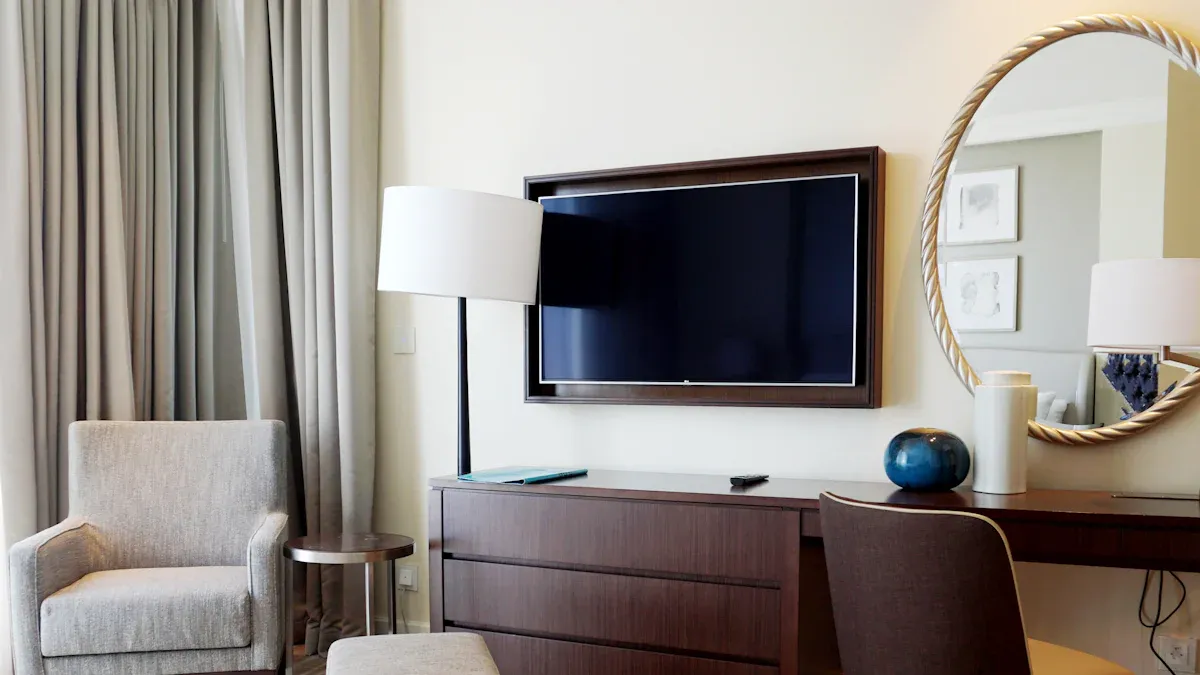
Hoteliers seeking affordable Hotel Guest Room Furniture must prioritize specific quality factors. These factors ensure durability and guest satisfaction, even with a budget-friendly price tag. Focusing on materials, construction, and finishes helps hoteliers make smart choices.
Material Selection for Durable Hotel Guest Room Furniture
Choosing the right materials forms the foundation of durable furniture. Hoteliers should look for materials known for strength and longevity. Solid wood, such as oak, maple, cherry, teak, or mahogany, offers exceptional strength and resists scratches and dents. Investing in high-quality wood furniture reduces replacement frequency, leading to long-term cost savings. Metal, like steel or aluminum, provides excellent support for frames and accents. It adds stability, strength, and lightweight properties. Metal also resists corrosion and cleans easily.
For upholstery, hoteliers need stain-resistant, easy-to-clean, and fade-resistant fabrics. High-quality upholstery extends furniture lifespan and maintains its appearance. Leather is durable and simple to maintain. Microfiber resists stains and cleans easily. Other options include velvet, organic cotton, hemp, and recycled polyester. Bamboo offers a fast-growing, renewable, and durable choice. Reclaimed wood provides a unique look and reduces demand for new timber. Laminate is cost-effective and easy to maintain, suitable for budget-conscious hotels. Plastic is lightweight and durable, practical for high-traffic areas. For frequently used surfaces like tabletops and drawer fronts, consider resilient options. Quartz or high-pressure laminate offer scratch resistance and easy maintenance. The Architectural Woodwork Institute (AWI) approves specific materials for casegoods, ensuring durability.
Construction Methods and Structural Integrity of Hotel Guest Room Furniture
The way manufacturers build furniture directly impacts its structural integrity and longevity. Solid wood construction, using hardwoods like oak, maple, or walnut, provides exceptional strength. It resists daily wear, unlike particle boards or MDF, which damage easily. Metal framing and reinforcements, especially powder-coated ones, add support and resist wear and corrosion. This enhances weight tolerance and overall durability. Commercial-grade upholstery materials, such as vinyl, treated leather, or specialized fabrics, ensure both comfort and longevity in high-traffic areas. These materials resist stains and fading and clean easily.
Simple and smart construction also contributes to durability. Furnishings with clean lines and fewer moving parts are less prone to damage. Overly ornate pieces often have fragile joints. A minimalist approach keeps furniture intact and easy to maintain. Furniture designed with modularity or replaceable parts, like detachable legs or panels, allows for easy maintenance. This extends the furniture’s lifecycle and reduces costs. Superior craftsmanship, combining time-honored joinery techniques with modern manufacturing processes, guarantees structural integrity. For wood products, the AWI sets quality benchmarks. Custom Grade is typically recommended for high-quality wooden hotel furniture. Premium Grade is reserved for high-use and high-profile items, ensuring the highest quality materials and production.
Importance of Durable Finishes for Hotel Guest Room Furniture
Durable finishes protect furniture surfaces from daily wear and tear. They resist scratches, spills, and moisture, maintaining the furniture’s appearance over time. Polyurethane finish is highly durable and moisture-resistant. It stands as an excellent choice for high-traffic areas like hotel guest rooms. Professional hotel furniture refinishing experts often recommend it for its ability to withstand daily wear, scratches, stains, and spills. A high-quality lacquer finish also provides protection against scratches, stains, and spills. It offers moderate durability, dries quickly, and achieves a sleek, modern look.
For casegoods, finishes like veneer offer a natural look with moderate wear protection. Laminate finishes provide different levels of protection. High-Pressure (HP) Laminate is ideal for horizontal surfaces that endure heavy impacts. Low-Pressure (LP) Laminate suits vertical surfaces with less wear. For metal finishes, baked-on or powder coatings are more durable than painted surfaces. They resist chipping and wear due to heat treatment. Applying eco-friendly and protective finishes helps furniture resist scratches, spills, and wear in high-traffic areas.
Certifications and Standards for Hotel Guest Room Furniture
Certifications and standards play a crucial role in ensuring the quality and safety of Hotel Guest Room Furniture. These guidelines provide a clear framework for manufacturers. They also give hoteliers confidence in their purchases. Reputable suppliers adhere to these benchmarks. This commitment guarantees furniture meets specific performance and safety requirements.
Several key organizations establish benchmarks for commercial furniture. These include:
- The National Fire Protection Association (NFPA). It mandates rigorous flame retardancy tests for furnishings like upholstered chairs.
- BIFMA standards. These apply to various hotel furniture, ensuring safety and quality.
- ASTM standards. These also apply to various hotel furniture, ensuring safety and quality.
- The American National Standards Institute (ANSI). It sets comprehensive benchmarks for commercial furniture. These benchmarks cover fire resistance and structural integrity.
- The California Bureau of Household Goods And Services (CBHGAS). It oversees product certification. This ensures products meet safety and quality standards.
Beyond national bodies, several international certifications further guarantee product integrity and sustainability. These certifications ensure consistent quality, environmental responsibility, and user safety.
| Certification Name | Description | Relevance to Hospitality | International Recognition |
|---|---|---|---|
| ISO 9001 | Quality Management Systems | Ensures consistent quality in products and services. | Widely recognized globally. |
| BIFMA | Business and Institutional Furniture Manufacturers Association standards. | Focuses on sustainability and safety for commercial furniture. | Recognized in North America and internationally. |
| LEED Certification | Leadership in Energy and Environmental Design. | Promotes sustainable building practices in hospitality. | Globally recognized in the building industry. |
| GREENGUARD | Certification for low-emission products. | Improves indoor air quality in hospitality environments. | Accepted worldwide. |
| FSC Certification | Forest Stewardship Council. | Promotes responsible forest management for wood products. | Internationally recognized standard. |
| CE Marking | Indicates compliance with European health and safety standards. | Required for products sold in the EU, ensuring safety for users. | Recognized throughout Europe and beyond. |
These certifications often rely on specific tests. These tests evaluate furniture performance under various conditions. They ensure durability, safety, and material quality.
| Certification/Standard | Scope | Main Content |
|---|---|---|
| ASTM F2057-19 | Anti-tip test for furniture | Simulates tip-over risks under various loads and impacts, requiring structural integrity during testing. |
| BIFMA X5.5-2017 | Strength and safety tests for commercial sofas and lounge chairs | Includes fatigue, impact, and fire resistance tests to ensure safety over long-term use. |
| NFPA 701 | Flame resistance test for textiles | Class 1 and 2 flame resistance tests for different fire safety scenarios. |
| BS 5852 | Fire behavior of upholstered furniture and indoor decorative materials | Evaluates flame retardancy based on smoke density, combustion corrosion, and other indicators. |
| CertiPUR-US® | Certification for high-resilience foam | Ensures foam used in internal padding meets standards for comfort and fire safety. |
Hoteliers should always ask suppliers for proof of these certifications. This due diligence confirms the furniture meets industry benchmarks. It also ensures guest safety and satisfaction.
Identifying a Trusted Budget Hotel Guest Room Furniture Supplier
Finding a reliable supplier for Hotel Guest Room Furniture requires careful investigation. Hoteliers must look beyond just price. They need to ensure the supplier can deliver quality, consistency, and good service. A thorough vetting process helps secure a valuable partnership.
Vetting Hotel Guest Room Furniture Suppliers
Hoteliers must carefully evaluate potential suppliers. This process ensures they choose a partner who meets their specific needs. A supplier should show proven experience in hospitality projects. They should have case studies involving international hotel chains or resorts. Assess their product scope and customization capability. Can they handle full-suite projects, including guestrooms, lobbies, and meeting areas? Do they offer customization services (OEM/ODM) to match brand identity?
Look for important certifications and quality standards. These include ISO9001, FSC, and BSCI. Materials must meet global compliance standards. This includes E1/E0 formaldehyde emissions and flame-retardant requirements. Inquire about their production capacity and lead time. Ask about monthly output, factory size, and average delivery time. This ensures timely delivery for large projects. A good supplier understands export documentation, packaging, and logistics. Their sales team should speak English well and respond quickly.
Hoteliers should also watch for warning signs. These indicate a potentially unreliable supplier:
- Unrealistically low prices may suggest poor materials or hidden costs.
- A lack of a portfolio or documented past projects is a red flag.
- No real factory means they might just be an office or showroom.
- Slow communication or vague answers show a lack of professionalism.
- Unclear payment or shipping terms pose risks for long-distance deals.
Visiting the factory can provide valuable insights. Hoteliers can review craftsmanship and material options in a sample showroom. They can assess the real-time manufacturing process in the production workshop. Checking the packaging area confirms furniture is export-ready. Observing the quality control station confirms testing procedures.
Assessing Communication and Transparency
Effective communication and transparency are vital in any supplier relationship. Hoteliers need clear and open dialogue with their furniture providers. Setting clear expectations early is crucial for effective supplier assessment. Companies establish a foundation for objective evaluation by outlining requirements. These requirements cover quality, delivery, ethical standards, and risk management. Documenting these expectations clearly promotes transparency from the start. Some companies even share these guidelines publicly. This ensures suppliers understand how buyers will assess them. It also fosters an environment of complete transparency.
Hoteliers should foster trust and open dialogue through proactive supplier relationship management (SRM). This includes scheduling regular, structured reviews. These reviews discuss performance, key performance indicators (KPIs), and joint improvement opportunities. Recognizing successes and collaborating on challenges strengthens the partnership. This directly assesses and improves communication. Conduct comprehensive supplier audits. These audits go beyond just compliance. They include quality system audits, financial health reviews, and ethical/social audits. Using audit findings for continuous improvement shows a commitment to transparency.
Leveraging technology for visibility also helps. Utilize supplier management platforms. These platforms centralize contracts, performance data, compliance documents, and communications. This unified platform provides real-time insights and control. It improves decision-making and reflects communication and transparency. Data analytics tools can further enhance this. They track KPIs, benchmark suppliers, and proactively identify risks. Clear processes and documentation help meet legal and internal policy requirements. This reduces audit risks and improves accountability.
Supplier Quality Control Processes for Hotel Guest Room Furniture
A reputable hotel furniture supplier must have clear quality control processes. These processes ensure each piece meets high standards. This is especially important given the constant use by guests. They prioritize robust and long-lasting, high-grade materials. This prevents early wear and tear. It ultimately saves money on replacements.
Key quality control processes include:
- Material Selection and Inspection: Rigorous inspection of wood components ensures they are free of warping or cracks. Upholstery fabrics must be fire-retardant and stain-resistant. Metal hardware should be corrosion-resistant and longevity-tested. Surface finishes need to resist scratches, moisture, and fading.
- Manufacturing Process Oversight: This involves precision cutting and assembly. It also includes seamless finishing with uniform coatings. Reinforced joinery and fastening are essential for structural integrity.
- Durability and Performance Testing: Suppliers conduct weight-bearing tests and impact resistance tests. They perform cycle testing for mechanisms like drawers and hinges. Abrasion and scratch resistance tests ensure surface longevity. Humidity and moisture resistance tests check performance in various environments.
- Safety & Compliance Checks: Furniture must meet fire safety standards, using fire-retardant upholstery. Chemical safety checks ensure non-toxic paints and adhesives. Stability tests prevent tipping. Child and elderly safety considerations include rounded edges and secure structures.
- Aesthetic and Finishing Inspections: This verifies color and texture consistency. It ensures flawless finishing, with no bubbles or scratches. Upholstery integrity means even stitching and no loose threads. Seamless assembly ensures a perfect fit with no gaps. Smooth functionality means effortless operation of drawers, doors, and hinges.
The Necessity of Hotel Guest Room Furniture Sample Evaluation
Evaluating samples of Hotel Guest Room Furniture is a critical step. It allows hoteliers to assess quality firsthand before committing to a large order. This process helps ensure the final products meet expectations and standards. It also prevents costly mistakes.
Hoteliers must physically interact with each sample piece. They should perform stability and function tests. Gently push on tables, desks, and headboards to check for wobbles or instability. Sit in every chair to assess its sturdiness. Open and close all drawers and cabinet doors. This ensures they operate smoothly and quietly without sticking.
A detailed visual review is also essential. Carefully inspect all surfaces for cosmetic damage. Look for scratches, dents, and chips on wooden furniture. Examine upholstered items closely for stains, tears, frayed edges, or excessive wear. Check that all artwork hangs straight. Ensure mirrors and glass surfaces are free of cracks and streaks.
Furthermore, hoteliers must check all fixtures and hardware. Verify that all light fixtures, including lampshades, are clean, undamaged, and working correctly. Test all knobs, handles, and locks on furniture and doors. This ensures they are secure and function as intended. Ensure all furniture is free of dust and dirt. Verify lampshades are straight with seams facing the wall. Confirm all furniture is straightened. Check the telephone for cleanliness and readable instructions. This thorough evaluation guarantees the furniture’s quality and functionality.
Warranty and After-Sales Support for Hotel Guest Room Furniture
A robust warranty and reliable after-sales support are crucial for any furniture purchase. They protect a hotelier’s investment. They also ensure long-term satisfaction. A reputable supplier stands behind its products.
Suppliers typically offer warranties covering defects in materials and workmanship. These warranties apply under normal use. The duration can vary. Some manufacturers guarantee products for three to five years, or even a lifetime. Retailers might offer their own warranties, such as a three- or five-year period. A standard warranty period is often one year for all furniture, including upholstered items, unless otherwise specified. For example, a warranty might cover defects for at least five years from the date of delivery for each piece of furniture. These warranties cover manufacturing or material defects. They do not cover normal wear and tear or natural material characteristics. Exclusions often include non-transferable warranties. They also do not cover products used for commercial purposes or defects noted before purchase.
Beyond the warranty, hoteliers should expect comprehensive after-sales support. This includes maintenance manuals and access to spare parts. Suppliers should provide clear warranty terms. They should also offer refurbishment or repair options. A reliable supplier ensures a prompt response to warranty claims. They also provide a steady supply of spare parts. This level of support demonstrates a supplier’s confidence in their product’s durability and quality. It also helps hoteliers maintain their guest rooms efficiently.
Maximizing Value in Hotel Guest Room Furniture Procurement
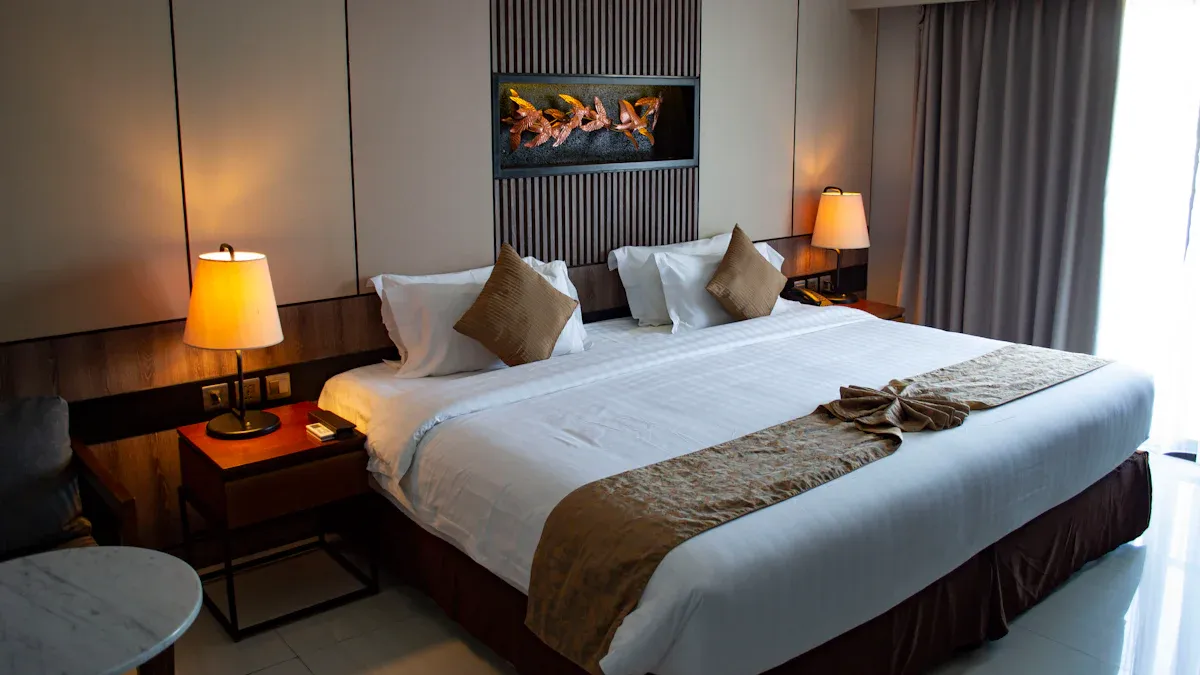
Hoteliers can achieve significant value when they procure Hotel Guest Room Furniture. This involves making smart choices in design, purchasing, and material selection. These decisions lead to both immediate savings and long-term benefits.
Strategic Design Choices for Hotel Guest Room Furniture
Strategic design choices ensure furniture looks good and performs well. High-end hotel room furniture emphasizes balance and proportion. This creates a comfortable and captivating experience for guests. Modern hotel room furniture should follow a cohesive theme. It uses functional art and ergonomic principles. This creates a stimulating and soothing visual story. Each furniture item must function as intended. It minimizes friction. Upholstery offers ergonomic support and durability. Commercial-grade mattresses are crucial for durability and comfort under heavy usage. Quality bed bases protect mattresses from sagging. They also ensure ergonomic support. Furniture should be comfortable and support guest activities. This includes ergonomic seating for relaxation and work-friendly desks. Furniture and fixtures must align with the overall design theme. This creates a cohesive look. Hoteliers select pieces built to last. They are also easily reconfigurable for changing needs. Movable furniture works well for multi-functional spaces. Choose materials that complement the design theme. They should also be resilient, easy to clean, and maintain. A clear concept integrates aesthetic vision and functional requirements. This guides all design decisions. It ensures consistency and coherence.
Advantages of Bulk Purchasing Hotel Guest Room Furniture
Bulk purchasing offers significant financial advantages. Suppliers often provide discounts for larger orders. This reduces the per-unit cost of each item. It also streamlines logistics. Consolidating shipments for a large order can lower transportation expenses. This approach simplifies the procurement process. It reduces the number of transactions and administrative tasks.
Long-Term Savings from Durable Hotel Guest Room Furniture
High-quality, durable hotel furnishings offer substantial long-term savings. They withstand constant use. This reduces the need for frequent replacements and repairs. This extended lifespan means fewer expenses over time. These items maintain their appearance and functionality longer. Choosing durable furniture is a smart financial move. It leads to a longer replacement cycle. This saves money in the long run. It also contributes to sustainability. It reduces waste, demand for raw materials, and energy consumption. Items do not end up in landfills prematurely. Investing in durable, high-quality hotel furniture leads to significant long-term cost savings. It minimizes frequent replacements. This reduces capital expenditures over a typical 10-15 year lifespan. This approach lowers total furniture acquisition costs. It enhances asset longevity. Such furniture requires less maintenance and fewer repairs. This decreases annual operational expenses. It positively impacts the Gross Operating Profit (GOP). Fewer replacements also mean less disruption to guest experiences and operations. This helps maintain high occupancy rates.
Balancing Customization with Standard Hotel Guest Room Furniture Options
Hoteliers often seek unique designs for their guest rooms. They also need to manage costs effectively. Finding a balance between customization and standard furniture options is crucial. This approach allows for distinctive spaces without overspending.
Hoteliers can opt for modular furniture. This furniture allows for easy upgrades and repairs. It reduces replacement costs over time. Modular components can reconfigure for different needs. This creates adaptable spaces. Movable dividers and convertible furniture also help. Multifunctional items serve two or three purposes. This replaces separate pieces for different functions. Sleek, visually lightweight pieces create a sense of spaciousness. This moves away from bulky traditional designs.
Prioritize essential furniture first. High-quality beds and mattresses directly impact guest satisfaction. Hoteliers should choose functional and durable seating. This is better than purely decorative pieces. They can explore cost-effective sourcing options. Purchasing in bulk or utilizing wholesale furniture suppliers offers discounted rates. Hoteliers balance quality with affordability. They consider budget-friendly options for certain furniture categories. They invest in premium options where guest experience is highest. Memory foam mattresses are an example of a premium option over high-density foam.
Advanced customization also exists. Modular systems allow guests to reconfigure their spaces. App-controlled furniture settings remember guest preferences. Adjustable features accommodate different body types. They also meet accessibility needs and working styles. Color-changing surfaces and adaptable aesthetics can shift based on mood or time of day.
Affordable Hotel Guest Room Furniture from China offers high quality. Hoteliers can achieve significant value. They must prioritize diligent supplier vetting. Understanding key quality indicators is also essential. This approach allows hoteliers to source durable, aesthetic, and budget-friendly furniture. They can enhance guest experiences without overspending.
FAQ
Is “cheap” hotel furniture from China always low quality?
No, “cheap” often means cost-efficient. Chinese manufacturers benefit from large-scale production and efficient supply chains. This allows them to offer competitive prices. Hoteliers can find high-quality, durable furniture within budget.
How can hoteliers ensure quality when buying budget furniture?
Hoteliers should focus on material selection, construction methods, and durable finishes. They must also vet suppliers carefully. Checking certifications and evaluating samples are crucial steps. This ensures the furniture meets quality standards.
What certifications should hoteliers look for in furniture suppliers?
Hoteliers should look for certifications like ISO 9001 for quality management. BIFMA standards ensure commercial furniture safety. FSC certification indicates responsible wood sourcing. These certifications confirm product integrity and safety.
Does bulk purchasing offer advantages for hotel furniture?
Yes, bulk purchasing offers significant advantages. Suppliers often provide discounts for larger orders. This reduces the per-unit cost. It also streamlines logistics and lowers transportation expenses. This approach simplifies the procurement process.