
Hotel cabinet design is no longer a decorative afterthought. In 2026, hotel cabinets are expected to carry luggage loads, integrate power systems, resist moisture, improve housekeeping efficiency, and maximize limited room area. A well-designed hotel cabinet reduces replacement cost, improves guest satisfaction, and supports long renovation cycles. The global hotel furniture, fixtures, and equipment market was valued at USD 63.09 billion in 2025 and is projected to reach USD 107.97 billion by 2033, showing how strongly hotels continue to invest in durable built-in furniture.
For procurement teams, the key conclusion is clear: hotel cabinets should be specified as engineered casegoods, not residential furniture. The most reliable specification framework includes structural strength, hardware durability, efficient storage geometry, and lifecycle maintenance access.
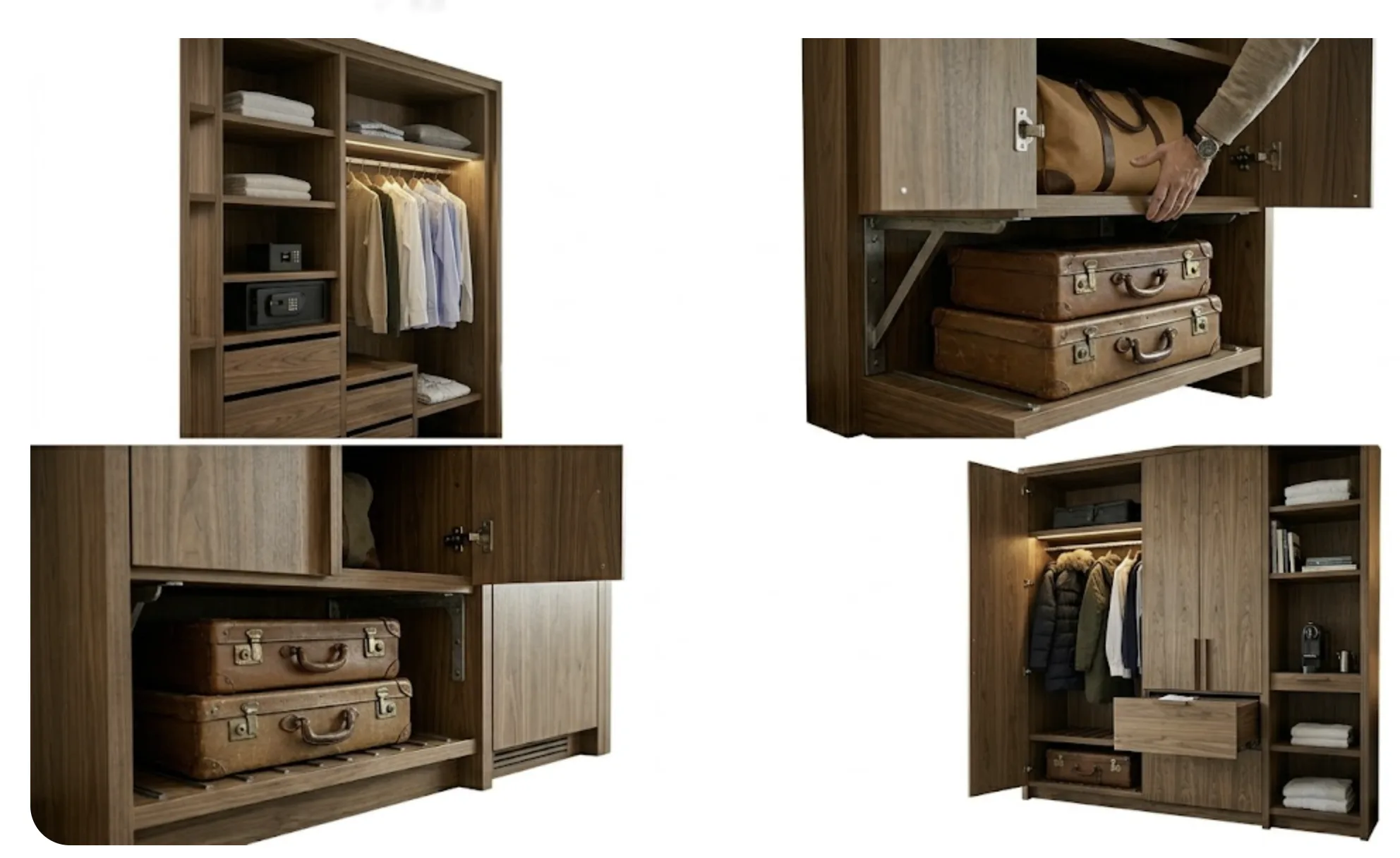
Why Hotel Cabinet Structure Matters in Hospitality Projects
Hotel cabinets experience far higher daily stress than residential cabinets. Drawers open hundreds of times per month, guests place heavy luggage on tops, and cleaning teams use strong chemicals on surfaces. Residential-grade boards often fail early under these conditions.
Commercial hotel cabinetry should use reinforced carcass construction, moisture-resistant cores, and tested hardware systems. Projects seeking durable solutions often evaluate hotel room cabinets, custom hotel wardrobes, and hospitality casegoods furniture during FF&E planning.
Common Structural Failures in Weak Cabinets
| Failure Point | Typical Cause | Operational Impact |
|---|---|---|
|
Drawer sagging |
Thin bottom panel |
Guest complaints |
|
Door misalignment |
Low-grade hinges |
Poor room appearance |
|
Swollen panels |
Moisture exposure |
Early replacement |
|
Loose top panels |
Weak joinery |
Safety risk |
Load-Bearing Principles for Hotel Cabinets
Load-bearing capacity should be calculated from real guest behavior, not showroom assumptions. A luggage bench cabinet may receive 25–40 kg suitcases repeatedly. TV cabinets may support screens, minibar units, and decorative stone tops.
For this reason, engineers specify thicker panels, internal stretchers, steel brackets, or plywood reinforcement zones. BIFMA-aligned durability benchmarks are commonly referenced for commercial furniture because they test static loads, cycles, and structural performance.
Recommended Load Zones
-
Wardrobe top shelf: 25 kg minimum distributed load
-
Drawer box: 20–30 kg dynamic load
-
Luggage cabinet top: 50 kg short-term load
-
Wall-mounted vanity cabinet: bracketed engineering review required
Hotels comparing options often source hotel luggage cabinets and hotel TV cabinet furniture with reinforced support frames.
Best Materials for Durable Hotel Cabinet Construction
Material selection determines lifespan, moisture resistance, repairability, and cost control. Solid wood is visually strong but can move with humidity. MDF offers smooth paint surfaces but lower screw-holding strength. Plywood remains one of the most stable commercial options.
Cabinet Material Comparison
| Material | Strength | Moisture Resistance | Typical Use |
|---|---|---|---|
|
Plywood |
High |
Good |
Premium casegoods |
|
MDF |
Medium |
Moderate |
Painted panels |
|
Particleboard |
Low-Medium |
Low |
Budget interiors |
|
Steel frame + board |
Very High |
High |
Heavy-use projects |
For hospitality environments, many buyers prefer plywood carcasses with laminate surfaces and ABS edging. Commercial-grade hotel furniture sources note that durability depends on structure and construction, not material alone.
Space Optimization Principles for Small Hotel Rooms
Many urban hotels operate with guest rooms under 30 square meters. In this environment, every cabinet must combine storage and circulation efficiency. The best hotel cabinet design reduces dead corners, supports luggage flow, and keeps cleaning paths clear.
High-Value Space-Saving Strategies
-
Full-height wardrobes with upper luggage shelves
-
Floating bedside cabinets for easier floor cleaning
-
Integrated desk + minibar cabinet combinations
-
Shallow-depth entry cabinets near door zones
-
Drawer dividers that improve usable volume
Projects focused on compact rooms often compare space-saving hotel wardrobes and custom hotel bedroom furniture for better room efficiency.
Hardware Systems That Extend Cabinet Lifespan
Cabinet hardware is a common failure point. Even strong panels fail when slides, hinges, locks, or handles wear out. Hotels should specify replaceable hardware from established commercial suppliers.
Preferred Hardware Standards
-
Soft-close drawer slides rated for repeated cycles
-
110° concealed hinges with adjustment screws
-
Corrosion-resistant fasteners for humid regions
-
Standardized lock cores for maintenance teams
-
Replaceable toe-kick and edge trims
Casegood specialists recommend modular repair-first design because replaceable components reduce downtime during occupancy cycles.
Sustainability and Lifecycle Cost in Hotel Cabinet Design
The cheapest cabinet often becomes the most expensive cabinet after five years. Replacement labor, room downtime, and logistics create hidden cost. Sustainable specification means longer life, repairability, and lower material waste.
Hotels increasingly request FSC-certified wood, low-VOC finishes, and modular components that can be replaced individually instead of discarding full units. Hospitality furniture trend reports identify sustainability and modularity as leading procurement priorities for 2026.
Lifecycle Cost Example
| Cabinet Type | Initial Cost | Expected Life | Mid-Cycle Repairs | Total Value |
|---|---|---|---|---|
|
Budget Unit |
Low |
3-5 years |
High |
Weak |
|
Contract Grade Unit |
Medium |
7-10 years |
Low |
Strong |
Specification Checklist for Hotel Procurement Teams
Before approving production drawings, verify these points:
-
Core board type and thickness
-
Edge banding material and thickness
-
Drawer slide cycle rating
-
Moisture-resistant backing panels
-
Load-bearing test requirement
-
Electrical cutout and cable access
-
Replacement hardware availability
-
Fire and emissions compliance where required
This checklist helps prevent costly redesign after installation.
FAQ
1. What is the difference between hotel cabinets and residential cabinets?
Hotel cabinets are engineered for commercial traffic. Hotel cabinets typically use stronger joinery, thicker panels, replaceable hardware, and more durable finishes. Residential cabinets may look similar but are often not designed for constant guest turnover and housekeeping use.
2. Which material is best for hotel wardrobe cabinets?
Plywood is widely preferred because plywood combines strength, screw-holding performance, and dimensional stability. MDF can be useful for painted fronts, while steel-reinforced systems suit high-use or humid locations. Final selection depends on budget and room category.
3. How much weight should a hotel luggage cabinet hold?
A practical benchmark is 50 kg short-term load on the top panel. Heavy-use hotels may specify higher values. Internal reinforcement and panel span design are critical because weight capacity depends on engineering, not only material thickness.
4. How can cabinets save space in small hotel rooms?
Use vertical storage, floating cabinets, integrated desk units, sliding doors, and shallow-depth millwork. These methods preserve circulation paths while increasing usable storage volume. Good layouts also improve housekeeping speed and guest movement.
5. What is the biggest mistake in hotel cabinet purchasing?
The most common mistake is choosing by purchase price alone. Low-cost units may fail early, causing room downtime and replacement expense. Lifecycle cost, repairability, and hardware quality usually matter more than the lowest quotation.


