

Securing high-quality hotel furniture demands careful consideration. Thorough vetting of a Hotel Furniture Manufacturer is critical. This process minimizes risks in hotel furniture procurement. It ensures reliable partnerships for your hotel furniture projects. For example, Ningbo Taisen’s Hotel Cabinets stands out as a top hotel furniture supplier in China. Proper verification secures successful product delivery and quality for your needs in Hotel Furniture China.
Key Takeaways
- Always check a factory’s business licenses and export papers. This confirms they are a real and legal business.
- Look at a factory’s past work and certifications. This shows their skill and commitment to quality standards.
- Visit the factory to see their showroom and production lines. This helps you check their quality control and packaging methods.
- Ask for product samples and watch out for very low prices. This helps you avoid bad quality and communication problems.
- Use third-party inspectors and review factory audit reports. This adds extra safety for your order and ensures ethical practices.
Confirm Manufacturer Legitimacy for Hotel Furniture
Scrutinize Business Registrations and Licenses
Before you commit to any factory, always confirm its legal standing. A legitimate Chinese factory needs specific licenses to operate. They must possess a corporate legal person business license and an enterprise business license. These documents prove their legal existence. The registration process involves several steps. First, they determine their business scope and select an entity type. Then, they reserve a unique company name with the local SAMR branch. They prepare Articles of Association and other required incorporation documents. After submitting the application, they receive their business license. Factories also register with the Public Security Bureau for company seals and open a Chinese corporate bank account. They register for tax with the State Taxation Administration and for social security and housing funds for employees. Some factories, especially those involved in manufacturing, also need industry-specific approvals like environmental and safety permits. You should ask for copies of these documents.
Verify Export Credentials and History
A factory’s ability to export is just as important as its manufacturing capability. A Chinese factory generally requires an export license to ship products internationally. This government document authorizes them to export goods and commodities from China. However, furniture does not typically fall into categories requiring special export licenses, unlike hazardous goods. To export goods, including hotel furniture, they need several documents. These include an export license, commercial invoice, packing list, and certificate of origin. Other necessary papers are a bill of exchange, an insurance certificate, and customs entry documents. Reviewing their export history can show their experience and reliability in international trade.
Differentiate True Hotel Furniture Factories from Intermediaries
It is crucial to know if you are dealing directly with a factory or an intermediary. True factories own their production lines and often have showrooms. Intermediaries, on the other hand, usually just resell products from various manufacturers. You can often tell the difference by asking for a factory tour or requesting detailed photos of their production facilities. Direct communication with factory management, rather than just sales agents, is another good sign. A genuine factory will readily provide evidence of its manufacturing capabilities, not just sales brochures. This distinction helps ensure you work directly with the source for your hotel furniture needs.
Evaluate Experience and Capabilities in Hotel Furniture Production

Assess Portfolio and Customization Options
A strong factory proudly displays its past work. You should ask to see their portfolio. This collection of past projects shows their range and skill. Look for examples of hotel furniture similar to your needs. A good portfolio demonstrates their ability to handle different styles and complexities. Also, inquire about their customization options. Can they adapt designs to fit your specific brand or space requirements? A factory with strong capabilities offers flexible solutions. They work with you to create unique pieces. This ensures your hotel furniture perfectly matches your vision.
Confirm Adherence to Quality Standards and Certifications
Quality is paramount for hotel furniture. A reputable factory adheres to strict international standards. They often hold various certifications. These certifications prove their commitment to excellence and safety.
Consider these important certifications:
- FSC Certification: This certification ensures wood products come from sustainably managed forests. It protects the environment and indigenous peoples. Factories must use FSC-labeled materials and maintain a clear chain of custody.
- AWI Certification: The Architectural Woodwork Institute sets high standards for architectural woodwork. This improves quality and efficiency. It leads to better delivery, reduced environmental impact, and more durable finishes.
Other crucial standards focus on safety and durability:
- NFPA (National Fire Protection Association): This mandates rigorous flame retardancy tests for upholstered items. It ensures furniture meets fire safety regulations.
- BIFMA standards: These standards confirm furniture can withstand heavy use in hospitality settings. They ensure guest safety and comfort.
- ASTM standards: These benchmarks cover commercial furniture. They include fire resistance and structural integrity.
- ANSI (American National Standards Institute): ANSI also sets comprehensive benchmarks for commercial furniture. It covers fire resistance and structural integrity.
Factories also often hold certifications for their management systems:
- ISO 9001:2015 (Quality Management Systems): This standard sets criteria for quality management. It focuses on customer satisfaction and consistent product delivery.
- ISO 14001:2015 (Environmental Management Systems): This standard helps organizations manage their environmental impact. It promotes sustainable practices throughout the supply chain.
These certifications show a factory’s dedication to high-quality and responsible manufacturing.
Review Design and Engineering Expertise for Hotel Furniture
A factory’s design and engineering team plays a vital role. They turn concepts into reality. Ask about their design process. Do they use modern tools and software? Advanced hotel furniture manufacturers commonly utilize SolidWorks CAD software. This software helps them produce practical, beautiful, and robust designs. Their engineering expertise ensures structural integrity and durability. They understand how materials behave and how to construct furniture for heavy use. A strong design and engineering team means your hotel furniture will be both aesthetically pleasing and long-lasting.
Conduct a Comprehensive Audit of the Hotel Furniture Factory
Inspect Showrooms and Production Lines
Visiting a factory gives you a real look at its operations. You can start by exploring their showroom. A good showroom proudly displays their best work. Look closely at the variety of styles and the quality of the finishes. After the showroom, move to the production lines. Observe the machinery. Is it modern and well-maintained? Check the factory’s overall organization and cleanliness. Watch the workers as they perform their tasks. Do they seem skilled and efficient? How does the material flow from one workstation to the next? This direct observation shows you their true manufacturing capabilities.
Evaluate Quality Control Processes
Quality control (QC) is extremely important. It ensures your furniture meets all necessary standards. A strong factory has clear and strict QC steps in place. They begin by checking materials.
- Material Selection and Durability: They choose strong materials. These materials resist wear, marks, and damage. Examples include solid wood, metal, durable laminates, and high-quality upholstered fabrics.
- Comfort and Ergonomics: Chairs and seats must provide good support. They verify ergonomic design for comfort during long use. This promotes good posture for guests.
- Finishes and Aesthetics: Look for smooth finishes and even color tones. Detailed workmanship shows a high-quality appearance.
- Stability and Safety: Furniture must be stable. Legs should be even, and edges smooth. They confirm that all relevant safety standards are met.
- Maintenance and Cleanliness: Can you clean the furniture easily? Does it resist dirt? Can you remove and wash cushion covers? Hard surfaces should be scratch-resistant.
- Versatility and Space Optimization: Good furniture can be easily rearranged. It should suit different group sizes or event layouts. This helps optimize space.
- Sustainability and Environmental Impact: Factories should prioritize eco-friendly materials and methods. Look for certifications like FSC or Greenguard.
- Customization Options: Do they offer choices? Can you change materials, styles, or colors? Can they add your branding?
- Delivery and Assembly: They ensure timely delivery. Products must arrive undamaged. Assembly instructions should be clear.
- Guest Feedback and Warranty: They monitor guest reactions to the furniture. They also offer a solid warranty to cover any defects.
These steps show a factory’s commitment to excellent products.
Observe Packaging and Shipping Procedures
Proper packaging protects your investment. This is especially true for international shipping. A reliable factory follows industry best practices.
-
They use 5-layer corrugated cardboard (double-wall). This is a global standard. It significantly reduces damage and builds trust.
-
For oversized items like beds, they divide them. They use 3–5 separate boxes.
-
Each box receives clear labels. These include numbering (e.g., ‘1 of 5’), a barcode, a ‘FRAGILE’ label, and sorting pictograms.
-
They utilize FSC or PEFC certified 5-layer cardboard. They avoid Styrofoam.
-
They adhere to specific box size recommendations:
Aspect Recommendation Box Volume ≤ 0.15 m³ Dimensional Formula L + 2(W + H) ≤ 274–300 cm Maximum Length 200 cm Weight 23–45 kg (country-dependent) Manual Handling Threshold Most couriers do not accept boxes >30 kg or >200 cm -
They perform a mandatory drop-test. They drop the package from 80 cm on all six sides.
-
They avoid non-recyclable or composite materials. These are materials that you cannot manually separate, like cardboard mixed with plastic.
-
Recommended materials include cardboard, paper, PET (1), and HDPE (2).
-
They are phasing out expanded polystyrene (EPS), commonly known as Styrofoam. It is difficult to recycle. The EU will phase it out by 2030.
-
Labels must include sorting pictograms and material identification codes.
-
They limit ’empty space’ in B2C packaging to no more than 40% void.
These careful steps ensure your hotel furniture arrives safely and in perfect condition.
Assess Operational Efficiency and Reliability for Hotel Furniture Orders
Analyze Production Capacity and Lead Times
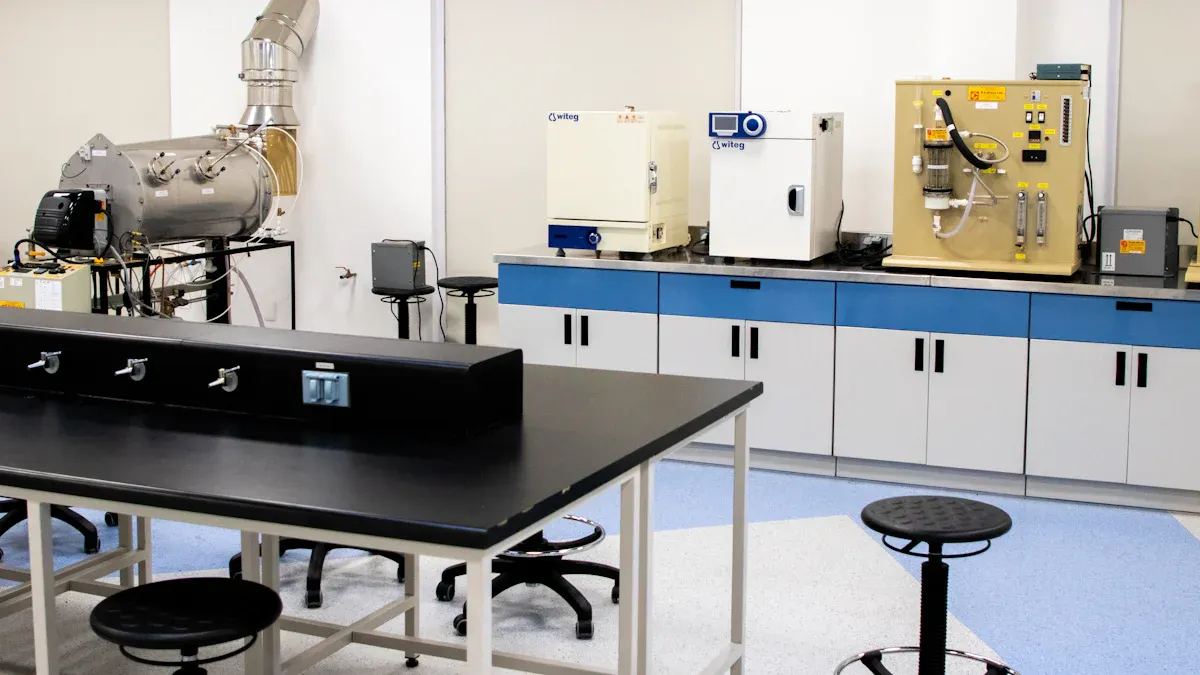
Understanding a factory’s production capacity and lead times is crucial. It helps you plan your project effectively. For custom furniture, Chinese factories typically need 30 to 60 days for production. Shipping by sea can add another 15 to 40 days. Therefore, overall lead times can range from 30 to 90 days or even more. This depends on the order’s complexity and the chosen shipping method. Always confirm these timelines early to avoid delays.
Examine Communication and Project Management
Effective communication and strong project management are vital for international orders. Factories should use centralized project management tools. Platforms like Procore, Asana, or Buildertrend offer real-time updates and document sharing. They enhance transparency for everyone involved. Regular status meetings, held weekly or bi-weekly, help teams align objectives and address challenges proactively. Comprehensive documentation of agreements and changes also prevents disputes. Modern solutions for FF&E projects provide a central hub for all information. They offer real-time visibility and aid decision-making. AI-powered analytics can even predict potential delays and optimize resource allocation.
Request and Evaluate Hotel Furniture Product Samples
Always request and carefully evaluate product samples. This step ensures the final product meets your expectations. Look for functionality and aesthetic appeal. The furniture must endure demanding hospitality environments while enhancing the guest experience. Durability is key; it needs to withstand significant wear and tear. High-quality materials and craftsmanship are critical here. Pay attention to finishing touches. Superior finishes protect against daily use and frequent cleaning. Consider customization capabilities. This allows for unique brand expression. Also, assess sustainability practices. Partner with manufacturers committed to eco-friendly methods. Discuss budget early to prevent overruns. Investing in high-quality hotel furniture can reduce long-term costs.
Identify Red Flags and Ensure Due Diligence for Hotel Furniture
Recognize Unrealistic Pricing and Poor Communication
You must stay alert for warning signs when you work with a factory. Unrealistic pricing often signals a problem. If a factory offers prices significantly lower than others, they might cut corners on materials or labor. This can lead to poor quality furniture. Poor communication also creates a major red flag. Slow responses, unclear answers, or a lack of transparency can cause misunderstandings and project delays. A reliable partner communicates clearly and promptly. They keep you informed throughout the process.
Utilize Third-Party Inspection Services
You can protect your investment by using third-party inspection services. These independent companies visit the factory. They check product quality and production processes. For example, TESTCOO is a third-party inspection company in China. They offer specialized “Furniture Inspection” services under their “Hardlines” category. These services provide an unbiased assessment. They ensure the factory meets your quality standards before shipping. This step adds an extra layer of security for your order.
Review Factory Auditing Reports
Always ask for and carefully review factory auditing reports. These reports give you a deep look into the factory’s operations. They confirm the factory follows ethical and legal practices. A comprehensive report covers several key areas. It checks for compliance with the law. It also looks at freedom of association and collective bargaining rights. The report prohibits discrimination and reviews compensation and working hours. It ensures workplace safety and prohibits child labor and forced labor. Finally, it examines environmental practices and overall safety measures. These reports help you choose a responsible and reliable partner.
Verifying a Chinese hotel furniture factory requires a multi-faceted approach. This comprehensive vetting minimizes risks. It also ensures reliable partnerships. You secure successful product delivery and quality for your hotel furniture needs. Always practice proactive due diligence. This leads to long-term success in your procurement efforts.
FAQ
How long does it take to get hotel furniture from China?
Production usually takes 30 to 60 days. Shipping by sea adds another 15 to 40 days. So, total time can be 30 to 90 days or more. This depends on the order and shipping method.
Why are certifications important for hotel furniture factories?
Certifications like FSC or ISO 9001 show a factory’s commitment. They prove quality, sustainability, and ethical practices. These standards ensure the furniture meets high expectations. They also protect the environment.
What is the biggest red flag when dealing with a factory?
Unrealistic pricing is a major red flag. If prices are much lower than others, the factory might cut corners. Poor communication also signals trouble. A reliable partner communicates clearly and promptly.
Should I visit the factory in person?
Yes, visiting the factory is very helpful. You can see their showroom and production lines. This shows their true capabilities. You can also check their quality control and observe workers.
What does a third-party inspection service do?
Third-party inspectors visit the factory. They check product quality and production processes. These independent companies provide an unbiased assessment. They ensure the factory meets your quality standards before shipping.