
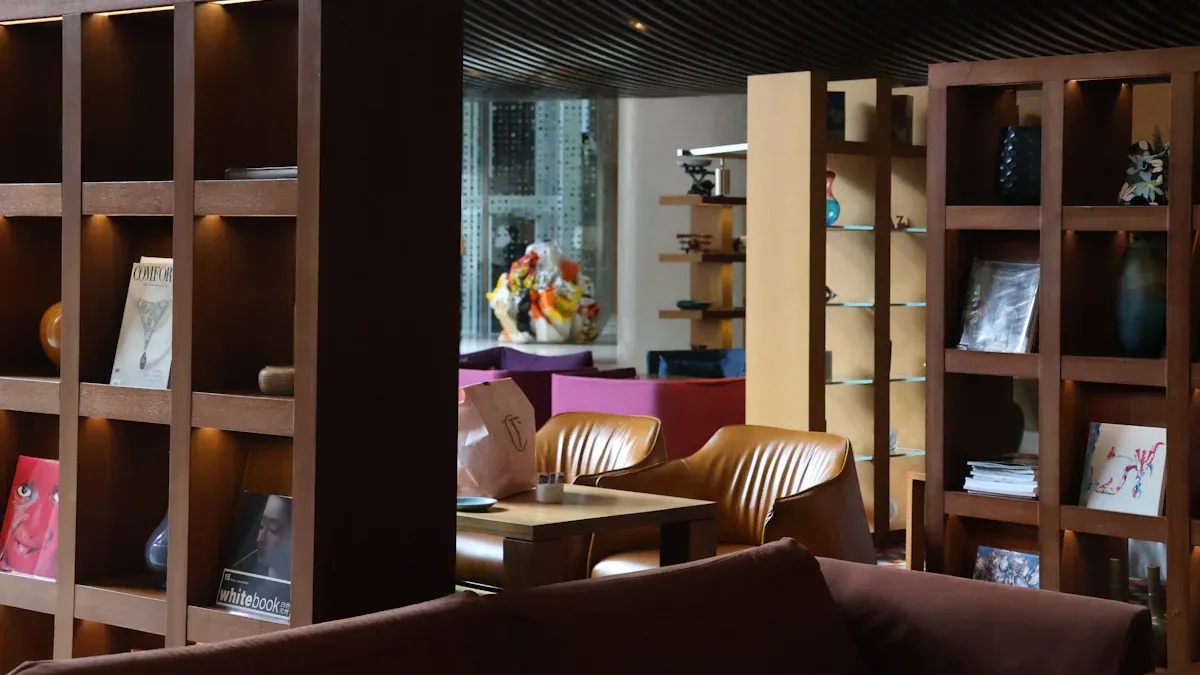
Selecting an OEM custom hotel furniture manufacturer requires careful consideration. Quality, customization capabilities, manufacturer experience, budget alignment, and after-sales support are paramount for successful Hotel Furniture procurement. These elements ensure durable, aesthetically pleasing, and functional hotel furniture for hospitality projects. They provide significant Benefits of Custom Hotel Furniture for Hotels. An informed decision in these areas is vital for the success of any bespoke hotel furniture project. Many ask, "Is custom hotel furniture more expensive?" The answer often lies in the long-term value these factors provide.
Key Takeaways
- Good hotel furniture lasts a long time. It uses strong materials and good building methods.
- Custom furniture lets hotels create unique spaces. It matches their style and needs perfectly.
- Choose a manufacturer with a good history. They should have many happy customers and proper certifications.
- Think about the total cost of furniture. Good quality furniture saves money over time.
- A good manufacturer helps with shipping and setup. They also offer support after you buy the furniture.
Quality and Durability of Hotel Furniture

Quality and durability are fundamental considerations for any hotel furniture project. Hotel furniture endures rigorous daily use by diverse clientele. This makes durability vital for maintaining both comfort and appearance over time. Selecting high-quality materials and craftsmanship reduces the need for frequent repairs or replacements. Ultimately, this lowers operational costs. Investing in durable furniture initially translates to a longer lifespan. Cheaper materials and construction often lead to faster degradation, requiring more frequent replacement.
Material Selection and Sourcing
Material selection directly impacts furniture longevity. Reputable manufacturers prioritize materials that withstand high-traffic use. Solid wood, such as mahogany, oak, teak, maple, and walnut, offers natural beauty, strength, and longevity. Plywood provides structural integrity for items like bed bases and cabinet panels. Metals like steel, aluminum, and wrought iron offer structural strength and resistance to wear. For upholstery, high-quality fabrics such as leather, polyurethane, microfiber, and vinyl provide durability and ease of cleaning. Quartz is a superior option for surfaces due to its high scratch and stain resistance.
Industry standards, like those from the Architectural Woodwork Institute (AWI), guide material selection. Manufacturers often adhere to AWI’s Custom Grade for most high-quality hotel furniture, ensuring design flexibility and robust construction. They consider anticipated foot traffic, environmental conditions, and brand identity when choosing materials. Conversely, using materials like particleboard or MDF can lead to quick deterioration, warping, or cracking. Opaque raw materials can also raise concerns about chemical safety and authenticity.
Construction Techniques and Craftsmanship
Superior craftsmanship ensures hotel furniture is built to last. Manufacturers combine time-honored joinery techniques with modern processes. Specialized joinery, such as mortise and tenon joints, provides structural integrity. These joints are often reinforced with corner blocks, metal braces, or dowel pins. For metal furniture, high-quality commercial-grade welding prevents weak points and rust. Attention to cushioning and support systems, including high-density polyurethane foams and spring suspensions, helps distribute weight evenly. Modular designs also allow for easy repairs. Poor construction, however, leads to common failure points. These include weak joints, misaligned seams, shaky legs, and loose connections. Such issues accelerate degradation and compromise safety.
Warranty and Guarantees
A strong warranty reflects a manufacturer’s confidence in their product’s quality. The industry standard for a good contract warranty on custom hotel furniture is typically five years. This covers defects in materials and workmanship. Reputable manufacturers often offer up to ten years for the structural integrity of casegoods like dressers and nightstands. Upholstered items may have slightly shorter warranties. A comprehensive warranty provides peace of mind and protects a hotel’s investment.
Customization Capabilities for Hotel Furniture
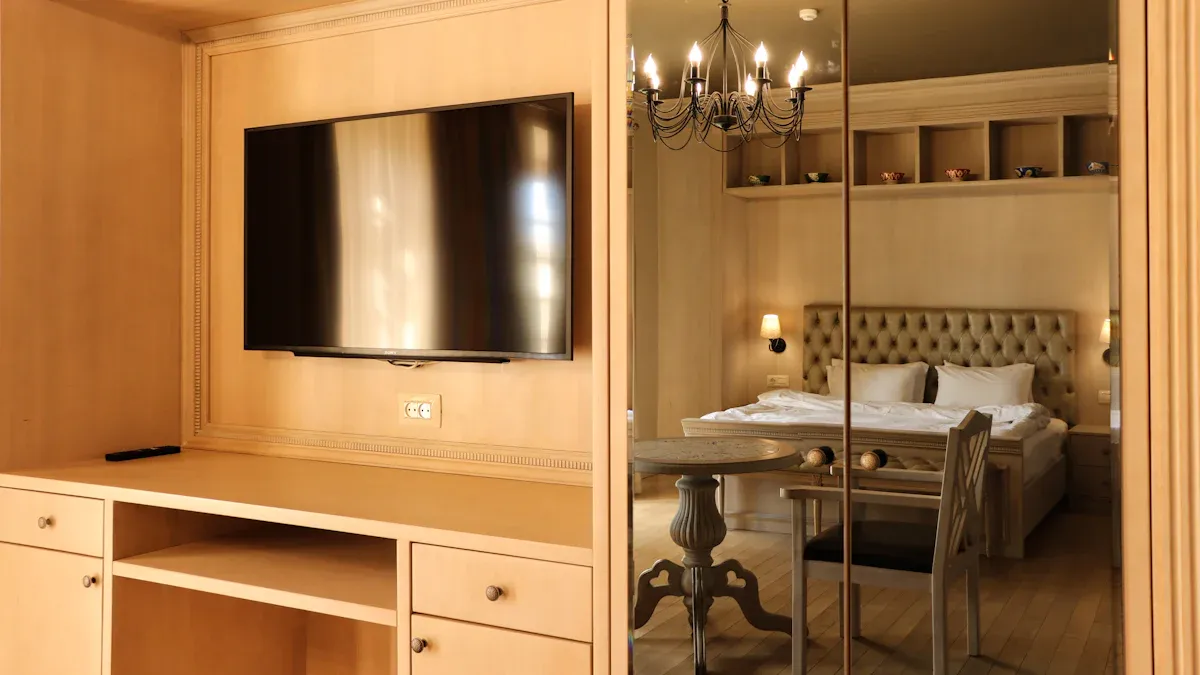
Customization stands as a core advantage when selecting a specialized manufacturer. It allows hotels to create unique environments. This ensures furniture perfectly aligns with a hotel’s brand identity and operational needs. Manufacturers offer extensive options for tailoring designs, materials, and finishes.
Design Flexibility and Adaptability
Custom manufacturers provide significant design flexibility. They adapt furniture pieces to specific spatial requirements and aesthetic themes. This ensures each item fits seamlessly into the hotel’s overall design vision. For example, a boutique hotel partnered with a custom furniture supplier. They designed bespoke pieces that complemented its modern, chic aesthetic. This collaboration resulted in a stunning transformation and positive guest reviews. Similarly, a large chain hotel used custom furniture. This ensured consistency across locations. It also incorporated unique regional touches in its lobby and guest room updates. This enhanced guest experience and reinforced brand identity.
Bespoke Options and Prototyping
Manufacturers offer bespoke options, creating truly unique pieces. This includes furniture designed from scratch to meet specific functional or artistic requirements. Prototyping is a crucial step in this process. It allows hotels to review and test a physical sample before full production. This ensures the design, dimensions, and functionality meet expectations. Prototyping helps identify any necessary adjustments early, preventing costly changes later.
Material and Finish Variety
A wide array of materials and finishes are available for custom hotel furniture. This allows for diverse aesthetic choices. Popular trends include biophilic designs, which incorporate natural elements like wood, stone, leather, and wool. Light woods with darker finishes and dark woods with rich grains, such as walnut, are popular. Statement stones like marble, granite, onyx, and travertine are used for various surfaces. Performance fabrics, including linens and velvets, are favored for durability and easy maintenance. Modern metals like silver, chrome, and steel have replaced gold finishes for hardware. Contemporary designs often favor a warm neutral palette, including soft beige, caramel, and terracotta. This creates a serene and luxurious atmosphere. Sustainable and eco-friendly materials, such as reclaimed wood and recycled metal, are also increasingly chosen. These options allow hotels to achieve a distinct look and feel.
Manufacturer Experience and Reputation in Hotel Furniture
A manufacturer’s experience and reputation are critical indicators of their reliability and capability. Hotels should choose a partner with a proven history of delivering high-quality products and services. This ensures a smooth project execution and satisfactory outcomes.
Industry Track Record and Portfolio
A strong industry track record shows a manufacturer’s expertise. It demonstrates their ability to handle complex projects. Such a manufacturer has extensive experience working with various hotels. They possess a robust portfolio and positive client testimonials. Case studies often highlight their consistent quality, timely deliveries, and responsive customer service. An established manufacturer with a strong presence and a portfolio of completed projects demonstrates reliability. They also show a deeper understanding of hospitality demands. For example, Taisen, a furniture factory in Ningbo, China, has over ten years of experience making hotel project furniture. They have a world-advanced production line and a fully computer-controlled system. This allows them to specialize in furniture design, manufacture, and marketing. Their products include dining sets, bedroom sets, and hotel furniture. They also offer OEM custom options.
Client Testimonials and References
Client testimonials and references offer direct insights into a manufacturer’s performance. They provide real-world examples of their work quality and customer service. Hotels should request references from past clients. They should also review case studies. These resources help verify a manufacturer’s claims. They also confirm their ability to meet project requirements. Positive feedback from previous customers indicates a reliable and trustworthy partner.
Certifications and Compliance
Certifications and compliance demonstrate a manufacturer’s commitment to quality and safety. These standards ensure products meet specific industry benchmarks. For instance, ISO 9001 certifies a quality management system. This helps organizations meet customer and regulatory requirements. ANSI/BIFMA standards, like X5.1 for general-purpose office chairs, specify safety, durability, and structural adequacy. NFPA 260 and California Technical Bulletin 117-2013 address flammability for upholstered furniture. FSC certification ensures wood products come from responsibly managed forests. GREENGUARD Certification ensures products meet stringent chemical emissions limits. This contributes to healthier indoor air quality. Adherence to these certifications ensures the Hotel Furniture meets high standards.
Budget Alignment and Value for Hotel Furniture Projects
Aligning budget with value is crucial for any hotel furniture project. Hotels seek manufacturers who offer competitive pricing without compromising quality. This ensures a wise investment and long-term financial benefits.
Transparent Pricing Structures
Manufacturers should provide clear and detailed pricing. This helps hotels understand the cost breakdown. Prioritizing in-house production allows manufacturers better visibility into labor, materials, and workflow. This leads to more accurate cost calculations and clearer breakdowns for buyers. Effective communication and stable internal teams are crucial for managing changes. They prevent misinterpretations and ensure stable pricing. This avoids cost fluctuations due to unclear instructions or production gaps. Buyers must provide clear specifications. Detailed drawings, accurate dimensions, material preferences, and finishing requirements enable manufacturers to give accurate cost estimations. This reduces the risk of revisions, delays, or unexpected cost adjustments.
Cost-Effectiveness and ROI
Cost-effectiveness goes beyond the initial purchase price. It considers the furniture’s lifespan, maintenance needs, and impact on guest satisfaction. Investing in durable, high-quality Hotel Furniture reduces replacement costs and repair expenses over time. This provides a strong return on investment (ROI). Quality furniture also enhances the guest experience. This can lead to repeat business and positive reviews. Hotels should evaluate the total cost of ownership, not just the upfront expense.
Payment Terms and Financial Flexibility
Understanding payment terms and pricing structure is crucial for hotel furniture. It represents a long-term investment. Key factors to consider include bulk order discounts and potential hidden costs. These include shipping, taxes, and custom modifications. Available payment options and financing plans also matter. Custom hotel furniture manufacturers primarily offer TT (Telegraphic Transfer) and FOB (Free On Board) as standard payment terms. Hotels can discuss and negotiate other payment terms in detail with the manufacturer. This flexibility helps manage cash flow and project finances effectively.
Logistics and Project Management for Hotel Furniture
Effective logistics and project management are crucial for custom furniture projects. They ensure timely delivery and installation. A manufacturer’s ability to manage these aspects directly impacts a hotel’s renovation or new build schedule.
Production Capacity and Lead Times
A manufacturer’s production capacity determines their ability to handle large orders efficiently. Hotels should assess if a manufacturer can meet their volume requirements without compromising quality. Lead times, the duration from order confirmation to delivery, are equally important. Shorter, reliable lead times help hotels adhere to their project timelines. Manufacturers with advanced production lines and efficient processes often offer more predictable schedules.
Shipping, Delivery, and Installation
Shipping, delivery, and installation present significant logistical challenges. Global supply chain issues can cause unpredictable timelines and rising costs. International shipping often adds months to project schedules and frequently results in delays. Tariffs and import charges can quickly inflate budgets. Manufacturers must coordinate effectively with suppliers and delivery companies. During delivery, space limitations for assembly, narrow hallways, and elevators can create maneuverability issues. Insufficient equipment or resources for unloading also poses problems. These obstacles can lead to damage or injuries.
Project Communication and Updates
Clear and consistent communication is vital throughout the project. Manufacturers should define a clear project scope early, collecting detailed client requirements. They segment projects into distinct phases, such as design, material sourcing, and fabrication. Many leverage specialized project management software like Trello or Asana for task tracking and centralized file management. They engage clients regularly with collaborative digital tools, sharing interactive sketches and 3D renders. Establishing transparent communication channels, such as weekly status calls, builds client trust. Manufacturers also use project data analytics to refine scheduling and optimize resource deployment. They collect client feedback post-delivery to improve workflows.
After-Sales Support and Communication for Hotel Furniture
After-sales support and clear communication are vital for a successful partnership with a custom furniture manufacturer. These services ensure the longevity of the furniture and the satisfaction of the hotel. A manufacturer’s commitment to support after the sale reflects their dedication to quality and client relationships.
Customer Service and Responsiveness
Excellent customer service and responsiveness are hallmarks of a reliable manufacturer. Hotels need a partner who quickly addresses inquiries and resolves issues. This includes prompt communication channels and dedicated support staff. A manufacturer who prioritizes customer satisfaction builds trust and fosters a positive working relationship. They understand that timely responses minimize disruptions for hotel operations.
Maintenance and Repair Services
Manufacturers often integrate maintenance considerations into the initial design and material selection process. They work closely with design teams to choose finishes that complement the hotel’s ambiance while maintaining longevity and ease of maintenance. Many manufacturers offer comprehensive after-sales support, including a generous warranty. For example, some provide a 10-year warranty for all furniture and a year of maintenance support after project completion. A comprehensive after-sales service process typically includes:
- After-sales service reception and recording: This involves customer consultation via hotline or online platform, detailed information recording, and work order generation.
- Problem diagnosis and confirmation: Initial communication with customers, professional on-site inspections if needed, and formulation of repair, replacement, or compensation plans.
- Implementation of solutions: This includes repair services (on-site or factory repair) and replacement services.
- Follow-up and acceptance: Post-repair quality inspection, customer acceptance, and satisfaction surveys.
- After-sales record and summary: Archiving records of the entire process and regular analysis to optimize service.
- Customer care and maintenance: Regular follow-up visits to understand furniture usage and providing value-added services like maintenance knowledge.
The comprehensive after-sales support, including a generous warranty and proactive maintenance services, underscores their commitment to long-term client satisfaction.
Long-Term Partnership Potential
Establishing a long-term partnership with a custom furniture manufacturer offers significant benefits. These relationships provide ongoing value beyond the initial installation.
- Comprehensive Project Management: Dedicated project managers streamline communication and ensure accountability. They provide regular updates from design to installation.
- Ongoing Value Beyond Initial Installation: Established relationships allow manufacturers to maintain detailed records of furniture specifications. This makes future additions, repairs, or modifications more efficient and cost-effective.
- Efficient Future Additions/Repairs: Manufacturers can provide expansion pieces that perfectly match existing furniture. This maintains visual consistency and functional integration as businesses evolve.
- Enhanced Warranty Services: Warranties typically exceed those for mass-produced furniture. They often include on-site repair services to minimize workplace disruption.
- Periodic Maintenance and Reconfiguration: Many manufacturers offer periodic maintenance, refinishing programs, and reconfiguration services. This adapts existing furniture to changing workplace needs.
- Expert Guidance on Workplace Optimization: The ongoing relationship provides a trusted partner. This partner understands unique requirements and offers expert advice on optimizing work environments.
Location and Manufacturing Capabilities for Hotel Furniture
A manufacturer’s location and production capabilities significantly influence project success. These factors impact costs, timelines, and the final product’s quality. Hotels should evaluate these aspects carefully.
Geographic Location and Shipping Costs
The manufacturer’s geographic location directly affects shipping costs and project timelines. The distance between the hotel site and the manufacturer’s facility can vary greatly. This is especially true if the furniture is produced overseas. Lead times must include production, transit times, customs clearance, and potential freight delays. Customs duties and taxes can also significantly increase the landed cost. This applies particularly to international shipments. Hotels should consider these financial implications when selecting a partner.
Advanced Production Lines and Technology
Modern manufacturers invest in advanced production lines and technology. This ensures greater precision, variety, and efficiency. For example, some companies use state-of-the-art CNC machines. These machines produce contour shapes with simultaneous edge banding. This boosts efficiency, ensures accuracy for custom requests, and saves labor time. Manufacturers also utilize advanced computer-aided design (CAD) software for precise design and collaboration. They employ 3D modeling technologies to visualize and refine furniture designs. New technologies and design methods are integrated into products. This includes modular furniture and smart furniture with built-in wireless charging pads or USB ports. Material innovation, such as novel composites and engineered veneers, also enhances durability and aesthetics.
Dust-Free Paint Rooms and Quality Control
Dust-free paint rooms are crucial for achieving high-quality finishes. These controlled environments prevent airborne particles from settling on furniture during the painting process. This results in a smooth, flawless surface. Manufacturers with advanced central dust collection systems and dust-free paint rooms demonstrate a commitment to superior quality. These facilities are part of a broader quality control system. This system ensures every piece meets stringent standards before leaving the factory. This attention to detail guarantees a premium product.
Prioritizing quality, customization, and a reliable partner is essential for long-term success in hotel furniture procurement. High-quality custom pieces offer durability and cost efficiency, reducing replacement needs and enhancing a hotel’s competitive advantage. Thorough due diligence across all key factors ensures a wise investment in a hotel’s furnishings. A well-chosen custom manufacturer significantly enhances guest satisfaction and strengthens brand image. Custom furniture creates comfortable, memorable spaces, leading to higher guest satisfaction ratings and a stronger brand story.
FAQ
Why should a hotel choose custom furniture?
Custom furniture perfectly matches a hotel’s brand and space. It offers unique designs and specific dimensions. This ensures optimal functionality and a distinct guest experience. It also provides higher quality and durability.
What is the typical lead time for custom hotel furniture?
Lead times vary based on design complexity and order volume. Manufacturers often provide estimates after design approval. They consider production, shipping, and installation schedules.
Do custom manufacturers offer design assistance?
Yes, many custom manufacturers provide comprehensive design support. They work with hotels to develop concepts. They also create prototypes. This ensures the final product meets aesthetic and functional needs.
What warranty can a hotel expect for custom furniture?
A standard warranty for custom hotel furniture is often five years. Some manufacturers offer up to ten years for structural components. This covers defects in materials and workmanship.
How does a hotel ensure quality control during production?
Reputable manufacturers implement strict quality control at every stage. They use dust-free paint rooms and advanced technology. Hotels can also request factory visits or third-party inspections.


