
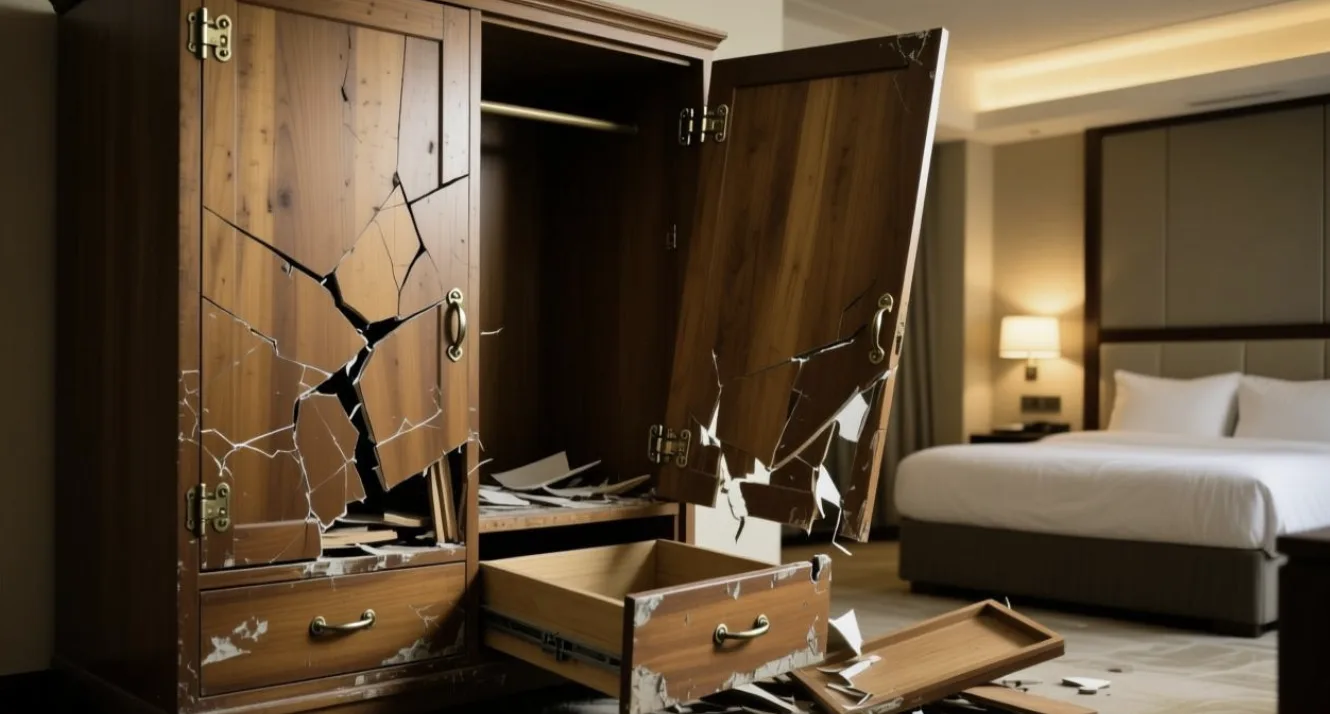
Hotel Cabinet Failures: Key Causes and Fast Prevention Strategies
Hotel cabinet failures usually come from three sources: unstable humidity, weak substrate materials, and low-cycle hardware. In guest rooms, luggage impact, daily cleaning chemicals, and repeated opening cycles accelerate damage. The most common visible problems are cabinet door cracking, side-panel warping, hinge loosening, drawer slide noise, and laminate edge lifting.
According to the USDA Forest Products Laboratory, wood-based panels expand and contract when moisture content changes. The National Institute of Standards and Technology also notes dimensional movement as a major cause of fit tolerance issues in assembled products. For hotels, correct cabinet engineering reduces maintenance calls and replacement cost.
Hotels upgrading storage systems often review durable hotel room cabinets, impact-resistant hospitality casegoods solutions, and moisture-stable custom hotel wardrobes during renovation planning.
Cabinet Cracking in Hotel Furniture: Why Panels Split
Cracking in hotel cabinets usually appears near screw points, hinge cups, panel corners, or edge-banded seams. The root cause is stress concentration. When particleboard density is low or pilot holes are undersized, screw insertion creates internal fractures. Over time, repeated door movement enlarges the crack.
Temperature swings also matter. Guest rooms near coastal zones or HVAC vents experience faster moisture cycling. The U.S. Forest Service reports that repeated wet-dry movement weakens wood fiber bonds. Decorative laminates may hide early cracking, but structural damage continues beneath the surface.
Typical Crack Locations in Hotel Cabinets
| Crack Area | Main Cause | Early Warning Sign |
|---|---|---|
|
Hinge zone |
Screw stress |
Door sagging |
|
Drawer front |
Impact load |
Hairline seam split |
|
Side panel corner |
Transport damage |
Visible edge opening |
|
Shelf pin hole |
Overload |
Surface fracture |
Hotels replacing damaged units often choose reinforced commercial hotel cabinetry with higher-density cores and better fastening systems.
Warping in Hotel Cabinets: Moisture and Heat Exposure
Warping means a panel no longer stays flat. Cabinet doors may twist, shelves may bow, and toe-kick sections may separate from the floor line. In hotels, warping is common in humid regions, bathrooms, minibar zones, and rooms with blocked air circulation.
The U.S. Environmental Protection Agency recommends humidity control because indoor moisture damages many building materials. For engineered wood cabinets, relative humidity above normal operating range can increase panel movement.
Moisture Risk Comparison for Hotel Cabinet Areas
| Location | Moisture Risk | Typical Failure |
|---|---|---|
|
Bathroom vanity zone |
High |
Door warp |
|
Minibar cabinet |
Medium-High |
Shelf swelling |
|
Bedroom wardrobe |
Medium |
Minor panel bow |
|
Corridor storage |
Low-Medium |
Joint movement |
Hotels often reduce risk by specifying sealed-edge water-resistant hotel cabinets and balanced laminate construction.
Hardware Issues in Hotel Cabinets: Hinges, Slides and Handles
Hardware failure creates most service tickets because moving parts wear faster than fixed panels. Common examples include loose concealed hinges, drawer slides that bind, soft-close dampers that fail, and pull handles that rotate.
The BIFMA standards organization provides performance testing methods widely used in furniture manufacturing. High-cycle hotel furniture should use tested hinges and slides rated for commercial use rather than residential duty cycles.
Common Hardware Problems and Solutions
-
Loose hinge screws – use threaded inserts or larger screw anchors.
-
Drawer misalignment – check carcass squareness before replacing slides.
-
Noisy runners – clean tracks, then inspect bearing wear.
-
Handle pull-out – add backing plates on thin fronts.
-
Soft-close failure – replace damper cartridge, not full hinge set.
Many renovation teams compare long-life hotel cabinet hardware upgrades before room refresh projects.
Material Selection for Durable Hotel Cabinets
Material choice directly affects lifespan. Particleboard is economical but vulnerable to water ingress at exposed edges. MDF provides smooth machining but may swell if sealing is poor. Plywood offers stronger screw holding and better moisture tolerance, though cost is higher.
According to the Architectural Woodwork Institute, specification details such as edge treatment, core type, and finish system are as important as panel category. A low-cost board with strong edge sealing may outperform a premium board with poor fabrication.
Material Comparison for Hospitality Cabinetry
| Material | Screw Holding | Moisture Resistance | Typical Use | |—|—|—| | Particleboard | Medium | Low-Medium | Dry wardrobes | | MDF | Medium | Low | Painted fronts | | Plywood | High | Medium-High | Heavy-use cabinets |
Hotels sourcing new casegoods often request durable hotel wardrobe furniture built with commercial-grade cores.
Preventive Maintenance for Hotel Cabinet Performance
A preventive program lowers replacement frequency. Monthly checks should include hinge tightening, drawer alignment, seal inspection, and moisture scanning near plumbing walls. Housekeeping teams should avoid chlorine-heavy cleaners on laminate edges because chemical residue can weaken adhesives.
Recommended maintenance workflow:
Inspect 10% of rooms each month.
Record recurring cabinet defects by room type.
Replace failed hardware before panel damage spreads.
Re-seal exposed edges near sinks or minibars.
Rotate spare parts inventory for common hinge models.
The Occupational Safety and Health Administration also emphasizes maintenance practices that reduce unsafe loose fixtures in commercial spaces.
How to Choose Replacement Hotel Cabinets in 2026
When replacing failed cabinets, decision makers should compare lifecycle cost rather than purchase price alone. A cabinet lasting ten years with fewer repairs often costs less than a low-price unit replaced twice.
Key selection criteria include:
Moisture-resistant substrate
Commercial hinge cycle rating
Replaceable hardware system
Low-VOC finish compliance
Standardized dimensions for faster installation
Easy-clean laminate or veneer finish
Hotels that standardize room furniture often reduce downtime because spare doors, shelves, and hardware fit multiple rooms.
FAQ
1. What is the main reason hotel cabinet doors crack?
Cabinet doors usually crack because screw stress combines with repeated opening cycles. Low-density board, improper pilot holes, and luggage impact increase risk. Crack lines often begin near hinge cups or handle fasteners where concentrated force is highest.
2. Can warped hotel cabinets be repaired without replacement?
Minor warping can sometimes be corrected by adjusting hinges, improving humidity control, or replacing swollen back panels. Severe panel twist or water-swollen core material usually requires full door or carcass replacement for stable alignment.
3. How often should hotel cabinet hardware be inspected?
High-traffic hotels often inspect cabinet hardware monthly or quarterly depending on occupancy rate. Hinges, drawer slides, and pulls should be checked before visible failure because early tightening prevents panel damage and guest complaints.
4. Is plywood better than particleboard for hotel cabinets?
Plywood usually offers stronger screw holding and better moisture tolerance. Particleboard can still perform well in dry zones when density is adequate and edges are sealed correctly. Budget, climate, and usage intensity determine the better choice.
5. What is a common mistake during hotel cabinet replacement?
A frequent mistake is buying cabinets based only on unit price. Ignoring hardware cycle ratings, substrate density, installation tolerances, and spare-part availability often increases long-term maintenance cost and room downtime.


