
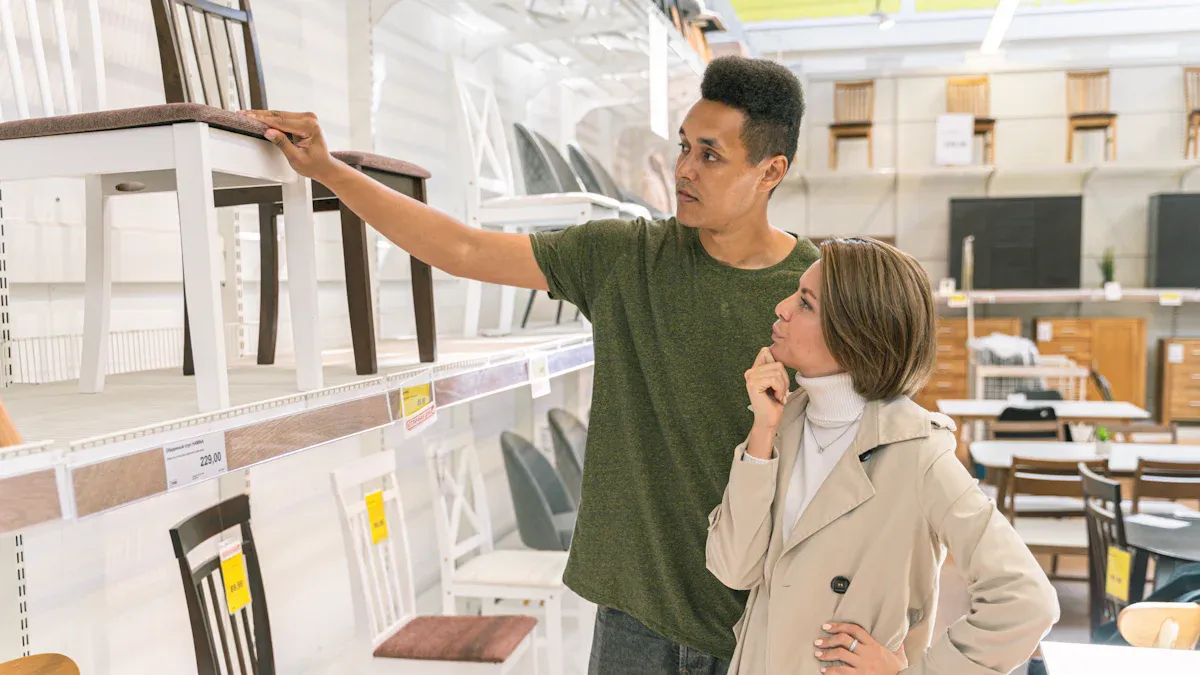
Many businesses often ask how to import furniture from China successfully. They want both quality and timely delivery for their hospitality furniture projects. The single most important step for success is proactive vetting of manufacturers. This initial effort ensures you receive the exact China hotel project furniture you need. It also guarantees your high-end custom hotel seating arrives on schedule. A factory providing Taisen Furniture OEM services, for instance, thrives on understanding specific Hotel Project Furniture requirements.
Key Takeaways
- Always check a factory’s past work and communication methods. This helps you find a good partner for your furniture needs.
- Factories must have strong quality checks. They should fix problems quickly and learn from mistakes to make better furniture.
- Understand a factory’s delivery times and shipping experience. This ensures your furniture arrives on schedule.
- Protect your money with clear payment terms and warranties. This keeps your investment safe.
Initial Vetting: Laying the Groundwork for Quality Hospitality Furniture
Finding the right Chinese furniture factory starts with careful vetting. This crucial first step helps you understand a factory’s true capabilities. It ensures they can meet your specific needs for quality and timely delivery.
How Do Manufacturers Demonstrate Their Capabilities and Experience?
A factory’s past work often tells its story best. They should readily share examples of previous projects, especially those similar to yours. For instance, Andaaz Manufacturing shows its expertise through custom casegoods and seating for the hospitality industry. They have completed projects for boutique hotels, luxury resorts, and even large-scale renovation timeshares. You can see their work at places like the Thompson Hotel in Houston, the Lafayette Hotel in San Diego, and Zelda Dearest in Asheville. They also partner with respected brands such as Marriott Vacation Worldwide and Autograph Collection. Similarly, Artone Manufacturing demonstrates its specialization by working with major hotel brands. These include AmericInn by Wyndham, Best Western Hotels & Resorts, and DoubleTree by Hilton. They also handle various project types, from casino and resort furnishings to commercial projects.
What Communication Protocols Ensure Clarity and Efficiency?
Clear communication is vital for any successful partnership. You should ask about a factory’s communication protocols. Do they assign a dedicated project manager? How quickly do they respond to emails or calls? A factory that values efficiency will have established channels for quick and clear exchanges. They might use specific software or provide regular updates. This ensures everyone stays on the same page, from design changes to shipping schedules.
How Do You Verify Specialization in Hospitality Furniture?
Verifying a factory’s specialization means looking beyond general furniture production. A factory truly focused on hospitality furniture will have a portfolio reflecting this niche. They will understand the unique demands of hotel environments, such as durability, safety standards, and aesthetic appeal. The examples from Andaaz and Artone Manufacturing clearly show their deep involvement in the hospitality sector. They do not just make furniture; they craft pieces specifically for hotels, resorts, and similar venues. This focus ensures they understand your project’s specific requirements.
Quality Control and Assurance: Ensuring Product Excellence in Hospitality Furniture

Quality control is a factory’s promise of excellent products. It shows their commitment to delivering furniture that meets your high standards. A strong quality assurance system means fewer surprises and better results for your projects.
What Specific QC Procedures Are in Place?
Good factories have clear steps for checking quality. After they make the goods, quality control officers inspect everything. They check for order accuracy, making sure items match the order in color, shape, material, and quantity. They also look for any damage or signs of prior use. For upholstered items, they ensure material consistency, like uniform softness in sofa stuffing without gaps. Seams must be even and straight. For wooden and metal items, they examine surfaces for scratches, splinters, holes, or defects. Paint quality must be uniform. They also take precise measurements, especially for custom pieces. If ceramics are part of the order, they inspect for chips and scratches. Finally, they test functionality for items like hot tubs or mini-swimming pools.
Before shipment, furniture goes through even more strict checks. They perform a packing visual check, ensuring strong cartons and correct shipping marks. They also verify accurate content and accessories. Workers inspect product storage, checking for moisture, mold, or odors. Cartons must sit on dry pallets in a well-ventilated area. A barcode scan test confirms barcodes are clean, readable, and match client information. A product visual check confirms logos, labels, and markings are correct. They look for surface defects, dirt, or wrinkles. Safety is key; they check for burrs or sharp edges. Wood finishes get checked for cracks or mold, and metal furniture for welding and rust. The overall design must match specifications. They also do a product assembly check, making sure assembly is easy and all parts are present. A functional check tests all product functions. Finally, a stability test ensures the furniture does not wobble.
Factories often conduct inspections at different stages. A During Production Inspection (DUPRO) happens when 20-60% of production is complete. This helps catch and fix issues early. A Pre-Shipment Inspection is the final check. It happens when manufacturing is 100% complete and most goods are packed. This confirms quality, quantity, and packaging before shipping. Container Loading Supervision ensures the correct products load in good condition. It also verifies the container’s integrity and proper securing to prevent damage during transit.
Which Certifications and Standards Do They Hold?
Certifications show a factory’s dedication to quality and responsible practices. Look for international standards. ISO 9001 focuses on quality management, ensuring consistent product quality and customer satisfaction. ISO 14001 promotes environmentally friendly practices, like sustainable sourcing and waste reduction. ISO 45001 ensures worker health and safety, addressing risks in manufacturing. ISO 28000 enhances supply chain security, important for raw materials. ISO 50001 helps optimize energy use. ISO 38200 guarantees wood comes from sustainable sources, supporting ethical practices.
Chinese factories also follow important national and provincial environmental standards. For example, the Technical Policy for Prevention and Control of VOCs Pollution encourages new technologies for controlling harmful volatile organic compounds (VOCs). The Emission Standard of Pollutants in Synthetic Resin Industry requires automatic monitoring for VOCs. The Control Standard for Unorganized Emission of VOCs proposes online sampling systems. The Technical Guide for Pollution Prevention and Control in Furniture Manufacturing Industry suggests using smart equipment like robots. Many provinces, like Guangdong, Shanghai, Fujian, Jiangxi, and Zhejiang, have their own strict VOCs emission standards. They often require automatic monitoring and advanced technologies.
Factories also adhere to standards for hazardous substances in furniture.
| Standard | Hazardous Substances Covered |
|---|---|
| GB 18584-2024 ‘Limits on hazardous substances in furniture’ (to be implemented July 1, 2025) | Phthalates, Polycyclic aromatic hydrocarbons, Aromatic amines decomposed by decomposable aromatic amine colorants, Formaldehyde, benzene, toluene, xylene, and TVOC in upholstered furniture, Formaldehyde, benzene, toluene, xylene, and TVOC in wooden furniture and other furniture |
These standards ensure the hospitality furniture you receive is safe and environmentally sound.
How Are Defects Identified and Resolved?
Even with strong QC, defects can sometimes happen. How a factory handles them shows their commitment to quality. Factories often rework defective items right after inspection. This is common in places like China due to lower labor costs. Reworking before shipping avoids higher costs and potential customer returns later. After rework, they do a re-inspection to confirm fixes. If rework is not possible, chargebacks or penalties can apply. These are often based on agreements made before production.
For severe defects that cannot be fixed, product destruction may be necessary. This protects a brand’s reputation, especially where counterfeit goods are common. An independent party should oversee this process.
Factories also learn from defects. They update their QC checklists and product specifications. This includes new criteria or material changes. It tells suppliers what specific defects to prevent. This also makes future inspections more efficient. They address common issues like knots in wood by sourcing high-quality materials. They prevent faulty drawer slides by using reliable hardware and stress tests. Weak hinges get replaced with sturdy ones after load tests. Cracks in finishes are avoided with proper curing processes. Uneven staining is fixed with uniform application. Wobbly legs are reinforced and stability tested. Scratches and dents are prevented with better packaging. They also ensure accurate measurements and proper alignment of patterns. Unpleasant smells are checked with regular odor tests. Loose joints are fixed with strong adhesion protocols. Tears in upholstery are prevented with durable fabrics. Uneven padding is standardized. Warping in wood is avoided with proper drying techniques.
When a defect occurs, factories document it clearly. They describe each defect and use images or videos. They also perform a root cause analysis to find out why the defect happened. Then, they outline corrective actions to fix the problem. Finally, they propose preventive measures. These steps stop similar defects from happening again. This helps improve quality over time.
Delivery and Logistics: Guaranteeing On-Time Arrival of Hospitality Furniture
Getting your furniture on time is just as important as getting quality pieces. A factory’s ability to manage delivery and logistics directly impacts your project timeline. You need to know they can handle the journey from their factory floor to your project site.
What Are Their Lead Times and Production Capacity?
Understanding a factory’s lead times helps you plan your project schedule. Lead time refers to the period between placing an order and receiving the finished product. You should ask about their typical lead times for custom orders. For example, CenSo Home, a manufacturer with factories in China, maintains an average lead time of 30–45 days for their hotel and hospitality projects. This includes custom hotel furniture orders. This timeframe gives you a good benchmark. You also need to know their production capacity. Can they handle your order size without compromising quality or delaying other projects? A factory with high production capacity can manage large volumes efficiently. They can also scale up if your needs change.
How Extensive Is Their Export Experience?
Export experience is vital for smooth international shipping. A factory with extensive export experience understands customs regulations, shipping documentation, and international logistics. They know how to get your furniture from China to your location without unnecessary delays or complications.
Consider the common shipping methods and routes:
- Ocean Freight: This is a cost-effective choice for large volumes and long distances. It is slower, taking weeks to a month, and weather can cause delays. Ocean freight is crucial for protecting items from moisture and shock.
- Air Freight: This method is much faster than ocean freight. It works well for small, lightweight, and urgent shipments. However, it costs more.
Here are some common transit times for 40′ HC containers:
- China to USA West Coast: 14-18 days.
- China to USA East Coast: 21-28 days.
- China to Europe (Hamburg): 28-35 days.
- China to Europe (Rotterdam): 26-32 days.
What if your furniture is too big for standard containers? Specialized solutions are available for oversized cargo:
- Break-bulk shipping: This method handles items that do not fit into standard containers. It offers reliable handling for oversized cargo.
- Custom Container Solutions: These include open-top containers for height restrictions. Flat-rack containers work for width or length limitations. Equipment trailers handle extremely large pieces.
- Flat-Pack Revolution: Modern modular designs can reduce oversized shipping requirements by up to 70%. This makes shipping easier and often cheaper.
What Supply Chain Management Strategies Do They Employ?
Effective supply chain management ensures your order moves smoothly from raw materials to final delivery. Factories use various strategies and technologies to achieve this. They aim for efficiency and reliability.
Many efficient Chinese furniture factories use advanced software and systems:
- ERP (Enterprise Resource Planning) tools help with efficient production and supply chain management.
- MES (Manufacturing Execution System) tools also aid in efficient production and supply chain management.
- Data analytics helps optimize inventory management for raw materials and finished goods.
- Smart logistics scheduling automates material and semi-finished product transportation.
- AI and big data technologies help with smart upgrading and production forecasting.
Other important tools include:
- Enterprise Resource Planning (ERP) platforms track inventory in real-time. They also process orders and control quality.
- Supply Chain Management (SCM) solutions streamline the entire process.
- Digital procurement platforms simplify supplier selection and order management.
- Advanced logistics systems coordinate transportation, tracking, and delivery schedules.
- APIs (Application Programming Interfaces) allow different software systems to communicate seamlessly. This includes ERP, CAD, and logistics platforms.
- Cloud-based solutions enable data sharing across all supply chain partners.
Factories also have strategies to handle supply chain disruptions. They optimize inventory management by carefully analyzing customer buying patterns. They use advanced simulation tools to predict competitor actions. This proactive approach ensures stock levels match market demands. It minimizes excess inventory, capital tie-up, and carbon footprint. They also improve distribution strategies. They use sophisticated logistics technology for real-time tracking. They refine transportation methods to optimize routes. This leads to fuel conservation and a lower carbon footprint.
Leveraging technology for efficiency involves refining production steps. They anticipate market changes and accurately manage resources. This avoids overproduction and tracks products at every stage of the supply process. Streamlining procurement processes means negotiating better terms with suppliers. They adopt sustainable materials and introduce advanced technology for more precise and swift procurement. This helps unify the supply chain and reduces lead times and costs.
Other key strategies include:
- Supplier Diversification: Manufacturers move away from single-source suppliers. This reduces vulnerabilities. It requires careful cost-benefit analysis.
- Nearshoring and Reshoring: They shift production to closer markets. For example, they might move from Asia to Mexico. This reduces lead times and mitigates risks.
- Digital Transformation and Smart Warehousing: They use AI-driven demand forecasting to optimize inventory. They employ robotics and automation to improve warehouse efficiency.
- Sustainable and Circular Economy Practices: They implement recyclable materials and modular designs. Furniture-as-a-Service (FaaS) models extend product lifespans and reduce waste.
- 3D Printing and On-Demand Manufacturing: Additive manufacturing reduces lead times and minimizes waste. It enables localized production. This decreases reliance on global supply chains.
- Blockchain for Supply Chain Transparency: This ensures ethical sourcing and real-time traceability of raw materials. It enhances supplier accountability and reduces fraud risks.
Factories also strengthen partnerships within the supply chain. This helps stabilize operations and navigate trade-related disruptions. They leverage technology for demand forecasting and inventory management. Real-time tracking systems and AI-driven analytics anticipate and address delays. They optimize inventory levels based on demand patterns. This enhances supply chain visibility. Embracing sustainability means adopting environmentally friendly practices. They reevaluate raw materials and packaging. They comply with stricter regulations on carbon emissions and waste reduction. This aligns with consumer preferences and government incentives. Finally, they anticipate regulatory shifts. Companies plan for evolving government policies and their effects on the supply chain. This helps maintain efficiency and meet consumer demand.
Financial and Contractual Safeguards: Protecting Your Hospitality Furniture Investment

Securing your investment in hospitality furniture goes beyond quality and delivery. You also need clear financial terms and strong contractual safeguards. These elements protect your business and ensure a smooth transaction.
What Are the Negotiable Payment Terms?
Factories offer various payment terms. You should discuss these options with them. A widely used method is TT (Telegraphic Transfer) in advance. This typically involves a 20%-40% deposit after you confirm the order. You then pay the balance after a quality inspection. For smaller orders or mock-ups, factories might ask for 100% TT in advance. Some custom furniture orders may require a 50% deposit. Another option, gaining popularity, is TT upon delivery. Here, you pay a 30% deposit. The remaining 70% balance is due against a copy of the Bill of Lading (B/L) after the goods ship. This method works well for large, heavy items like furniture sent by sea freight.
Other payment methods exist too. These include Letters of Credit (LCs) like Red Clause LC or Revolving LC. You might also encounter business account terms such as DP (Documents against Payment) or DA (Documents against Acceptance). For shipping, you can choose FOB (Free On Board). This lets you arrange your own customs broker. Alternatively, DDP (Delivered Duty Paid) means the furniture arrives directly at your location, saving you effort.
What Are the Minimum Order Quantity (MOQ) Requirements?
Minimum Order Quantity (MOQ) refers to the smallest number of items a factory will produce. For furniture, a "low MOQ" often means fewer than 500 units. The standard MOQ is usually 50 pieces per model. However, factories can negotiate more flexible MOQ terms for large-scale or customized projects.
Several factors influence a factory’s MOQ. Subcontractors often set their own MOQs for materials and components. Factories must meet these. This explains why different materials or even colors can have varying MOQs. Product customization also plays a role. Simple changes, like a custom logo, are easier than entirely new designs. Factories also consider production costs, including raw materials, labor, and packaging. They need to cover fixed costs, like setup expenses, and ensure profitability.
What Warranty Policies Do They Offer for Hospitality Furniture?
A good warranty protects your hospitality furniture investment. However, certain actions can void a warranty. Misusing furniture, such as standing on a dining table or placing excessive weight on it, typically voids coverage. Exposing furniture to extreme temperatures or moisture also often cancels the warranty. Environmental damage, like fading from sun exposure, is usually not covered. Issues from accidental damage are often your responsibility. Finally, delaying warranty claims can lead to denial. Many warranties have strict deadlines for filing.
Thorough vetting is essential for successful partnerships with Chinese furniture factories. Businesses must carefully choose their manufacturers. This diligence in selection directly leads to long-term success for your hospitality furniture projects. Building strategic partnerships ensures quality and timely delivery. It helps secure your investment and builds trust for future collaborations.
FAQ
How can I ensure the quality of materials used in my furniture?
Factories often provide material samples for approval. They also hold certifications like ISO 38200 for sustainable wood. Quality control checks happen at various stages. These checks confirm material consistency and adherence to specifications.
What is the typical process for a custom furniture order?
First, you discuss your design and specifications with the factory. They then create prototypes or samples for your approval. After approval, they begin mass production. Throughout this process, they maintain clear communication and provide updates.
How do factories handle shipping and customs for international orders?
Experienced factories manage all aspects of international shipping. They handle customs documentation and choose the best shipping method. This includes ocean freight for large orders or air freight for urgent ones. They ensure smooth delivery to your location.
What if I need to make changes to my order during production?
Factories with good communication protocols can accommodate changes. They assign a project manager to your order. This person helps you discuss modifications. They also assess any impact on cost or delivery timelines.


