
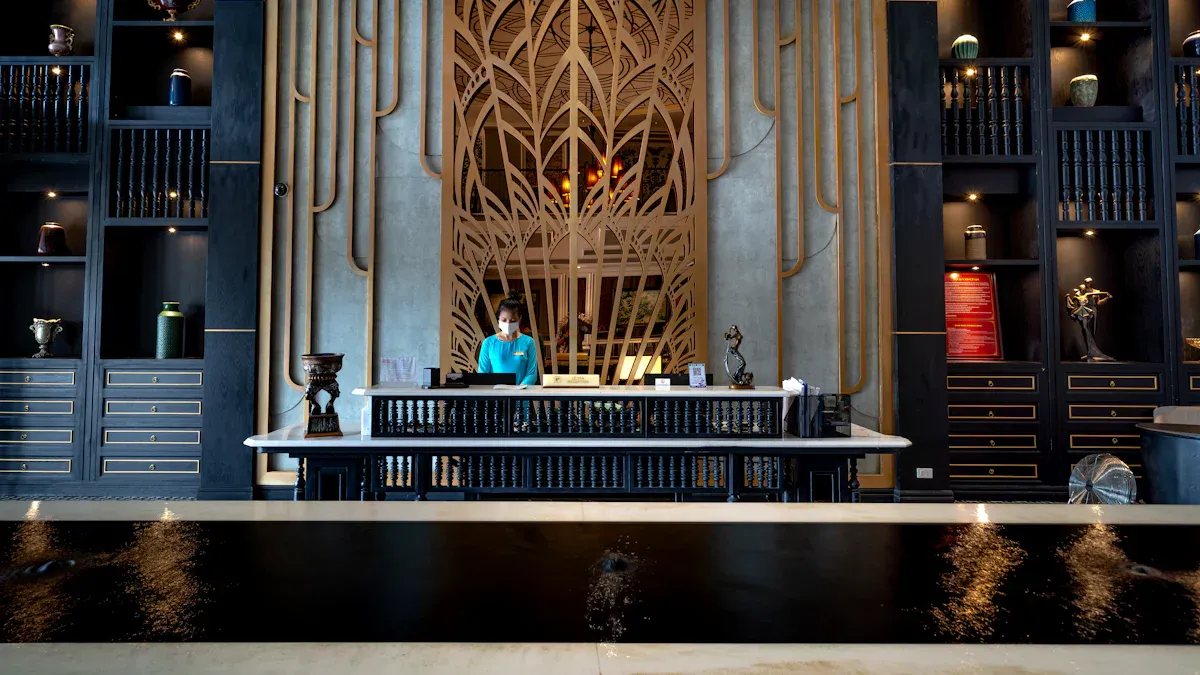
A one-stop hotel project furniture service simplifies complex procurement, ensuring consistent quality across all items, including Custom Hotel Furniture. This approach saves clients time and money. Providers offer reliable support from the initial design phase to after-sales for Hotel Guest Room Furniture. They efficiently manage Custom OEM Hotel Furniture Projects. Many people wonder, "What includes one-stop hotel furniture service?" This comprehensive service covers every step. It also helps answer the question, "How to find reliable hotel project furniture suppliers?" by providing a complete solution.
Key Takeaways
- A one-stop service handles all hotel furniture needs. It goes from design to installation and after-sales support.
- This service helps save money and time. It makes the process simple and avoids problems.
- Hotels get custom furniture designs. These designs match their brand and vision.
- The service ensures high quality. It uses strict checks and tests for all furniture.
- After installation, hotels receive support. This helps furniture last longer and keeps guests happy.
Overcoming Challenges in Hotel Project Furniture Procurement
Hotel developers often face significant hurdles when they procure furniture. These challenges can complicate projects and impact their success. Understanding these common issues helps businesses find better solutions.
Fragmented Processes and Multiple Vendors in Hotel Project Furniture
Managing many different suppliers for a single hotel project furniture endeavor creates complexity. When a project involves numerous vendors, costs often increase. For example, projects can see cost increases of 10-20% due to less negotiation power and material shortages. This fragmented approach also causes project delays. If a key vendor fails or misses crucial deliveries, the entire project can stall. Furthermore, buying items from various suppliers often results in inconsistent quality and aesthetics. Finishes might not match, hardware could differ, and colors might vary slightly. Guests often notice these subtle differences. When items need replacement, finding the original vendor becomes a time-consuming task. This also leads to vendors blaming each other if deliveries are damaged or late.
Quality Control and Consistency Issues in Hotel Project Furniture
Ensuring consistent quality across all furniture pieces presents a major challenge. Items sometimes arrive damaged or do not match the specified designs. This creates problems for the hotel. Quality control issues are a common concern for developers. To prevent inconsistencies, essential measures include initial material inspections. This means checking wood for warping, upholstery for durability, and metal for corrosion resistance. Oversight during manufacturing also helps. This ensures precision alignment and proper adhesive application. Durability tests, like weight-bearing for seating and cycle testing for drawers, are also crucial. Finally, aesthetic inspections confirm color consistency and flawless finishes.
Time and Cost Overruns in Hotel Project Furniture Projects
Budget overruns and project delays frequently plague furniture procurement. Unclear lead time estimates often cause delays. Materials might not arrive on schedule due to unforeseen events. This leads to additional costs for equipment or personnel. Poor coordination among contractors, designers, and suppliers also causes installation delays and quality issues. Inaccurate project cost estimates can lead to poor cash flow. Competitive bidding sometimes results in incorrect budget expectations. It is important to have transparent budgets. Failing to account for all costs, including delivery, storage, and customization, creates significant budget shortfalls. Ignoring lead times for custom or international items also causes project delays.
The Seamless Journey of One-stop Hotel Project Furniture Solutions

A one-stop solution transforms the complex process of furnishing a hotel. It guides clients through every step, from initial ideas to final installation. This integrated approach ensures a smooth and efficient project.
Integrated Design and Consultation for Hotel Project Furniture
An integrated design and consultation process lays the groundwork for successful hotel furniture projects. It starts with a deep understanding of the client’s vision and brand. This process uses advanced tools like CAD technology. CAD helps create highly customized furniture pieces that match branding guidelines perfectly. It also plays a big role in the overall interior design. This technology minimizes reworks and changes, leading to perfection, accuracy, and quick turnarounds. It allows for comprehensive visualization of floor plans, detailed furniture layouts, and elevations. This ensures furniture design harmonizes with the hotel’s overall look and function. Visualizing designs before building them helps make informed decisions and achieve desired outcomes.
This integrated approach also uses virtual prototyping and simulation. Designers can assess how furniture works, its ergonomics, and its appearance without physical models. This saves time and money by finding issues early. It also helps integrate smart technologies like wireless charging and smart lighting. This keeps designs current and adaptable. For large projects, CAD services offer scalability. They allow consistent replication of designs across many properties. This maintains brand continuity and adapts to different room sizes and styles.
The process involves several key stages:
- Initial Design Communication & Concept Alignment: The design team, sales team, and client talk to gather information. They align expectations and identify the project scope and site conditions early. This prevents costly redesigns.
- Precision Site Measurement: They accurately record every dimension. They account for material thickness, clearance, structural elements, and utilities. This ensures the final furniture fits perfectly during installation.
- Technical Drawing Development & Refinement: They turn raw measurements into precise elevations, plans, and detail drawings. They verify compatibility with lighting, HVAC, and other elements. They also communicate discrepancies for feasible solutions.
- Product Breakdown & Production Preparation: They systematically break down products into manufacturable components. They detail material requirements, finishes, hardware, and structural needs. They also create additional drawings for complex components.
- Production, QA Monitoring & On-Site Installation: They supervise key production stages to ensure they execute the design intent. They cross-check materials and joinery. They brief the site team on critical alignment points. They conduct final inspections for quality and function.
This detailed process includes stages like Schematic Design, which explores solutions with concept boards and initial cost estimates. Design Development then narrows down solutions, providing detailed floor plans, material selections, and refined cost estimates. Finally, Construction Documents assemble the final paperwork for bidding and building.
Precision Manufacturing and Quality Assurance for Hotel Project Furniture
Precision manufacturing ensures each furniture piece meets high standards. It starts with careful material selection. Materials are chosen to fit project needs, like weather-resistant finishes for beachfront properties or sturdy laminates for high-traffic areas. Manufacturers use advanced machinery from German and Italian companies. This ensures microscopic accuracy in every joint, cut, and finish. This leads to structurally superior furniture. This cutting-edge machinery guarantees each piece meets high international standards for durability and finish.
After material selection, detailed technical drawings are produced. Prototypes, often called ‘white bodies,’ are created to test functionality and stability before full production. This step helps catch any design flaws early.
Quality assurance protocols are strict throughout the manufacturing process.
- Raw Material Evaluation: Before manufacturing, materials like wood, metal, and fabrics are tested for quality. They inspect wood for defects or check fabric colorfastness.
- In-Process Quality Monitoring: During production, QA teams monitor aspects like joint stability and finish quality. They use tools like digital calipers to ensure dimensions match specifications.
- Final Product Assessment: Once furniture is complete, it undergoes rigorous tests. These tests ensure safety, durability, and functionality for real-world use.
For example, durability testing checks how well furniture withstands stress. A chair should withstand 100 kg for 10,000 cycles. Stability testing ensures furniture remains steady under weight. A table should not tip with 20 kg on one edge. Flammability testing ensures upholstery does not catch fire easily, meeting standards like California TB 117-2013. Finish and colorfastness tests check if finishes resist scratches and fabrics hold color. They look for no visible fading after 40 hours of light exposure. Compliance with global standards like ANSI/BIFMA X5.1 for general-purpose office chairs and X5.4 for lounge seating ensures safety and durability through rigorous testing.
Efficient Logistics and Installation of Hotel Project Furniture
Efficient logistics and installation are crucial for timely project completion. Planning supply chain transportation ahead helps. Arrange transportation as soon as furniture readiness is known. This allows for slower, less expensive options like ocean freight or certain rail lines. Strategic warehousing acts as a safety net for construction delays. It prevents last-minute storage costs or on-site damage. It also avoids wasted payments for idle installation crews due to delivery delays. When delays happen, logistics partners manage communication and coordination with all parties.
Quality assurance checks happen throughout the supply chain. This identifies and addresses issues like incorrect colors or damage early. It is best to have a third-party logistics (3PL) provider manage liability. General contractors need training on delivery sign-off. They must understand proper delivery inspection and sign-off procedures. This prevents refusal of goods and costly return shipping. Using professional FF&E installation teams over general movers ensures better efficiency and expertise.
Key considerations for planning FF&E installation include:
- Logistics: Determine the order’s location, movement paths, and if the facility will be open for business.
- Assembly: Identify installation locations and required resources like power outlets.
- Haul away: Plan for the removal and disposal of existing FF&E.
- Cleanup: Specify expectations for packaging material disposal and site condition.
To streamline installation, communicate openly with the FF&E installer from the project’s start. Request prototypes to test product reception and confirm design elements before full production. Agree on a realistic schedule for deliveries, manpower, and resources. Create a detailed itinerary for installation days. This keeps everyone aligned and minimizes disruptions. When choosing an installer, consider the FF&E manufacturer. They often simplify budgeting and logistics. They know the product best. A manufacturer’s recommendation also provides peace of mind. Independent installers require more vetting to ensure they can handle the job and meet deadlines.
Comprehensive Project Management for Hotel Project Furniture
Comprehensive project management ties all these elements together. It ensures seamless coordination from start to finish. A dedicated project manager oversees every detail. They manage timelines, budgets, and communication among all stakeholders. This includes architects, interior designers, contractors, and manufacturers. They use a shared digital model to reduce ambiguity and facilitate real-time feedback. This integrated approach contributes to cost-efficiency and sustainability. It minimizes material waste, enables better planning, and speeds up the design process through quick revisions. This leads to quicker lead times and reduced errors. This holistic oversight ensures the entire hotel project furniture process runs smoothly. It delivers a high-quality outcome on time and within budget.
Comprehensive Project Management for Hotel Project Furniture
Comprehensive project management ties all these elements together. It ensures seamless coordination from start to finish. A dedicated project manager oversees every detail. They manage timelines, budgets, and communication among all stakeholders. This includes architects, interior designers, contractors, and manufacturers. They use a shared digital model to reduce ambiguity and facilitate real-time feedback. This integrated approach contributes to cost-efficiency and sustainability. It minimizes material waste, enables better planning, and speeds up the design process through quick revisions. This leads to quicker lead times and reduced errors. This holistic oversight ensures the entire process runs smoothly. It delivers a high-quality outcome on time and within budget.
Effective project management significantly contributes to the success of hotel furniture installations. It focuses on several key areas.
- Procurement and Ordering: Managers source reliable suppliers. They negotiate favorable pricing. They also manage lead times to prevent delays.
- Delivery and Logistics: Meticulous scheduling is essential. Securing appropriate storage and effective inventory management safeguard against damage. This ensures items are available for installation.
- Installation and Punch List Resolution: Managers ensure installations adhere to schedules and specifications. A comprehensive punch list process helps rectify defects. This ensures client satisfaction.
- Managing Mid-Project Changes and Communication: Effective communication and adaptability are crucial. They handle client requests or unforeseen circumstances. This minimizes disruptions.
- Building Realistic Schedules and Contingency Plans: Managers develop schedules that account for long lead times and vendor dependencies. Backup plans for potential delays ensure project success.
- Budget Control Strategies: This includes accurate initial estimates. Contingency funds (5-10% of the budget) are set aside. Real-time tracking identifies issues early. Value engineering optimizes costs without compromising quality.
Meticulous planning is a cornerstone of this process. It starts months before installation. This planning integrates FF&E schedules with overall project timelines. It also considers construction milestones and objectives. This includes detailed analysis of construction schedules, building access, delivery constraints, and installation sequences. It identifies and resolves potential conflicts early.
Professional receiving and warehousing are also vital. This involves sophisticated receiving processes. They identify defects and damage immediately. Organized inventory systems allow for rapid retrieval. Climate-controlled environments protect materials. This prevents damage, loss, and disorganization that often plague DIY attempts. Advanced inventory management uses digital cataloging, real-time tracking, and specialized software systems. These systems manage thousands of individual FF&E items. They provide visibility into status, location, and condition. This prevents chaos and ensures items are staged and delivered precisely.
Strategic delivery planning and logistics involve precise coordination. Specialized vehicles and experienced drivers transport furniture. This accounts for building access, delivery windows, and construction activities. It ensures timely and damage-free delivery. Expert installation and assembly are the final steps. Skilled craftspeople ensure proper assembly. They provide precise placement according to design plans. They also verify quality and make final adjustments. This transforms delivered items into functional, aesthetically complete spaces that meet specifications.
This comprehensive approach offers clear benefits:
- Prevents Delays: Proactive planning, contingency strategies, and integrated scheduling ensure projects stay on track. This is especially important for projects with firm opening dates.
- Controls Costs: Professional management prevents hidden costs and budget overruns. It does this by reducing damage, optimizing scheduling, managing claims, and preventing productivity losses from delays.
- Ensures Quality: Multiple checkpoints, expert assembly, precise placement, and final verification guarantee that every item meets specifications. This contributes to overall project success.
- Meets Project Timelines and Specifications: Meticulous coordination, advanced tracking, and expert execution ensure all aspects of the installation align with the project’s deadlines and design requirements.
Effective project management for hotel furniture solutions involves several core components. Key specifications are discussed with manufacturers. These include:
- AWI standards: Adhering to Architectural Woodwork Institute guidelines ensures wood product quality.
- Warranty: A standard 5-year warranty for casegoods provides assurance.
- Materials: Balancing budget, durability, and functionality guides material selection.
- ADA compliance: Meeting regulations for bed height, entrances, and outlets is crucial.
Vetting FF&E suppliers is another core component. It focuses on lead time and responsiveness. Partnering with communicators who anticipate obstacles and provide clear updates on lead times (typically 8-10 weeks) is important. Manufacturers must also provide comprehensive drawings for review and input at various milestones.
The core components of effective project management for FF&E involve a structured procurement process:
- Needs Assessment & Budgeting: This establishes the scope. It calculates budgets, typically per room. A recommended reserve of 4-5% of revenue for FF&E is often included.
- Design & Specification: Detailed ‘control books’ are created. These include item specifications, material selection, and prototype reviews. This ensures safety and aesthetic standards.
- Sourcing & Vendor Selection: Partners are chosen based on financial stability, production capacity, and past project references.
- Manufacturing & Quality Control: This integrates research, production, and sales. Rigorous inspections before shipping prevent on-site defects.
- Logistics, Installation & Project Management: This coordinates freight, warehousing (including attic stock), and professional installation. It ensures timely hotel openings.
Effective project management also includes managing FF&E assets. This involves preventative maintenance. Proactive care like regular cleaning and hardware tightening extends asset life. A documented maintenance schedule supports this. Deciding between refurbishment versus replacement is also part of asset management. ‘Soft goods’ renovations (e.g., changing fabrics) offer cost-effective refreshes. Full ‘hard goods’ replacements are for more extensive changes. Future-proofing with attic stock is also important. Purchasing 2-5% extra inventory during initial procurement ensures exact matches for replacements. This maintains brand consistency.
Key Benefits of One-stop Hotel Project Furniture Services

A one-stop service offers many advantages for hotel owners and developers. It simplifies complex tasks. It also ensures high quality and saves resources.
Streamlined Process and Reduced Complexity for Hotel Project Furniture
A one-stop service greatly simplifies furnishing a hotel. It removes many headaches for hotel owners and developers. This approach offers turnkey solutions. It manages everything from design to installation. This means you do not need to work with many different companies. Instead, one provider handles it all. This integrated method prevents budget problems. It also minimizes delays. You get clear cost information. Turnkey projects can cut overall project costs by up to 20%. This happens because procurement is smoother. There are fewer repeated tasks. They also shorten project timelines by 25% compared to old ways. This allows hotel owners to focus on their main business. Accountability is very clear. One company takes responsibility for the whole project. This reduces misunderstandings and project failures.
This streamlined process also brings efficiency gains. It reduces errors and delays. This happens through central tracking and standard ways of doing things. Operational efficiency improves. You get real-time data. This data shows inventory levels, order status, and spending. Team collaboration gets better. Procurement cycles become shorter. This is thanks to strong procurement software. Financial control also becomes stronger. This is because of complete procurement systems. You can also forecast costs. This helps identify which furniture types cost the most to keep up. You can track vendor performance. This shows which suppliers always meet durability needs. Sustainability metrics also get documented. This includes how much furniture gets recycled, fixed, or replaced.
Guaranteed Quality and Design Consistency in Hotel Project Furniture
A one-stop provider ensures high quality and consistent design for all hotel furniture. They use many methods to make sure every piece meets standards. They focus on commercial durability. This means furniture has strong construction. It uses heavy-duty parts. Joints do not wobble. Finishes resist scratches. Suppliers also meet fire and environmental rules. They use low-VOC coatings. They provide necessary certificates like CE, ISO, and ASTM.
These providers can make many identical room sets. They also offer custom items. This includes special headboards or branded woodwork. Project management is key. They provide detailed shop drawings. They give Bills of Materials (BOMs). They share lead-time schedules. They get sample approvals. They also support installation. Logistics and packaging are important too. They use export-grade packaging. They have damage insurance. They work with freight forwarders. Sometimes, they even do on-site installation. They offer clear warranty terms. Furniture structures usually have a 1-3 year warranty. Spare parts are also available. They ensure transparent sourcing. Materials are traceable. They use responsible wood sourcing. They also offer sustainable finish options.
Room prototyping is a big part of this. It creates a model room. This room shows the desired design and function. It makes sure all rooms look and feel the same. This process helps keep brand standards. It involves several steps. First, they define brand standards. This sets color schemes, furniture styles, and layouts. Then, they create room types and templates. These have specific layouts and furnishings. They develop a design concept. This outlines key elements. They make physical or digital prototypes. They use CAD software for 3D models. They test these prototypes. They check for function, looks, and guest experience. They get feedback and make changes. This ensures everything matches brand standards. They estimate costs accurately. This covers materials, labor, and furnishings. They pilot the new design in a few rooms. This gathers real-world feedback. They document everything. This ensures consistent use. They implement the design with quality checks. They train staff. They also monitor and refine the design over time.
Cost and Time Savings in Hotel Project Furniture Procurement
Choosing a one-stop service for hotel project furniture saves both money and time. This integrated approach prevents unexpected costs. It also avoids delays. It gives clear cost information. This helps you manage your budget better. For example, turnkey projects can reduce overall project costs by up to 20%. This is because they streamline buying processes. They also cut down on repeated work. They can shorten project timelines by 25%. This is much faster than traditional methods.
The streamlined process reduces errors. It also minimizes delays. This happens because of central tracking and standard procedures. Operational efficiency improves. You get real-time data. This data shows inventory levels and order status. It also shows spending. Team collaboration gets better. Procurement cycles become shorter. This is due to strong procurement software. Financial control also becomes stronger. This comes from complete procurement systems. You can forecast costs. This helps you know which furniture types will be most expensive to maintain. You can track how well vendors perform. This shows which suppliers consistently meet durability needs. These savings allow hotel owners to invest more in other areas. They can also open their hotels sooner. This means they start earning revenue faster.
Enhanced Accountability and Risk Mitigation for Hotel Project Furniture
A one-stop service makes accountability much clearer. It also helps reduce risks. When you work with many different suppliers, it can be hard to know who is responsible for what. A single point of contact changes this. An FF&E consultant often acts as this main contact. They handle everything. This means you do not need to talk to many different vendors. This approach guarantees unified quality standards across all items. It also simplifies how you oversee the project. Budgeting and cost control for FF&E become much easier to manage.
Vendor consolidation, with the consultant as a single point of contact, greatly simplifies communication. It ensures consistency. It also minimizes potential errors when buying FF&E for hotels. Dedicated project managers are also key. They serve as a single point of contact throughout the FF&E procurement process. They deliver progress updates. They coordinate all the people involved. They resolve challenges before they affect timelines. This strategy is a core part of every hotel FF&E engagement. On-site project management also includes a single point of contact. This ensures someone is always there to address issues directly.
Dedicated After-sales Support for Hotel Project Furniture
After-sales support is very important for hotel furniture. It helps the furniture last longer. It also keeps clients happy. A fundamental aspect of this support is providing warranties and comprehensive after-sales service. It is an important question to ask potential hotel furniture suppliers.
Evaluating a supplier’s customer service and after-sales support is crucial during the selection process. A strong procurement strategy prioritizes suppliers with a consistent history of timely deliveries. They should also respond promptly to service needs. This directly contributes to furniture longevity and client satisfaction. Good support means you can quickly address any issues that come up. This ensures your investment continues to serve your guests well for years.
Selecting the Right One-stop Hotel Project Furniture Provider
Choosing the right partner for your hotel project furniture needs is a critical decision. A reliable provider ensures your vision becomes reality. They deliver quality and efficiency.
Experience and Portfolio in Hotel Project Furniture
A provider’s experience and portfolio speak volumes about their capabilities. Look for companies with a proven track record. They should have completed major projects. Certifications also show their commitment to industry standards. Testimonials from past clients offer direct feedback on their performance. A strong portfolio showcases their range of completed work. This includes experience with specific brand packages, like those for AmericInn by Wyndham or Marriott brands. They should also handle custom projects for unique settings, such as boutique hotels or casino resorts.
Customization Capabilities for Hotel Project Furniture
Excellent customization capabilities are essential. A good provider accurately translates design intent into finished products. They manufacture according to approved drawings, dimensions, materials, and finishes. This is crucial for branded hotels to maintain consistency. Companies like CenSo Home offer ‘full-system customization’ with ‘high customization accuracy.’ Harman Furnishings provides ‘customization based on hotel standards.’ Kimball Hospitality delivers furniture solutions that meet strict brand standards for international hotels. Creative Style Furniture emphasizes ‘personalized design and tailored solutions.’ The customization process often involves:
- Brainstorming and Conceptualization
- Design Refinement
- Material Selection
- Prototyping
- Revisions
- Production
Quality Standards and Certifications for Hotel Project Furniture
Quality standards and certifications ensure durability and safety.
- FSC Certification (Forest Stewardship Council): This certification focuses on environmental sustainability. It ensures wood products come from responsibly managed forests. It requires a complete chain of custody, from forest to end-user.
- AWI Certification (Architectural Woodwork Institute): This sets standards for hotel furniture manufacturers. It ensures high quality and service. It aims to create and improve standards for architectural woodwork. This results in better, faster, and more economical delivery.
Transparent Communication and Project Management for Hotel Project Furniture
Clear communication and strong project management are vital for any successful hotel furniture project. They help keep everyone on the same page. A good provider acts as a responsive and detail-oriented partner. They offer clear communication, proactive updates, and a problem-solving mindset. This is especially true for large projects spread across many locations. This approach helps prevent delays. Often, poor coordination causes delays more than production issues.
Providers promise full transparency and seamless communication. This gives clients a predictable experience at every stage of the project. You always know what is happening. They offer regular status updates throughout the entire journey of furniture, fixtures, and equipment (FF&E). This includes updates from production and manufacturing to shipping and final delivery. They even cover customs clearance and site scheduling.
This means you get consistent updates and responsive project coordination. The provider gives detailed reporting throughout the project’s life cycle. This open approach builds trust. It also makes sure everyone understands the progress and any challenges. When you choose a provider, look for one that values this kind of clear and constant communication. It makes a big difference in keeping your project on track and within budget.
A one-stop hotel project furniture service truly delivers efficiency, quality, and peace of mind. This comprehensive approach simplifies complex tasks. It ensures consistent standards from the first design sketch to final installation. Businesses gain significant advantages, including streamlined processes, guaranteed quality, and considerable cost and time savings. They also benefit from enhanced accountability and dedicated after-sales support. Consider this comprehensive approach for superior results. It ensures your hotel project achieves its vision from design to after-sales.
FAQ
What does a one-stop hotel furniture service include?
It covers everything! From initial design and consultation to manufacturing, quality checks, logistics, installation, and even after-sales support. This comprehensive approach simplifies the entire process for hotel owners.
How does this service help save costs?
A one-stop provider streamlines procurement and reduces complexity. This minimizes errors, avoids delays, and offers clear cost information. It helps prevent unexpected expenses and keeps projects within budget. 💰
Can hotels get custom furniture designs?
Absolutely! Providers offer extensive customization capabilities. They translate design concepts into finished products, matching specific brand standards or unique visions. They use detailed drawings and prototypes to ensure accuracy.
What kind of quality assurance do these services offer?
They implement strict quality protocols. This includes raw material evaluation, in-process monitoring, and final product assessments. They also conduct rigorous durability and safety tests to meet international standards. ✅
What happens after the furniture is installed?
Dedicated after-sales support continues. This includes warranties and comprehensive service to address any issues. This ensures the furniture’s longevity and keeps clients satisfied long after installation.
Remember, good support means your investment continues to serve your guests well for years.


