

Amazing hotel project furniture elevates guest experiences and defines a property’s character. This quality directly stems from reputable hotel project furniture manufacturers. Choosing the right partner ensures superior quality, lasting durability, and impeccable design for every piece. For instance, Taisen hotel furniture exemplifies excellence in this field. Many ask, “Which hotel project furniture factory is better?” or “Where can I find a reliable hotel project furniture manufacturer?” The answer lies in thorough research and understanding key criteria.
Key Takeaways
- Good hotel furniture makes guests happy and shows off the hotel’s style. Choosing the right maker means you get strong, good-looking furniture that lasts.
- Top furniture makers use strong materials and build things well. They also offer custom designs to fit your hotel’s unique look.
- Always check a manufacturer’s past work, read what other clients say, and visit their factory. This helps you see their quality and how they work.
- Do not just pick the cheapest furniture. Cheaper items break faster. Good quality furniture costs more at first but saves money because it lasts longer.
- Make sure the furniture maker has good communication and support. They should also use eco-friendly methods and have enough staff to finish your order on time.
What Defines Reputable Hotel Project Furniture Manufacturers?
Quality Materials and Craftsmanship for Hotel Project Furniture
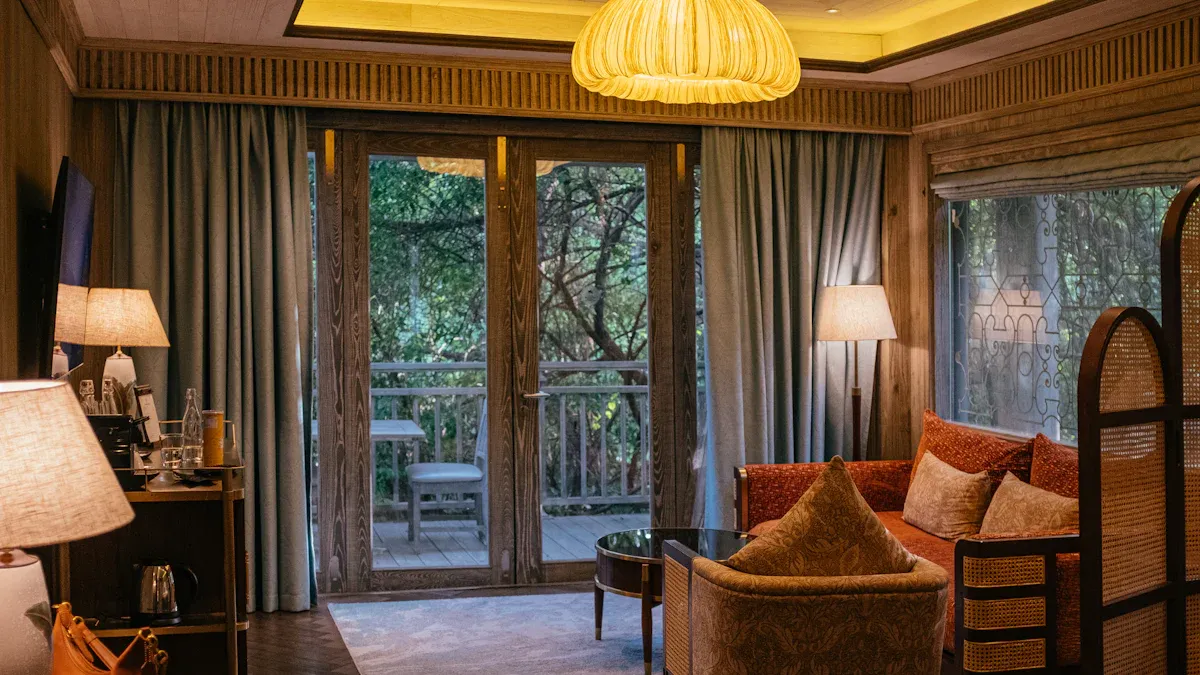
Reputable manufacturers prioritize superior materials and meticulous craftsmanship. They understand that high-quality hotel project furniture must withstand heavy daily use. This necessitates selecting materials like hardwood and metal, known for their durability and ability to endure high traffic. Fire-retardant properties are also essential for safety compliance.
| Material Type | Advantages (Defining Quality) | Disadvantages (Impact on Quality) |
|---|---|---|
| Wood | Durability (solid wood like oak/teak, long-lasting with maintenance), Aesthetic Versatility (natural appearance, various finishes), Customizable & Repairable (extended product lifecycles) | Cost (premium hardwoods are expensive), Maintenance (reacts poorly to scratches, heat, moisture if untreated), Weight (heavy, affects portability) |
| Metal | Strength (high resistance to wear, good for high-traffic areas), Minimal Maintenance (rust-resistant materials lower operational costs), Modern Aesthetics (clean lines, smooth finishes) | Cold/Harsh Feel (unless paired with warm tones/fabrics), Noise (chairs generate sound when shifted), Prone to Dents (e.g., aluminum) |
Craftsmanship standards are equally vital. Manufacturers employ techniques such as mortise and tenon joints for secure fastening and stronger cabinetry. They construct tables with strong corner blocks, glued and screwed with lag bolts, increasing overall strength and rigidity. Drawer construction often features English dovetail joints for durability and solid drawer boxes. These precise methods ensure furniture longevity and structural integrity, meeting the rigorous demands of hospitality environments.
Design Expertise and Customization for Hotel Project Furniture
Leading manufacturers offer extensive design expertise and customization options. They move beyond standard catalogue pieces, creating unique, design-driven furniture that aligns perfectly with a hotel’s individual identity. This includes tailoring designs to specific preferences and project needs, allowing for unique brand expression. Manufacturers provide adaptable design solutions for all hotel areas, from lobbies to outdoor spaces, ensuring both functionality and style. They specialize in integrating specific themes and functional requirements into each design, enhancing the overall aesthetic and guest experience.
Production Capacity and Timeliness for Hotel Project Furniture
A reputable manufacturer possesses scalable production capacity, crucial for large-scale hotel projects. This ensures consistency and timely delivery, especially for hotel chains and multi-site developments. Companies like Starjoy Hotel Furniture operate massive facilities, spanning 56,000 square meters, employing over 570 staff members across six distinct manufacturing plants. They utilize advanced machinery from German and Italian manufacturers for precision and efficiency. This robust infrastructure allows them to handle comprehensive product lines, covering all hotel furniture needs, including guest rooms, lobbies, restaurants, and conference spaces, with a one-stop service for wooden, metal, and upholstered products.
Certifications and Compliance for Hotel Project Furniture
Reputable manufacturers demonstrate their commitment to quality and ethical practices through various certifications. These certifications assure clients of adherence to industry standards. For example, leading hotel furniture manufacturers proudly display AWI certification. This signifies their ability to produce millwork according to comprehensive industry standards. They also commit to environmental conservation throughout the manufacturing process, including the creation of custom hotel FF&E.
Certifications for hotel furniture companies cover a wide range of areas. These include quality management systems and environmental sustainability standards. They ensure manufacturers meet and exceed customer and stakeholder expectations. Two key certifications include:
- FSC Certification: This focuses on environmental sustainability and responsible sourcing of wood products. It ensures wood comes from sustainably managed forests, meeting high environmental and social standards. Certification involves a complete chain of custody from forest to end-user.
- AWI Certification: From the Architectural Woodwork Institute, this emphasizes high quality and efficient processes in architectural woodwork. It helps manufacturers adhere to proven industry standards. This leads to benefits like better delivery, reduced environmental impact, and more durable finishes.
Customer Service and Post-Sale Support for Hotel Project Furniture
Exceptional customer service and robust post-sale support are hallmarks of a reputable manufacturer. They understand that a project does not end with delivery. Manufacturers offer comprehensive support to ensure client satisfaction and product longevity. This includes:
- 24/7 Service Availability: Companies offer round-the-clock service. Customers can always reach their support team.
- After-sales Service Reception and Recording: This involves customer consultation via a dedicated hotline and online platform. It includes detailed information recording and work order generation.
- Problem Diagnosis and Confirmation: Initial communication with customers occurs. Professional on-site inspections confirm problem causes. Manufacturers then formulate specific repair, replacement, or compensation plans.
- Implementation of Solutions: This includes repair services for fixable furniture. It also covers replacement services with timely logistics delivery and installation guidance.
- Follow-up and Acceptance: Post-repair quality inspection ensures satisfaction. Customer acceptance confirms problem resolution. Satisfaction surveys gather feedback.
- After-sales Record and Summary: All service records are archived for future inquiry and analysis. Regular service data analysis optimizes processes and improves quality.
- Customer Care and Maintenance: Regular follow-up visits understand furniture usage. They gather feedback. Manufacturers establish long-term relationships through value-added services like maintenance knowledge.
Financial Stability and Experience in Hotel Project Furniture
A manufacturer’s financial stability and extensive experience provide a solid foundation for successful partnerships. Financially stable companies possess the resources to invest in advanced technology and skilled labor. This ensures consistent quality and reliable production. Experience, particularly in hotel project furniture, means they understand the unique challenges and requirements of the hospitality sector. Taisen, for instance, has been making hotel project furniture for more than ten years. This long-standing presence in the industry demonstrates their expertise and ability to deliver on complex projects. Their history of successful projects builds trust and confidence with clients.
Key Criteria for Identifying Reputable Hotel Project Furniture Manufacturers
Portfolio and Case Studies of Hotel Project Furniture
A manufacturer’s portfolio and case studies offer tangible proof of their capabilities. These documents showcase their past work. They demonstrate their experience in various hospitality settings. A strong portfolio typically features custom casegoods and seating for hospitality projects. It includes examples from guestrooms, suites, public spaces, and restaurant areas. Manufacturers often highlight their work on boutique hotels, large-scale brand programs, renovations, and new construction properties. Some manufacturers even offer a ‘One-Stop Solution for Turnkey Hotel Project’. This indicates a comprehensive project scope beyond just furniture. Reviewing these examples helps clients visualize the manufacturer’s design aesthetic and production quality. Case studies provide deeper insights. They detail challenges faced and solutions implemented. This reveals a manufacturer’s problem-solving skills and project management expertise.
Client Testimonials and References for Hotel Project Furniture
Client testimonials and references provide invaluable insights into a manufacturer’s reputation. These endorsements come directly from previous clients. They speak to the manufacturer’s reliability, product quality, and customer service. Reputable manufacturers readily provide a list of references. Prospective clients can contact these references directly. This allows for independent verification of claims. Positive feedback from past projects builds significant trust. It assures new clients of a manufacturer’s commitment to satisfaction. A manufacturer’s willingness to share references indicates confidence in their work.
Factory Visits and Quality Control for Hotel Project Furniture
Conducting factory visits offers a crucial step in identifying reputable manufacturers. A visit allows clients to observe the production process firsthand. They can inspect the machinery, assess cleanliness, and evaluate safety standards. This direct observation ensures the manufacturer maintains high operational standards. It also confirms their production capacity. Quality control measures are paramount. Reputable manufacturers implement rigorous inspections at various stages of production. They conduct material checks, in-process quality checks, and final product testing. These stringent controls guarantee product consistency and adherence to specified standards. A transparent manufacturing process demonstrates a commitment to excellence in every piece of hotel project furniture.
Warranty and Guarantees for Hotel Project Furniture
Reputable manufacturers stand behind their products with comprehensive warranties and guarantees. These assurances provide clients with peace of mind regarding their investment. The industry standard for hotel project furniture warranties typically covers 5 years. This warranty addresses defects in materials and workmanship under normal use. A robust warranty also covers damaged parts, repair, replacement, on-site or factory service, and freight charges.
Manufacturers often offer varying warranty periods for different component categories. This reflects the expected lifespan and wear of specific parts.
| Component Category | Warranty Period |
|---|---|
| Chair, desk & table frames; Work surfaces; A&D READY® and EMOJI® seating; Soft seating | Limited Lifetime (12 years) |
| High-use items (casters, glides, tablet arms, ganging mechanics, plastic/metal accents) | 5 years |
| Pneumatic desk & chair lifts; Electrical components; Mechanical parts (drawer & door mechanics) | 1 year |
| Discontinued products | Longer of 2 years from discontinuation or 5 years from purchase |
These detailed warranty structures demonstrate a manufacturer’s confidence in their product quality and their commitment to long-term client satisfaction.
Sustainable Practices in Hotel Project Furniture Manufacturing
Sustainable practices have become a crucial consideration for modern hotel furniture manufacturing. Manufacturers increasingly adopt eco-friendly approaches throughout their production processes. They prioritize the use of sustainable materials to minimize environmental impact.
Common sustainable materials include:
- Bamboo: This material offers a short growth cycle and high strength. However, it requires high processing standards and can crack or suffer insect damage if improperly handled.
- Engineered Wood (Eco-Friendly Type): It provides a stable structure and suits mass production with controlled costs. Low-quality types may pose adhesive pollution risks, and surfaces need enhanced wear resistance.
- Recycled Plastic: This material utilizes discarded resources and resists water, corrosion, and mold. Its mechanical strength is relatively low, and its aesthetic may differ from high-end interiors.
- Organic Fabrics: Manufacturers make these from certified organic agricultural systems without GMO seeds or harmful chemicals. Examples include cotton, wool, silk, and hemp.
- Sustainable Wood: Sourced from managed forests and certified by programs like the Forest Stewardship Council (FSC). Common species include pine, oak, maple, and white ash, often used with veneers.
- Cork: This renewable, lightweight, soft, and durable bark acts as a good insulator. Manufacturers integrate it into headboards, end tables, nightstands, chairs, and benches.
- Stone: Natural stone is sustainable because it occurs naturally, contains no chemicals, and requires less water to process. Certified by organizations like the Natural Stone Council, common types include marble, granite, quartz, and limestone.
- Reclaimed Materials: These are repurposed items like unfinished wood, metals (aluminum, steel, copper), glass, ceramics, and stone. Manufacturers give them a second life through ‘upcycling’.
Manufacturers also implement energy-efficient production methods and waste reduction strategies. These efforts contribute to a greener manufacturing footprint.
Innovation and Technology in Hotel Project Furniture
Innovation and technology drive advancements in hotel furniture design and production. Modern manufacturers leverage cutting-edge tools to enhance efficiency, customization, and guest experience.
CAD (Computer-Aided Design) technology revolutionizes hotel furniture design. It enables extensive customization, detailed layouts, and comprehensive visualization. CAD minimizes reworks and changes, ensuring accuracy and quick turnarounds in the design process. Designers create floor plans, detailed furniture layouts, and elevations. This helps them visualize the final look and make necessary adjustments for desired outcomes and functionality. Upcoming advancements like AR/VR (Augmented Reality/Virtual Reality) and 3D printing will provide immersive experiences and facilitate the creation of highly customized furniture.
Manufacturers also integrate technology directly into furniture pieces. This creates ‘smart’ furniture solutions for guests.
- Technology Integration within Furniture Design:
- Wireless charging stations
- Bluetooth-enabled sound systems
- IoT-connected furniture
- Advanced Manufacturing and Automation:
- Advanced robotics
- AI-powered production lines
- Smart manufacturing software
These innovations aim to provide guests with convenience and a high-tech experience. They make hotel rooms more interactive and comfortable. Modern hotel furniture production embraces these smart solutions, including built-in charging stations, integrated lighting controls, and smart beds that adjust for comfort.
How to Select the Best Reputable Manufacturer for Your Hotel Project Furniture
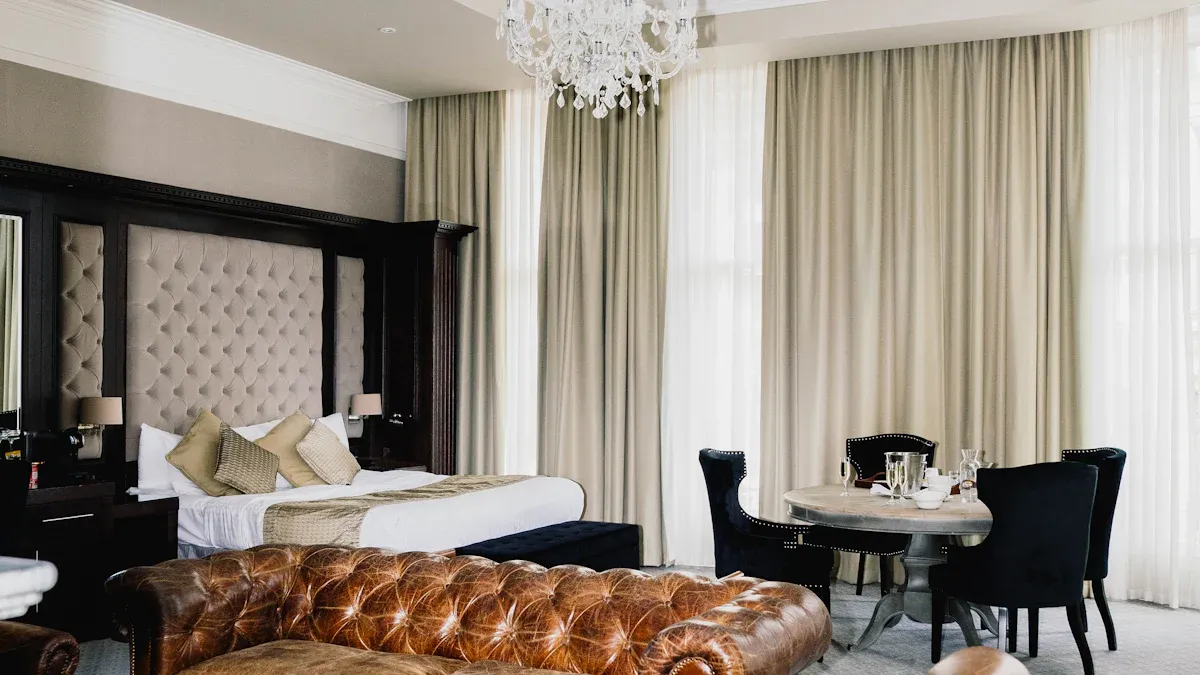
Selecting the ideal manufacturer for your hotel project furniture requires a systematic approach. This process ensures the chosen partner aligns with your vision, quality standards, and operational needs. Careful consideration at each stage minimizes risks and maximizes the potential for a successful outcome.
Assessing Your Hotel Project Furniture Needs
Before engaging with any manufacturer, thoroughly assess your specific requirements. This foundational step defines the scope and informs all subsequent decisions. For hotel guest room furniture, functional requirements must prioritize the guest experience. Imagine two occupants and visualize their movement within the space. Furniture must function as intended to minimize friction and enhance comfort. This includes ergonomic support and durability for upholstery. Commercial-grade mattresses with appropriate bases must withstand heavy usage while maintaining comfort. The overall design should also adhere to ergonomic principles to ensure a comfortable and captivating stay.
Consider these specific functional requirements for hotel guest room furniture:
- Hotel Bed and Mattress Quality: Guests require comfortable and durable mattresses for a restful sleep, supported by high-quality beds with sturdy frames. Options for varying firmness are also important.
- Hotel Wardrobe and Storage Solutions: Essential for guest convenience, these include spacious wardrobes or built-in closets, luggage racks, dressers, and drawers.
- Hotel Bedside Tables and Nightstands: These must be functional, offering soft lighting (lamps), charging stations, power outlets, and storage drawers.
- Hotel Desk and Workspace Furniture: Especially for business travelers, this includes ergonomic chairs, spacious desks with power outlets and USB ports, and adjustable desk lamps.
- Hotel Seating and Lounge Chairs: These provide relaxation options beyond the bed, such as armchairs, sofas, and coffee tables, with compact arrangements for smaller rooms.
Researching and Shortlisting Hotel Project Furniture Manufacturers
Once you have a clear understanding of your needs, begin researching and shortlisting potential manufacturers. This phase involves identifying partners who can meet your specific demands and uphold your quality expectations. Several key considerations guide this selection process.
Consider these key factors when evaluating manufacturers:
- Ease of Access: Proximity impacts shipping costs, delivery times, and the ability to inspect products.
- Consistency: Look for uniform product quality and the ability to consistently customize pieces.
- Profitability: Evaluate the overall cost of products and their impact on your budget.
- Warranty: A robust warranty policy is crucial for repairs and addressing defects.
- Customer Service: Good service solidifies relationships and ensures client needs are met.
Additionally, ask essential questions to thoroughly vet each manufacturer:
- Material Quality: Ensure materials are commercial-grade, durable, and long-lasting.
- Styles: Confirm they offer designs suitable for your hotel’s aesthetic and can provide architectural shading solutions.
- Sustainability: Inquire about environmentally friendly processes and materials.
- Comfort: Prioritize furnishings that provide a peaceful and stress-free environment for guests.
- Adherence to Regulations: Verify compliance with standards like the Americans with Disabilities Act (ADA).
- Delivery Time: Understand lead times and delivery windows; plan purchases 12-14 weeks in advance.
- Customization Capabilities: Determine if they can accommodate tailor-made furniture pieces.
Requesting Quotes and Samples for Hotel Project Furniture
After shortlisting manufacturers, the next step involves requesting detailed quotes and, where appropriate, samples. A comprehensive Request for Quotation (RFQ) ensures you receive accurate pricing and specifications. Provide all necessary information to avoid misunderstandings and delays.
Your RFQ should include the following key information:
- Your Name
- Email Address
- Phone Number
- Project Name
- Design Firm
- Procurement/Purchasing Company
- Target Order Date
- Desired Completion Date
- Property Location
- Item Name
- Item Quantity
- Item Dimensions
- Item Finish & Materials
- COM (Customer’s Own Material)
- Hardware
- Stone
- Design specifications, drawings, web links or anything else we should know?
Requesting samples allows you to physically inspect the quality of materials, craftsmanship, and finishes before committing to a large order. This step is crucial for verifying that the manufacturer’s output meets your aesthetic and durability standards.
Conducting Due Diligence on Hotel Project Furniture Manufacturers
Conducting thorough due diligence on hotel project furniture manufacturers is a critical step. It ensures a successful partnership and high-quality outcomes for any hospitality venture. This process involves a deep dive into various aspects of a manufacturer’s operations and offerings.
First, evaluate the manufacturer’s operational capabilities. Consider whether to choose a domestic or foreign manufacturer. Domestic suppliers often offer better quality control, shorter lead times, and less risk of damage, though they may have higher upfront costs. Foreign suppliers might present lower initial costs but carry risks of longer lead times, damaged goods, and inconsistent quality. Assess the supplier’s communication responsiveness. They must communicate effectively and respond quickly to issues like damage, delivery problems, or order adjustments. Insist on detailed product drawings before manufacturing begins. This ensures the order meets exact specifications. Clarify production lead times, especially for custom orders. The supplier must also provide replacement parts quickly if needed. While direct installation is rare, ensure the manufacturer considers installation logistics. This includes hallway widths, ingress/egress points, and in-room utilities, potentially through site visits and surveys. Some suppliers also offer storage solutions. This facilitates phased deliveries and minimizes damage risk from multiple handling.
Next, investigate product quality and longevity. Durability is paramount for high-traffic areas in hotels. Investigate materials, construction methods, and warranty terms to ensure longevity. Request durability testing certifications, such as abrasion resistance scores. Ask about maintenance guides, repair services, or replacement parts. Prioritize modular designs for easy component replacement and consider service agreements. Understand the warranty terms. Domestic hospitality casegoods manufacturers typically offer a 5-year warranty under normal use.
Furthermore, examine ethical and regulatory compliance. Inquire about eco-friendly and sustainable manufacturing practices. This includes sustainably sourced materials, energy-efficient production, environmental certifications, and company policies on sustainability. Verify compliance with fire safety regulations, weight capacities, and local standards. For eco-conscious brands, check for certifications like FSC or GREENGUARD. Ensure furnishings meet fire safety regulations and are accessible for all guests, including those with disabilities. Look for proper certifications like fire-resistant upholstery and flame-retardant materials.
Finally, assess the manufacturer’s experience and business practices. Ask about their track record, specialization (contract or custom), and references from previous hotel projects. Determine if they offer bespoke designs and can modify dimensions or materials. Ensure custom designs meet quality standards. Inquire about primary materials used, adherence to quality assurance guidelines, and techniques for durability and design precision. Clarify standard lead times, international shipping experience, and how they handle delays, damages, or defects. Ask about warranty types, repair/maintenance services, and policies for replacing damaged or defective furniture. Confirm their capacity to manage large-scale orders and maintain quality control during mass production. Review their portfolio of large projects. Understand their pricing, bulk order discounts, potential hidden costs, and available payment or financing options. Conduct due diligence on the supplier’s reputation, checking customer ratings, reviews, and testimonials. Inquire about after-sales support, warranties, and maintenance services to guarantee a long-term hassle-free experience.
Negotiating Contracts for Hotel Project Furniture
Negotiating contracts for hotel project furniture requires careful attention to detail. A well-structured agreement protects both parties and ensures project success. Begin by clearly defining the scope of work. This includes specific furniture pieces, quantities, materials, finishes, and design specifications.
Focus on pricing and payment terms. Negotiate a clear pricing structure, including any bulk order discounts. Understand potential hidden costs, such as shipping, installation, or taxes. Establish a payment schedule that aligns with project milestones. This might involve an upfront deposit, progress payments, and a final payment upon satisfactory delivery and inspection. Explore available financing options if necessary.
Address delivery schedules and logistics. Specify firm delivery dates and penalties for delays. Clarify shipping policies, especially for international projects. Discuss how the manufacturer handles potential damages or defects during transit. Ensure the contract outlines responsibilities for unloading, staging, and any on-site assembly.
Include comprehensive quality control clauses. The contract should detail inspection procedures at various stages of production. It must also specify acceptance criteria for the final products. This ensures the furniture meets agreed-upon standards before final payment.
Detail warranty and after-sales support. Clearly outline the warranty period and what it covers, including defects in materials and workmanship. Specify procedures for repairs, replacements, or maintenance services. A robust after-sales support plan provides long-term peace of mind.
Finally, incorporate dispute resolution mechanisms. This outlines how both parties will address disagreements or breaches of contract. A clear, written agreement minimizes misunderstandings and provides a framework for a successful partnership.
Common Pitfalls to Avoid When Choosing Hotel Project Furniture Manufacturers
Prioritizing Price Over Quality in Hotel Project Furniture
Many decision-makers often focus solely on the lowest upfront cost when selecting furniture. This approach, however, frequently leads to significant long-term expenses. Prioritizing lower initial costs, especially with overseas manufacturing, typically results in a much shorter furniture lifecycle. Hoteliers should expect to replace these items, possibly within five years, given the high-traffic nature of hospitality environments. Investing in high-quality furnishings, conversely, yields substantial long-term savings. These items are built to last, reducing the need for frequent replacements. Beyond durability, superior quality furniture shows less wear and tear from constant use, maintaining its appearance and functionality for longer. This translates into fewer expenses for repairs and replacements over time.
Neglecting Due Diligence for Hotel Project Furniture Suppliers
Failing to conduct thorough due diligence on potential suppliers presents numerous risks. This oversight can lead to missed deadlines and compromised quality, which can derail an entire project. Beyond operational issues, financial risks also emerge. A vendor’s debt, poor cash flow, or unstable funding can result in contract failures or unpaid obligations, disrupting operations. Reputational risks are also significant; a vendor’s unethical actions, such as fraud, can severely damage a brand’s image. Compliance risks, like a vendor’s failure to adhere to regulations, can lead to fines or litigation. Operational risks, such as weak processes or inadequate security, may cause service interruptions or supply delays. Finally, strategic risks arise if a partner’s long-term direction or values misalign, hindering growth and increasing costs.
Overlooking Communication and Support for Hotel Project Furniture
Effective communication and robust support are crucial for successful furniture procurement. Neglecting these aspects can create numerous problems. Manufacturers should feel like integral team members, working collaboratively and addressing issues proactively. Proper documentation is essential, including detailed drawings, furniture layouts, and electrical schematics, to prevent practical issues. Establishing responsive communication practices and identifying a primary point of contact for all project inquiries ensures clarity. Requesting detailed product drawings also guarantees accurate order fulfillment. Discussing pricing, securing written timelines, and establishing clear warranty terms are all part of this vital communication. Maintaining open communication helps avoid assumptions about lead times or compliance, ensuring projects receive positive feedback and certification.
Ignoring Sustainability Practices in Hotel Project Furniture
Overlooking sustainable practices in hotel furniture manufacturing carries significant risks. This oversight impacts the environment, a brand’s reputation, and long-term financial viability. Manufacturers who disregard eco-friendly methods often contribute to deforestation, excessive waste, and increased carbon emissions. This directly harms the planet.
Modern guests increasingly prioritize sustainability. They expect hotels to align with their values. Choosing manufacturers without strong sustainability commitments can damage a hotel’s brand image. It may deter environmentally conscious travelers. This leads to lost revenue and negative public perception.
Furthermore, regulatory landscapes are evolving. Governments worldwide implement stricter environmental standards. Manufacturers ignoring these trends face future compliance challenges. This can result in costly retrofits or penalties. Prioritizing sustainable sourcing, energy-efficient production, and waste reduction is crucial. It ensures long-term success and responsible business operations.
Failing to Verify Production Capacity for Hotel Project Furniture
Neglecting to verify a manufacturer’s production capacity is a common pitfall. This oversight can lead to severe project delays and budget overruns. A manufacturer might promise unrealistic timelines without the necessary infrastructure or workforce. This results in missed deadlines for furniture delivery.
Inconsistent quality also arises from overstretched production lines. Manufacturers rushing orders may compromise on craftsmanship or material standards. This directly impacts the durability and aesthetic appeal of the furniture. Hotels then face premature replacements or guest complaints.
Before committing, clients must assess a manufacturer’s ability to handle the project scale. This includes evaluating factory size, machinery, and labor force. Requesting production schedules and visiting the facility provides crucial insights. It confirms their capability to deliver on time and to specification. This due diligence prevents costly setbacks and ensures project success.
Reputable manufacturers directly contribute to successful hotel projects. Investing in quality hotel project furniture enhances the guest experience, strengthens brand reputation, and improves return on investment. Studies show a strong correlation between tangible hotel attributes, including furniture and room features, and brand loyalty.
| Attribute | Before COVID-19 (Correlation with Brand Loyalty) | After COVID-19 (Correlation with Brand Loyalty) |
|---|---|---|
| Outward Appearance (includes furniture) | 0.339 | 0.249 |
| Room Feature (includes beds) | 0.471 | 0.352 |
Therefore, prioritize thorough research and selection for all hotel project furniture needs. This ensures lasting quality and guest satisfaction.
FAQ
What is the typical lifespan of hotel project furniture?
High-quality hotel furniture typically lasts 7-10 years. Reputable manufacturers use durable materials and superior craftsmanship. This extends furniture life, reducing replacement costs. Lower-quality items may require replacement within 3-5 years.
How important are certifications for hotel furniture manufacturers?
Certifications are crucial. They validate a manufacturer’s commitment to quality, safety, and sustainability. For example, FSC ensures responsible wood sourcing. AWI confirms adherence to architectural woodwork standards. These certifications build client trust.
Can manufacturers customize furniture to specific hotel designs?
Yes, reputable manufacturers excel in customization. They offer design expertise to match a hotel’s unique brand and aesthetic. They tailor dimensions, materials, and finishes. This ensures furniture perfectly integrates with the overall design vision.
What should I look for in a manufacturer’s warranty?
Look for comprehensive warranties covering materials and workmanship. Standard warranties often last 5 years. Ensure it details coverage for damaged parts, repairs, and replacements. A strong warranty reflects confidence in product durability.


